
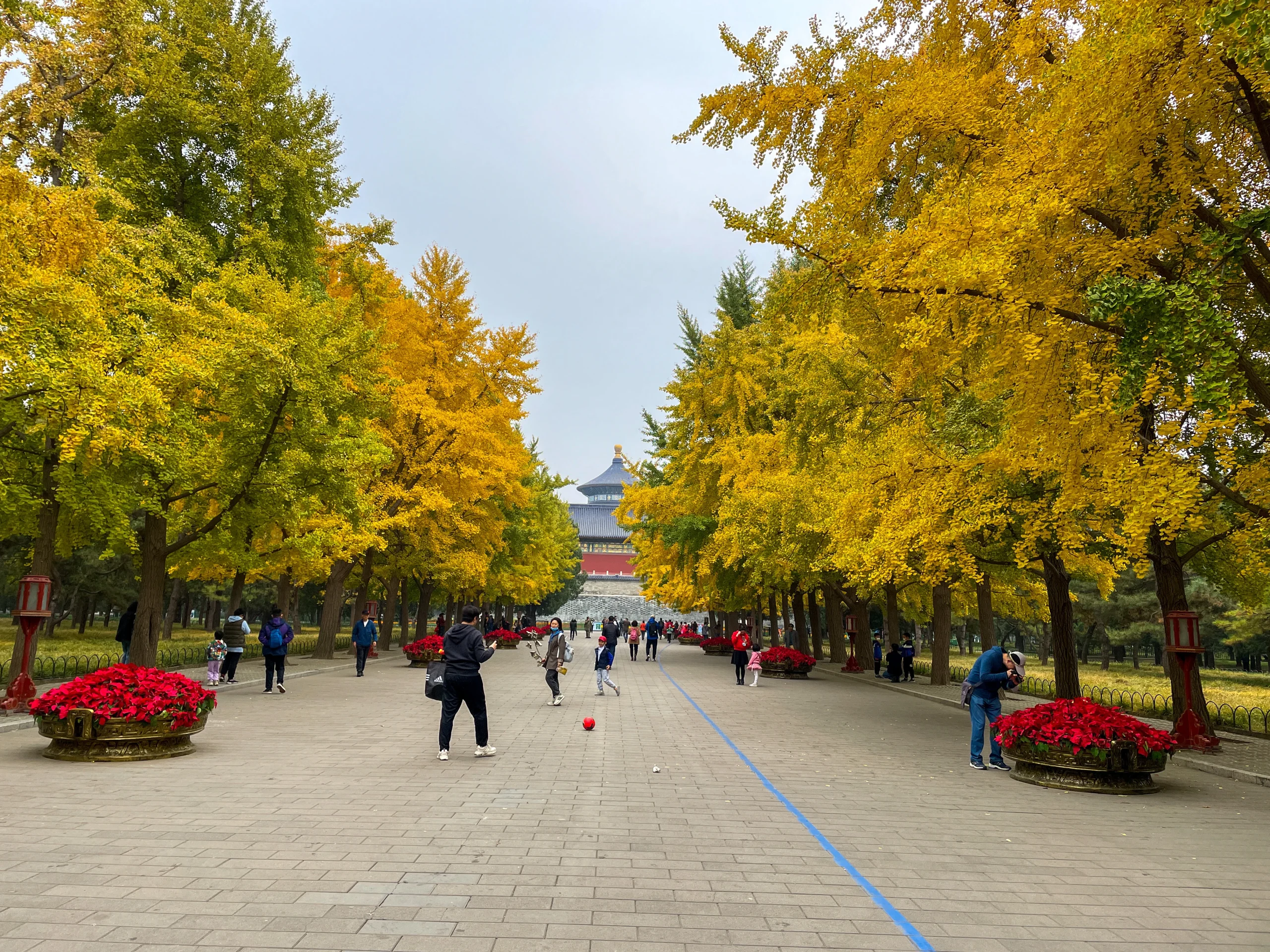

The Temple of Heaven in Beijing is a place that, like few others, connects the deep spirituality of ancient China with the vibrant, authentic daily life of today’s Beijingers. For Imperial China, this complex was the spiritual heart of the empire: as the “Son of Heaven,” the Emperor was responsible for cosmic balance. Only here, through strictly secret sacrificial rituals, could he secure imperial legitimacy and plead for Heaven’s support for harvest and the survival of his people. Whether you are planning your first visit to the Temple of Heaven in Beijing or are simply interested in the fascinating culture of China—this overview will provide you with everything regarding the history, architectural highlights, and my personal insider tips for this UNESCO World Heritage site (external link).
The History of the Temple of Heaven: Where the Emperor Prayed in Beijing
To understand the magic of this place, we need to take a small trip back in time. The vast temple complex was constructed from 1406 to 1420 during the reign of the Ming Emperor Yongle—the same emperor responsible for the construction of the Forbidden City. In the 16th century, under the Jiajing Emperor, the complex was expanded and officially received the name we know today.
In ancient China, the Emperor was regarded as the “Son of Heaven” (Tianzi), ruling the earth on behalf of a heavenly authority. To maintain this legitimacy and show respect, strict rituals and offerings were vital. The Emperors of the Ming and Qing dynasties therefore traveled here regularly to pray for good harvests and cosmic harmony in solemn ceremonies.
Good to know: Despite its name, this was never a place for the common people. For nearly five centuries, the complex was strictly closed to ordinary citizens. It wasn’t until 1918 that the grounds were converted into a public park, and in 1998, it was finally declared a UNESCO World Heritage site. Today, it is the world’s largest surviving complex for imperial sacrificial ceremonies.
Fasting and Absolute Silence: The Imperial Protocol
The preparations for these state rituals, especially for the Winter Solstice at the Circular Mound Altar, resembled a logistical masterpiece. Days before the actual ceremony, all roads in the temple were renewed and the sacrificial animals were strictly inspected. Before the Emperor could even set foot on the altar, he had to undergo a strict three-day fasting period. Several ritual baths served his spiritual purification.
On the eve of the ceremony, a gigantic, kilometers-long procession moved silently from the Forbidden City to the Temple of Heaven. On the day of the ritual, the Emperor performed a precisely choreographed, nine-part rite. Offerings included precious silk, jade, wine, and slaughtered bulls. A flawless execution was a matter of state—if even a single gesture failed, the entire empire feared the wrath of Heaven in the form of droughts or famines.
Does a visit to the Temple of Heaven fit your Beijing itinerary? My rating:
Here is a quick overview to see if you will enjoy a visit to the Temple of Heaven in Beijing:
| Authenticity | 🍌🍌🍌🍌 (4/5) | Nature | 🍌🍌🍌 (3/5) |
| Crowds | 🍌🍌🍌 (3/5) | Budget | 🍌🍌🍌🍌 (4/5) |
| Accessibility | 🍌🍌🍌🍌🍌 (5/5) | Lifestyle & Entertainment: | 🍌🍌 (2/5) |
| History & Culture | 🍌🍌🍌🍌 (4/5) | Photogenic | 🍌🍌🍌🍌 (4/5) |
Architecture and Symbolism: The Universe in Miniature
What makes a visit to the Temple of Heaven in Beijing so fascinating is the profound symbolism embedded in every single stone. The entire complex reflects the contemporary understanding of the cosmos. In Chinese cosmology, the square represented the Earth and the circle represented Heaven. This principle runs through the entire complex.
Even the outer walls reflect this: the outer wall is taller and semi-circular (Heaven), while the inner wall is shorter and rectangular (Earth). All buildings within the temple are also covered with special dark blue roof tiles, symbolizing the color of the sky.
Numerology also plays a huge role. Everywhere you look, you will encounter the number nine or its multiples—which was considered the most auspicious number in ancient China, representing the nine levels of Heaven.
The Three Main Attractions at the Temple of Heaven
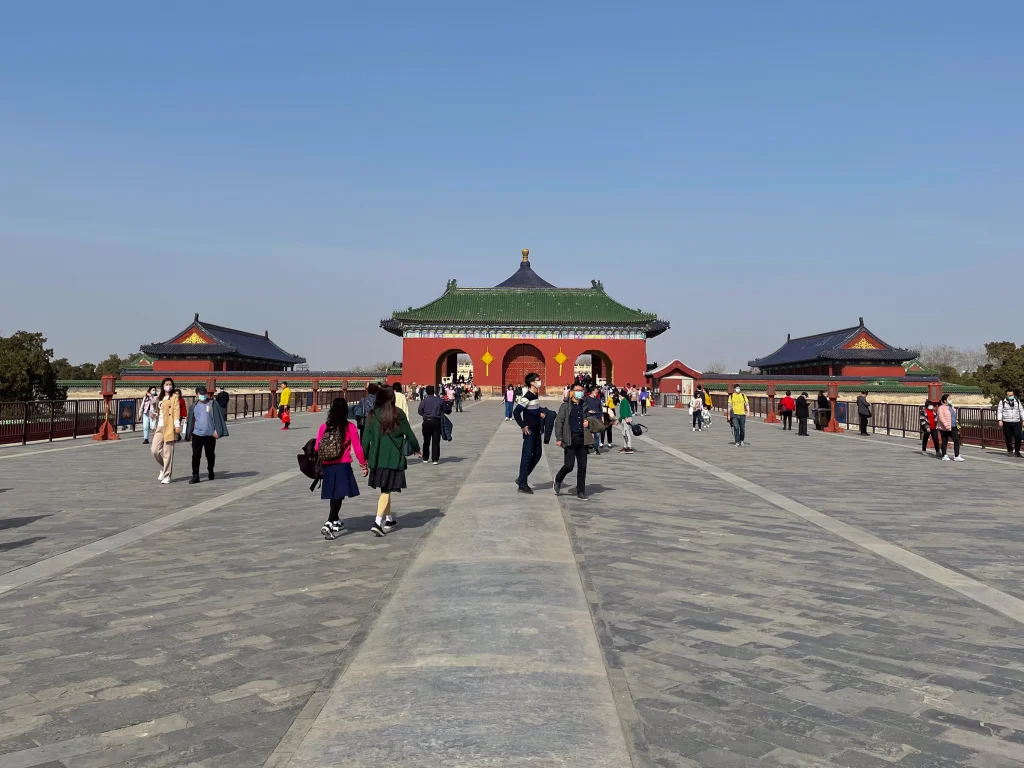
The complex is not a single monument, but a carefully choreographed sequence of ceremonial buildings connected by wide, elevated walkways and expansive courtyards, guiding the visitor through a symbolic journey between Heaven and Earth.
The Hall of Prayer for Good Harvests
The Hall of Prayer for Good Harvests (祈年殿 – Qinian Dian) is the landmark of the complex and one of the most iconic buildings in all of China. This circular hall is 38 meters high, 36 meters in diameter, and stands on a three-tiered marble base. What is absolutely fascinating: the entire building was constructed completely of wood and without a single nail! The original building burned down in 1889 due to a lightning strike but was reconstructed true to the original a few years later. The harmonious color palette of brilliant white, deep blue, and lush green emphasizes its spiritual rather than purely imperial-power character.
Inside, the arrangement of the columns forms a precise cosmological map: the four central pillars represent the seasons, twelve inner columns represent the months of the year, and twelve outer columns reflect the traditional Chinese time system. Standing here, you feel as though you are in the midst of the space and time of the imperial era.
The Imperial Vault of Heaven
South of the Great Hall is the smaller, also circular building of the Imperial Vault of Heaven (皇穹宇 – Huangqiongyu), which stands on a single-level marble base. This is where the ceremonial tablets of the gods were formerly kept before the Emperor performed the rites. Here, the Emperor took the opportunity to pause and rest briefly before the main ceremony.
The Vault of Heaven is connected to the Hall of Prayer via a brick bridge—a 360-meter-long, elevated path that slowly inclines upwards. The building is surrounded by the famous Echo Wall, a round, smooth wall with amazing acoustics that reflects even faint sounds over great distances: a soft whisper at one point can still be clearly heard at the other end of the wall. This architecture emphasizes the belief that recited prayers are heard all the way to Heaven.
The Circular Mound Altar
Further south lies the actual sacrificial altar (圜丘坛 – Huanqiu Tan). Built in 1530 and redesigned in 1740, it is an empty, three-tiered marble platform decorated with elaborately carved dragons. Every element—from the balustrades to the steps—is based on the sacred number nine.
In the exact center of the altar lies a round stone called the Heart of Heaven (天心石 – Tianxin Shi). Here, the Emperor stood completely isolated under the open sky to pray for favorable weather. Thanks to the clever design of the altar, the sound of the voice is reflected by the railings, creating a palpable resonance intended to assist in communicating with Heaven. Due to the giant marble platform with minimal decoration and no shelter, this place of prayer feels very awe-inspiring.
My Personal Highlight: Experiencing Beijing’s Vibrant Park Life
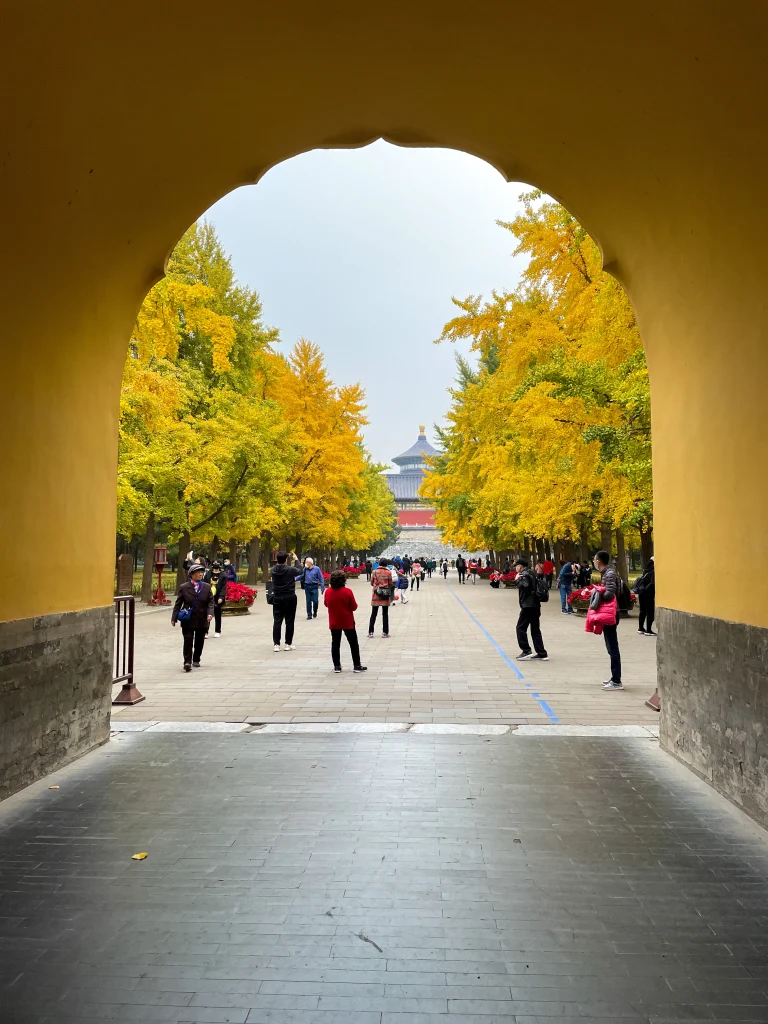
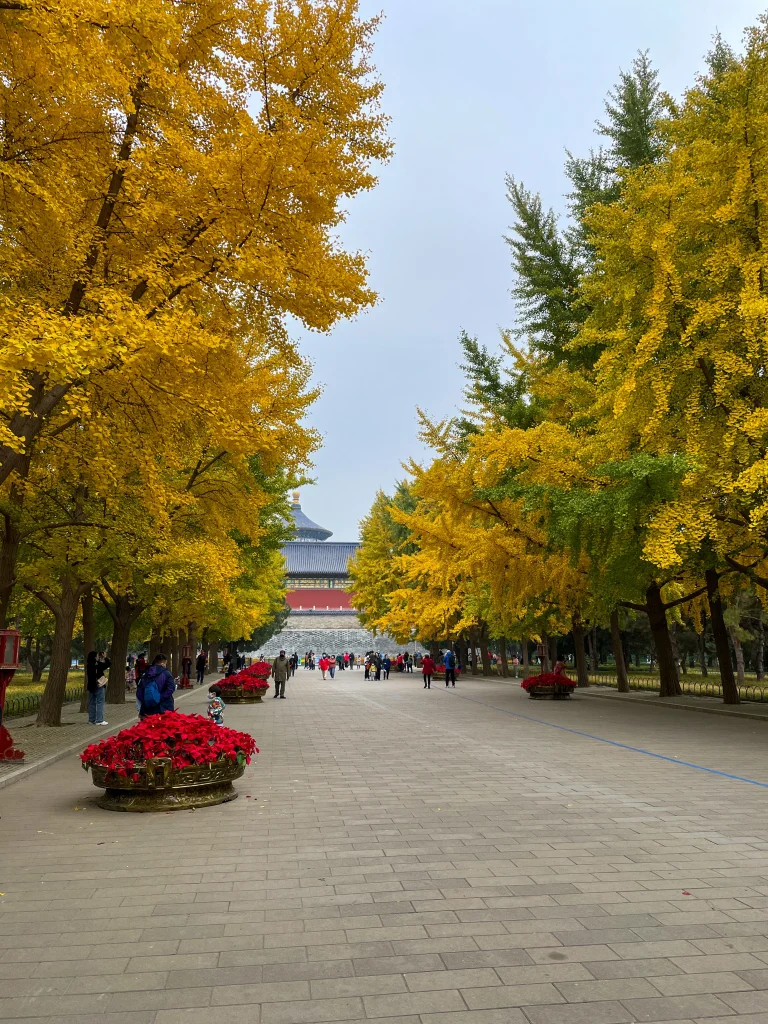
As impressive as the imperial architecture is: when I lived in Beijing, the surrounding park—and not the temple itself—was one of my absolute favorite places in the entire city. Almost nowhere else can you observe and absorb the authentic lifestyle of Beijing’s older generation as well as here.
Today, the park is full of life and radiates its own magic. As you stroll through the avenues, you’ll see Chinese families having picnics, seniors passionately playing table tennis or tennis, and, with a bit of luck, groups practicing their Tai Chi routines in perfect synchronization. Others practice traditional fan dancing, sing Peking Opera, or use water to write giant calligraphy characters on the pavement.
My Insider Tip: Come early in the morning, ideally before 09:00 AM or even shortly after sunrise! At this time, local residents are going about their morning activities, and you can experience the Echo Wall or the Heart of Heaven in peace, without the large tour buses.
Practical Info for Planning Your Visit
To ensure everything goes smoothly during your visit to the Temple of Heaven in Beijing, I’ve summarized the most important facts for you:
Opening Hours & Admission Prices: The complex distinguishes between access to the general park grounds and the actual temple buildings (which are closed on Mondays, except for statutory holidays).
| Season | Area | Opening Hours | Ticket Prices |
| Peak Season (Apr 1 – Oct 31) | Park Temple | 06:00 – 22:00 (Entry until 21:00) 08:00 – 18:00 (Entry until 17:30) | Park: 15 CNY Combined Ticket: 34 CNY |
| Off-Season (Nov 1 – Mar 31) | Park Temple | 06:30 – 22:00 (Entry until 21:00) 08:00 – 17:00 (Entry until 16:30) | Park: 10 CNY Combined Ticket: 28 CNY |
Getting There: The connection to the Beijing subway network is excellent and straightforward:
- Metro Line 5: Take it to Tiantandongmen station and use Exit A (directly at the East Gate of the park).
- Metro Line 8: Take it to Tianqiao station and use Exit C.
Time Required: Plan about 2 to 3 hours for the temple sights alone. If you want to explore and soak up the lively park life at your leisure, you should set aside a good 4 hours.
Buying Tickets:
- Easiest (in English): You can conveniently book your tickets in advance via Trip.com. It costs a minimal additional fee but works in English and allows you to pay in your home currency with standard credit cards. Book your tickets here on Trip.com (externer Affiliate Link).
- Via WeChat: If you are already familiar with China, you can use the official WeChat Mini-App and pay directly via WeChat Pay.
- On-site: There are also ticket counters on-site. You can pay there with WeChat, Alipay, or cash. Don’t forget your passport!
Conclusion: Why the Temple of Heaven is a Must-Visit
For me, the Temple of Heaven embodies the true face of Beijing. It is the contrast between the monumental, almost reverent silence of centuries-old imperial architecture and the bustling, joyful energy of Beijingers in the here and now. While the Forbidden City often feels like a giant, detached museum, the Temple of Heaven breathes history and the present simultaneously. A visit here isn’t just about checking off a sight; it’s a deep dive into the city’s way of life.
You can find more about other activities and sights in Beijing in my overview of the best attractions in Beijing.
Have you been to Beijing yourself, or are you planning your first trip to China? What fascinates you most about Chinese culture? Let me know in the comments—I’m really looking forward to exchanging ideas with you and answering your questions!
3 thoughts on “The Temple of Heaven in Beijing: An Overview for Your Visit”