
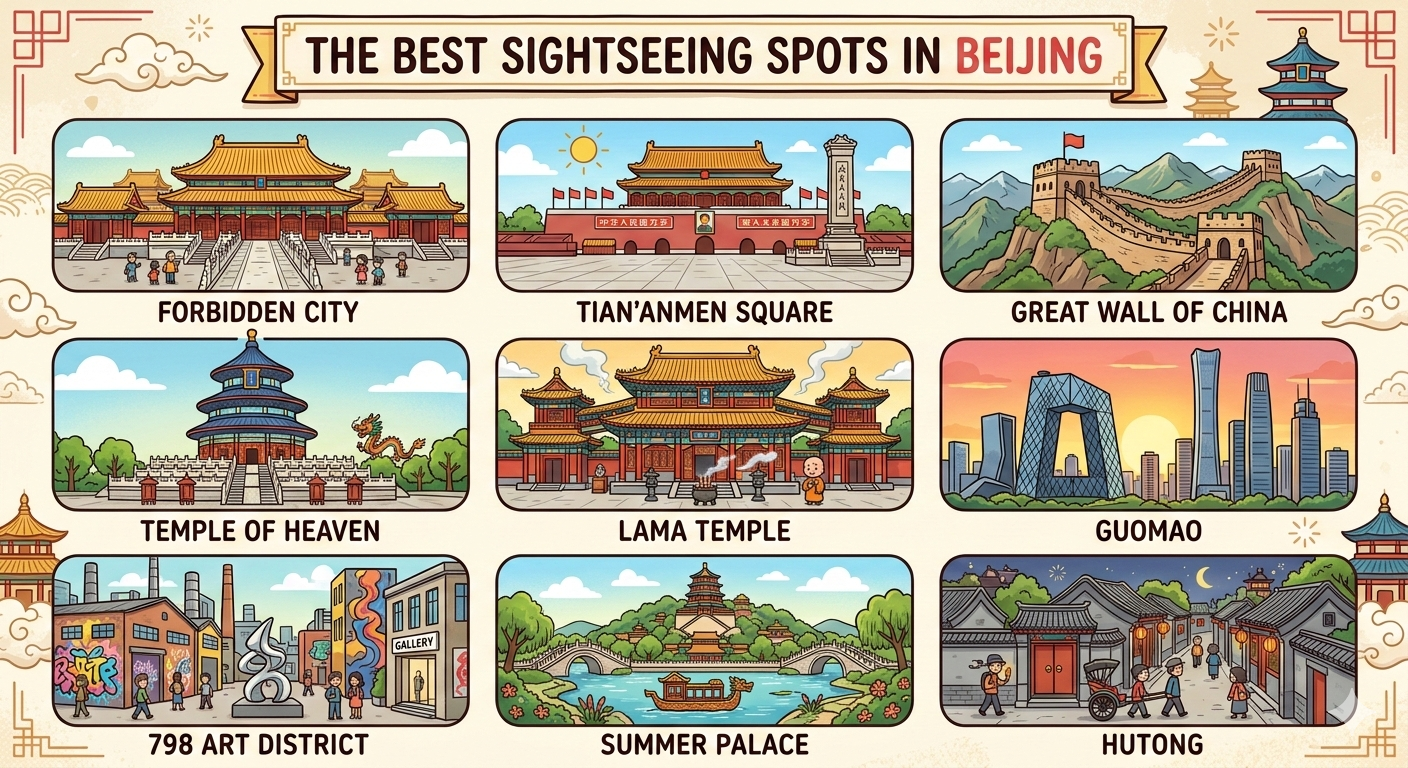

If someone asks me which city in China is an absolute must-see, I don’t have to think twice: Beijing! I lived in this fascinating city for over three years myself. Beijing isn’t just the capital; it’s the vibrant cultural and political heart of the country. Here, you can experience the ancient Empire with a breath-taking intensity, only to find yourself standing amidst a hyper-modern skyline the very next moment. Are you ready for a journey through my former home of choice? Here are the best sights in Beijing for your bucket list!
On the Trail of the Empire in Beijing: A Monumental Heritage
Beijing is a living history book. To understand the power of the past dynasties of the Empire, you have to start at the center.
- Forbidden City (Gùgōng, 故宫): The literal center of Beijing and the former imperial palace for over 500 years. With its 9,999 ½ rooms (a symbolic number, as only heaven was allowed to possess 10,000 rooms), it is the world’s largest palace complex. Every detail, from the dragon figures on the roofs to the arrangement of the halls, follows strict imperial symbolism.
- Tian’anmen Square (Tiān’ānmén Guǎngchǎng, 天安门广场): Located right outside the gates of the Forbidden City, this is one of the largest public squares in the world. It houses the Mao Mausoleum and the National Museum. Here, you can experience the sheer scale and political significance of Beijing.
- Jingshan Park (Jǐngshān Gōngyuán, 景山公园): Situated directly north of the Forbidden City, this park offers one of the most spectacular views of the city. Here you can enjoy the perfect view of the shimmering yellow tile roofs of the Forbidden City.. The hill was artificially created from the earth excavated during the construction of the palace moat.
- Temple of Heaven (Tiāntán, 天坛): This site is the embodiment of Daoist architecture, where the emperors prayed for a good harvest.
- Summer Palace (Yíhéyuán, 颐和园): When the heat in the Forbidden City became too intense, the imperial court retreated here. The Summer Palace is a masterpiece of Chinese garden design. The man-made Kunming Lake still invites visitors for long, relaxing walks today.
Does Beijing fit your travel plan? My Rating:
Here’s a quick overview to help you decide if Beijing and its sights are the best choice for your itinerary:
| Authenticity | 🍌🍌🍌 (3/5) | Nature | 🍌🍌🍌 (3/5) |
| Crowds | 🍌 (1/5) | Budget | 🍌🍌 (2/5) |
| Accessibility | 🍌🍌🍌🍌🍌 (5/5) | Lifestyle & Entertainment: | 🍌🍌🍌 (3/5) |
| History & Culture | 🍌🍌🍌🍌🍌 (5/5) | Photogenic | 🍌🍌🍌🍌🍌 (5/5) |
The Soul of Beijing: Sights and Tradition in the Hutongs
Away from the grand squares and palaces, you’ll find the “real” Beijing in the Hutongs (Hútòng, 胡同) – the narrow, winding alleys of the old city.
- Houhai Lake (Hòuhǎi, 后海): This idyllic lake is surrounded by some of the best-preserved Hutongs. The hidden cafés in the side branches of the alleys are particularly charming.
- Lama Temple (Yōnghégōng, 雍和宫): Originally an imperial palace, this complex was converted into a Lamaist monastery in the 18th century. It is considered one of the most important Tibetan Buddhist temples outside of Tibet. The absolute highlight is the “Hall of Infinite Happiness,” which houses an 18-meter-high Buddha statue carved from a single trunk of sandalwood.
- Qianmen Street (Qiánmén Dàjiē, 前门大街) & Zhengyangmen: Located directly south of Tian’anmen Square is the historic city gate Zhengyangmen, which once guarded the entrance to the inner city. The adjacent Qianmen Street was already one of the most important commercial streets during the Ming Dynasty.
- Nanluogoxiang (Nánluógǔxiàng, 南锣鼓巷): This alley, over 800 meters long, is one of the oldest and best-preserved Hutongs in the city. My tip: Definitely turn off into the quieter side alleys. There you will find beautiful hidden courtyards, cozy cafés, and much more peace than on the busy and unfortunately very commercialized main street.
The Great Wall of China: A Wonder of the World on Beijing’s Doorstep
No visit to Beijing is complete without having stood on the Great Wall of China (Wànlǐ Chángchéng, 万里长城). The best part: from Beijing, you can reach various sections in just about two hours. Since each part has its own character, it really depends on what kind of adventure you’re looking for.
- Badaling (Bādálǐng, 八达岭): The most famous and most developed part of the wall. It has the easiest transport links. However, because Badaling is so popular, it can get very crowded here.
- Mutianyu (Mùtiányù, 慕田峪): My recommendation as an entry point to the Great Wall, as you’ll find a good mix of comfort and authenticity here. This section is excellently restored and offers breath-taking views of the forested mountains.
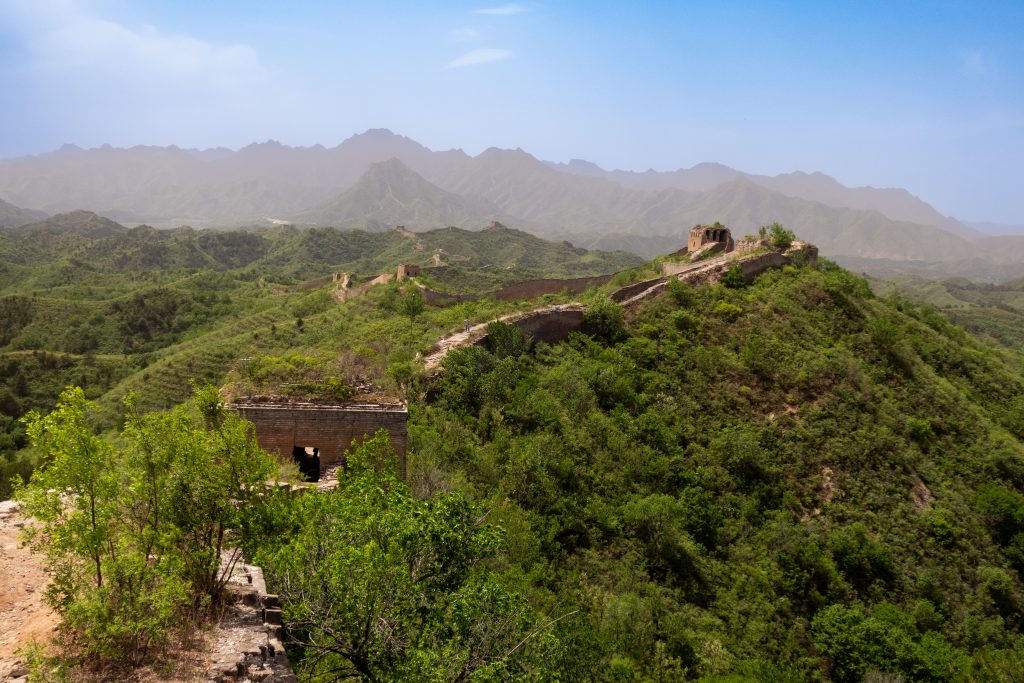
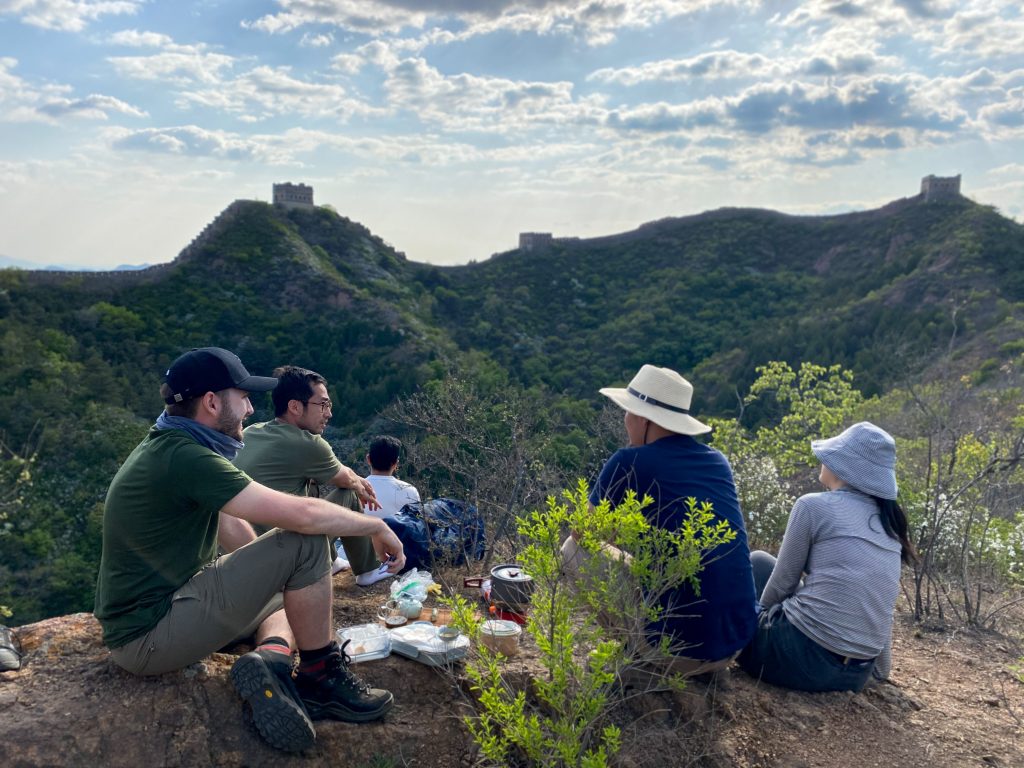
- Jinshanling & Panlongshan: A paradise for photographers and hikers. These sections are partially restored but retain much of their original, “wild” charm. The watchtowers here are built particularly close together, providing a spectacular backdrop.
- Riverside Great Wall (Shuǐguān, 水关): This section is unique because the wall here partially sinks into the water of a reservoir.

Modern Architecture and Hip Trendy Districts in Beijing
The impressive skyline and one of the best art scenes in China prove that Beijing has more to offer than just historical sights.
- Guomao & CCTV Tower (Zhōngyāng Diànshìtái Zǒngbù Dàlóu, 中央电视台总部大楼): The Central Business District (CBD) impresses with a skyline that shimmers brilliantly at night. The striking CCTV Tower dominates this skyline and is an architectural marvel. This is where the economic heart of the city beats.
- 798 Art District (798 Yìshùqū, 798艺术区): Housed in a former East German electronics factory complex, this is now home to Beijing’s most important art district. The Bauhaus-style halls contain world-class galleries, studios, cafés, and stylish design shops. It’s the perfect place to spend an afternoon wandering through street art and soaking up Beijing’s creative energy.
- Sanlitun (Sānlǐtún, 三里屯): The heart of Beijing’s nightlife and international fashion. Here you’ll find Taikoo Li, a massive open-air shopping center with international luxury brands. The surrounding streets are famous for their nightlife, hip bars, and the city’s latest food trends.
- Liangmahe (Liàngmǎ Hé, 亮马河) & Solana: The area around the Liangma River has developed into a beautifully landscaped promenade in recent years. You can stroll along the banks while the skyline reflects in the water. Right next to it is Solana, a European-style lifestyle shopping center.
- Shopping in Beijing: The futuristic shopping malls in Guomao and the historic shopping arcades in the city center are perfect for a day of shopping. Click here for my Beijing Shopping Guide.
- Olympic Park: Visit the famous Bird’s Nest (Niǎocháo, 鸟巢) and the illuminated Water Cube from the 2008 Summer Olympics. The 2022 Winter Olympics site, located in a revitalized industrial district, has also become a highlight.
- National Center for the Performing Arts (Guójiā Dà Jùyuàn, 国家大剧院): Located right next to the Forbidden City, this glass “egg” looks like a spaceship that landed in an artificial lake – a fascinating contrast to the imperial architecture.
- Universal Studios Beijing (Běijīng Gǔshì Yǐngchěng, 北京环球影城): Opened in 2021, this theme park offers a spectacular “Jurassic World” and one of the most detailed “Harry Potter” worlds globally. You can find more information on the official website of Universal Studios Beijing (external link).
Nature and Recreation in Beijing
Despite its size, Beijing offers wonderful places to escape the hustle and bustle alongside its famous sights. Let me show you the best parks in Beijing.
- Chaoyang Park (Cháoyáng Gōngyuán, 朝阳公园): The green lung in the east of the city and the largest park within the 4th Ring Road.
- Beihai Park (Běihǎi Gōngyuán, 北海公园): One of the oldest and most beautiful imperial gardens. The White Pagoda on Qionghua Island is the park’s landmark.
- Xiangshan (Fragrant Hills): A popular excursion destination in western Beijing. It’s particularly beautiful in autumn when the maple leaves turn bright red.
- Lingshan (Língshān, 灵山): At over 2,300 meters, this is the highest mountain in Beijing and ideal for an extensive hiking tour.
- Beijing Zoo (Běijīng Dòngwùyuán, 北京动物园): Beijing’s zoo is housed in a historical garden complex.
- Stroll along the canals at the 2nd Ring Road: A real insider tip. Restored canals now run along the line of the old city wall. A walk by the water here is wonderfully relaxing and shows you a quieter, almost village-like Beijing right in the center.
A Small Side Trip: More Sights in the Port City of Tianjin
Do you have a day to spare? The port city of Tianjin (Tiānjīn, 天津) is only 30 minutes away by high-speed train. As the historic gateway to Beijing, you’ll find beautiful colonial architecture along the Xinkai River. A “City Walk” over the many bridges is the perfect contrast to imperial Beijing.
My Personal Conclusion: Why I Love Beijing
After three years in Beijing, I can highly recommend a trip to China and Beijing in particular: there is no place where the connection between deep-rooted tradition and rapid progress is so tangible. The best sights in Beijing are often the ones you discover by chance when turning into a small alleyway. I hope this overview has made you want to hop on a plane yourself!
Have you ever been to Beijing, or are you currently planning your first trip? What were the best sights in Beijing for you? Let me know in the comments – I look forward to chatting with you!
6 thoughts on “The Best Sights in Beijing: An Insider’s Guide”