
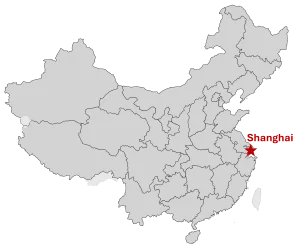
Welcome to one of the most fascinating metropolises in the world! But to truly understand the soul of this city, we have to dig deeper than the foundations of its skyscrapers. In this article, I’ll take you on a journey through time and give you an overview of the history of Shanghai for travelers, so that during your next visit, you’ll know exactly which historical secrets are hidden behind the modern facades.
The Spiritual Roots: The Beginning of Shanghai’s History
Long before Shanghai became a global financial center, temples were the first structures—some of which are still preserved today. As early as 242 AD, the king of the former Kingdom of Wu laid the foundation stone for the Longhua Temple (龙华寺, Lónghuá Sì). According to legend, its 13 pagodas were built to house sacred Buddha relics. One of these pagodas remains part of the historic temple complex today, even though the site had to be rebuilt in 977 AD following its destruction at the end of the Tang Dynasty.
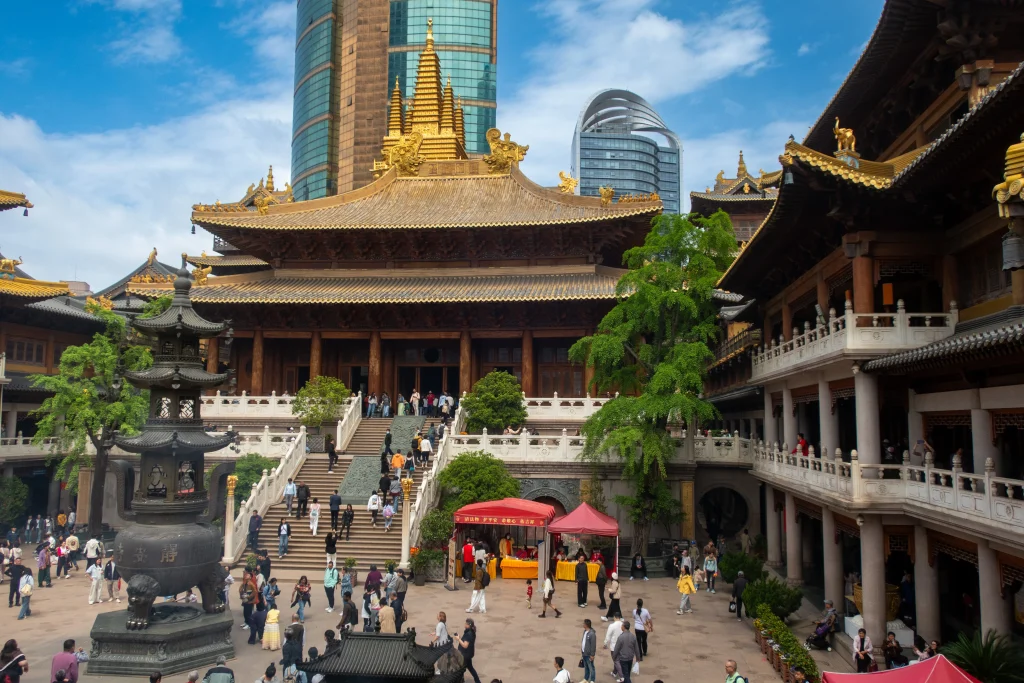
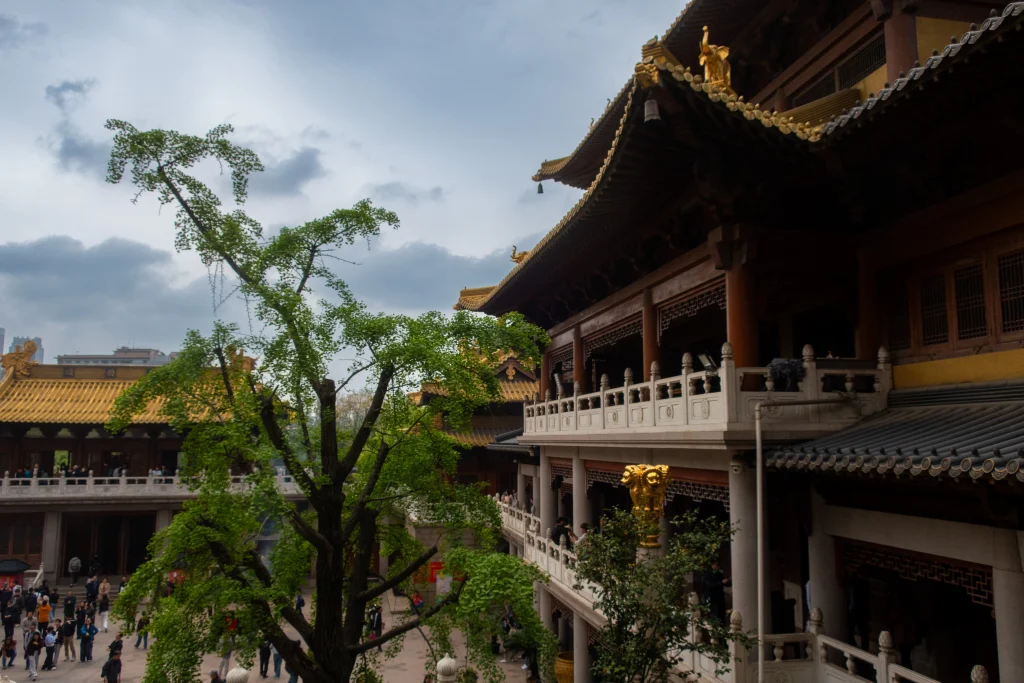
Around the same time, the famous Jing’an Temple (静安寺, Jìng’an Sì) was established. Originally built in 247 AD along the Suzhou Creek, constant flooding during the Song Dynasty forced the monks to relocate the temple to its current location on Nanjing Road in 1216. Today, the gold-glimmering temple forms an almost surreal contrast to the surrounding luxury shopping malls—a perfect example of how old and new exist side by side in Shanghai.
The First Trade Routes in Shanghai
Significantly older than the city of Shanghai itself are other settlements founded within the current city limits. One such example is Zhujiajiao. The water town of Zhujiajiao (朱家角, Zhūjiājiǎo) has existed since the era of the Three Kingdoms (208–280 AD) and developed into a flourishing commercial hub during the Song and Yuan Dynasties. Back then, the true power center of the region was nearby Suzhou, which even served temporarily as the capital of the Kingdom of Wu. You can learn more about the history of Suzhou here in my separate article.
It wasn’t until 960 AD that Shanghai was officially mentioned as a village. Its rise to a trading city accelerated in the 13th century when Shanghai acquired its own port and began shipping large quantities of cotton to Beijing. To protect itself from raiders, the city built a five-kilometer-long city wall in 1554. From this Ming Dynasty era comes the Yu Garden (豫园, Yùyuán), now one of the most popular historical destinations for travelers in Shanghai. The garden was built in 1559 by Pan Yunduan as a place of peace for his aging father.
The Era of Concessions: Paris of the East
A defining chapter in the history of Shanghai for travelers began with the First Opium War. In 1842, Great Britain forced the opening of the city to global trade. Consequently, foreign concessions emerged where merchants and missionaries enjoyed immunity. They were subject to the laws of their own countries, enforced by their own police forces. The British settled along The Bund (外滩, Wàitān), while the French shaped the area to the southwest, known today as the French Concession (上海法租界, Shànghǎi Fǎ Zūjiè).
Later, Americans and Japanese joined, forming the “International Settlement“. This period gave Shanghai its unique architecture: while you marvel at Neoclassical landmarks on the Bund, the former French Concession offers charming avenues lined with plane trees and villas that feel more like Europe than East Asia.
A turning point for the city’s social development was the Taiping Rebellion (1851–1864). During these bloody years, countless people fled the massacres, seeking refuge in the perceived safety of the foreign settlements. This massive inflow changed the cityscape permanently: while Shanghai suddenly had plenty of cheap labor, the living conditions for refugees were often miserable. Amidst rampant unemployment and systematic exploitation by foreign investors, a dangerous breeding ground for social tension emerged. This era led to widespread organized crime and laid the foundation for the later rise of revolutionary forces.
Political Awakening in the History of Shanghai
Thanks to its strategic location near the main trade routes for silk and tea, Shanghai rose to become a major port and industrial center by 1900. During this time, the city was largely controlled by two criminal triad organizations: the Red Gang (红帮, Hóng Bāng), which cooperated closely with British firms and British intelligence, and the notorious Green Gang (青帮, Qīng Bāng). The latter was founded in the 18th century by unemployed sailors and worked with the French in the drugs and intelligence business. By the early 1920s, the Green Gang had brought the extensive underworld under its control. Cruel examples were made of merchants or criminals who disregarded the Green Gang’s strict rules; their tendons were severed with knives, and they were left on the roadside as a warning to others. This era further intensified political tensions between the concessions and the local population.
At the beginning of the 20th century, Shanghai finally became a sanctuary for political visionaries and the persecuted. Major unrest, such as the Boxer Rebellion (1900) or the fall of the last Chinese Emperor, Puyi, in 1911, drove waves of people into the international concessions. From 1918 onwards, Sun Yat-sen (孙中山, Sūn Zhōngshān), the founder of the Kuomintang (中国国民党, Zhōngguó Guómíntǎng), lived and worked here. His former residence is now a museum and can be visited in Shanghai. In 1921, the Communist Party of China (中国共产党, Zhōngguó Gòngchǎndǎng) was founded in Shanghai.
Tensions between the local population and foreign powers reached a breaking point in 1925 when British colonial police shot several protesting students. This event triggered the nationwide May 30th Movement (五卅运动, Wǔ-Sà Yùndòng), which paved the way for the subsequent reunification of China.
The 1930s were marked by conflicts with Japan. After fierce fighting in 1932 and 1937, Japanese troops occupied large parts of the city. Following the end of the Second World War in 1945, the city finally returned entirely to Chinese control.
The Leap into Modernity: Pudong’s Skyline
A visit to Shanghai today is inseparable from the view of the Pudong (浦东, Pǔdōng) skyline. Yet, historically speaking, this sight is brand new. In the mid-1980s, the government decided to assign Shanghai a pioneering role in China’s modernization. This led to a massive increase in industrial production and foreign investment. Where there were once swamplands and warehouses, skyscrapers rose in record time in the new district of Pudong. The Oriental Pearl Tower (东方明珠塔, Dōngfāng Míngzhū Tǎ), completed in 1994, marked the beginning of this new era and was the tallest building in the country at the time.
Conclusion on the History of Shanghai for Travelers
Whenever I wander through Shanghai today, one thought surprises me again and again: just how incredibly young Shanghai actually is compared to other Chinese metropolises. For a long time, magnificent Suzhou was the undisputed power center of the region, while Shanghai was little more than a fishing village. But then came the turning point where Shanghai didn’t just catch up—it transformed the entire region at a breathtaking pace. Shanghai was the source of profound social changes and political movements that have significantly shaped the face of modern China.
If you are planning a trip to Shanghai, I have summarized the best sights in Shanghai in another article. I hope this overview of the history of Shanghai for travelers helps you see beyond the beautiful surfaces and understand the stories this city has to tell.
Have you already visited any of these historic sites, or are you currently planning your first trip to Shanghai? Let me know in the comments—I look forward to chatting with you!
2 thoughts on “History of Shanghai: An Overview for Travelers”