
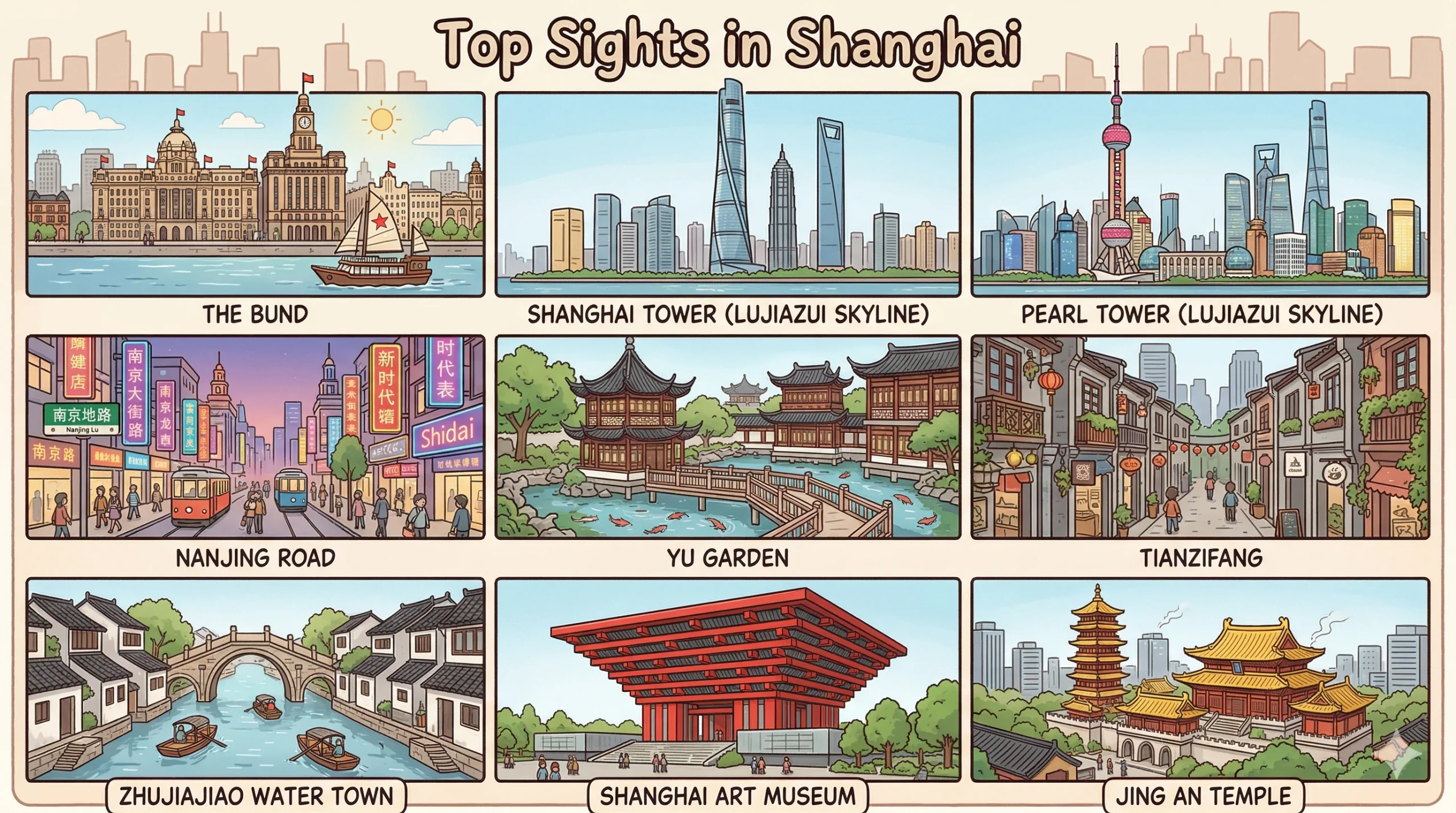
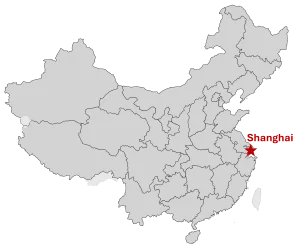
Shanghai is an incredibly modern and progressive metropolis. For me, the heart of China’s pop culture and innovation beats right here, making Shanghai the New York of the 21st century. If you are planning a trip to China, you simply cannot miss this city at the mouth of the Yangtze River. In this article, I will introduce you to the best sights in Shanghai that will make your trip unforgettable. Dive with me into this fascinating and fast-paced city!
The Skyline at the Bund and Lujiazui
The Bund (外滩 – Wàitān): It is the ultimate postcard motif of China and definitely one of the best sights in Shanghai. This extensive waterfront promenade is the perfect place for a stroll along the Huangpu River. The special thing here is the contrast: on your side, the west side of the river, you can admire the historical colonial architecture, while on the opposite side of the Huangpu River, the futuristic skyline of Lujiazui rises into the sky. Especially at night, when everything is illuminated, it offers a magical sight. The Bund shines in warm gold, while Lujiazui sparkles in bright colors and massive LED signs. But beware: it often gets very crowded here, especially near Nanjing Road. My tip: Just turn right and follow the Bund towards the south. The further you walk, the quieter it gets and you can enjoy the view in peace.
Lujiazui (陆家嘴 – Lùjiāzuǐ): Directly opposite, in the Pudong district, lies Lujiazui, the modern financial heart of the city. Hard to believe, but until the mid-1980s, this area was predominantly swampland! Today, some of the highest buildings in the world stand here. Many only know the view of Lujiazui from the opposite Bund. But there are also many observation decks between the skyscrapers, and I find that you only truly perceive the impressive size of these giants when you are directly surrounded by them. There is also a beautiful waterfront promenade on this side of the river, from which you get the perfect view of the warm golden-lit historical buildings of the Bund. For a special photo spot, I have a secret tip for you: The rooftop terrace of the IFC Mall in Lujiazui offers a grand view of the Pearl Tower and the surrounding skyline, yet it is hardly known and therefore usually pleasantly empty.
Shanghai from Above: Breathtaking Skyscrapers, Observation Decks, and Sights
To grasp the sheer dimension of this megacity, you have to go high up. The many high-rises in Lujiazui with their observation decks provide the perfect starting point for this:
Shanghai Tower (上海中心大厦 – Shànghǎi Zhōngxīn Dàshà): Right at the forefront is the Shanghai Tower. Because of its twisted shape, it is affectionately called the “Corkscrew.” It is the tallest building in China and the fourth tallest in the world. Its observation deck is located at a dizzying height of 562 meters and offers you—weather permitting—a view that reaches far beyond the city limits. Since this tower has the highest observation deck in Shanghai, no other skyscraper blocks your 360-degree view.
Jinmao Tower (金茂大厦 – Jīnmào Dàshà): Right next to it stands its “smaller” but older brother, the Jinmao Tower. It is the third tallest building in the skyline. Although designed by architects from Chicago, many traditional Chinese elements were incorporated into the construction. The facade is meant to resemble bamboo stalks and a pagoda. The Jinmao Tower also lures visitors with an observation deck at 340 meters. Here, on the 88th floor, you can walk along a 60-meter-long and 1.2-meter-wide glass-bottom skywalk without railings—fully secured, of course! If that’s too much of a thrill, I recommend the bar “Cloud 9” on the top floor of the Grand Hyatt Hotel in the same building. You can enjoy a fantastic view over the city with a cocktail and don’t have to pay extra for an entry ticket.
Shanghai World Financial Center (上海环球金融中心 – Shànghǎi Huánqiú Jīnróng Zhōngxīn): Directly next to the Shanghai Tower and the Jinmao Tower stands the third member of the “skyscraper trio”: the Shanghai World Financial Center. Because of the striking opening at the top, it is often called the “Bottle Opener.” Originally, the opening was supposed to be circular, but to avoid associations with the Japanese flag, the current shape was chosen. You can find contradictory information online, but according to my research, the observation deck is currently no longer open to the public and is only rented out for private events.
Oriental Pearl Tower (东方明珠广播电视塔 – Dōngfāng Míngzhū Guǎngbō Diànshì Tǎ): Another landmark of the city is the TV tower, the Oriental Pearl Tower. With its striking architecture of eleven different large spheres at various heights, it was the tallest building in China for a long time after its completion in 1994. Today, it offers a total of 15 observation decks, a revolving restaurant, and a worthwhile exhibition on the history of Shanghai on the ground floor.
Does Shanghai and its sights suit you best? My rating:
Here is a quick overview of whether Shanghai and its sights are the best choice for your travel itinerary:
| Authenticity | 🍌🍌🍌 (3/5) | Nature | 🍌 (1/5) |
| Crowds | 🍌🍌 (2/5) | Budget | 🍌🍌 (2/5) |
| Accessibility | 🍌🍌🍌🍌🍌 (5/5) | Lifestyle & Entertainment: | 🍌🍌🍌🍌🍌 (5/5) |
| History & Culture | 🍌🍌 (2/5) | Photogenic | 🍌🍌🍌 (3/5) |
Shopping Paradise Shanghai
If you love shopping, you will love Shanghai. The shopping malls here are on a completely different level than in Europe, and even if you don’t plan on buying luxury fashion accessories, it’s worth visiting a few of these malls. Find my Shanghai Shopping Guide here.
Nanjing Road (南京路 – Nánjīng Lù): The most famous and largest shopping street in Shanghai is Nanjing Road. It connects Tomorrow Square with the Bund. If you are good on your feet, I recommend starting at Tomorrow Square and strolling the entire length of the street until you hit the Bund. But be warned: during major Chinese holidays, it gets so crowded that even the military has to manage the street crossings to control the flow of people.
Besides the giant malls, there are also architectural highlights. A real eye-catcher is the LOUIS VUITTON Visionary Journeys exhibition in the building “The LOUIS”, which is designed in the shape of a massive yacht. You can’t get more luxury or brand staging than this!
Old Town, Gardens, and Temples
Despite all the modernity, Shanghai has preserved some of its traditional sides. However, you must be aware that due to Shanghai’s enormous growth, many historical districts and gardens have disappeared. While you can grasp the modern and exciting life of China in Shanghai, there are fewer “classic” historical sights. I’d like to bring the best of these historical sights in Shanghai closer to you:
Yu Garden (豫园 – Yùyuán): The Yu Garden is a famous example of traditional Chinese gardening, originally built in 1559 and fully renovated in the 1950s. Although I personally find the gardens in nearby Suzhou even more worth seeing, Yu Garden is the most beautiful garden in Shanghai itself. I find the hustle and bustle in the streets directly in front of the garden particularly charming. Old-style houses stand here, and it teems with tourists and vendors.
Jing’An Temple (静安寺 – Jìng’ān Sì): In the middle of the modern bustle and surrounded by shopping malls lies the Jing’An Temple. This Buddhist complex right in the center of Shanghai forms an almost surreal contrast to the neighboring skyscrapers with its golden roofs.
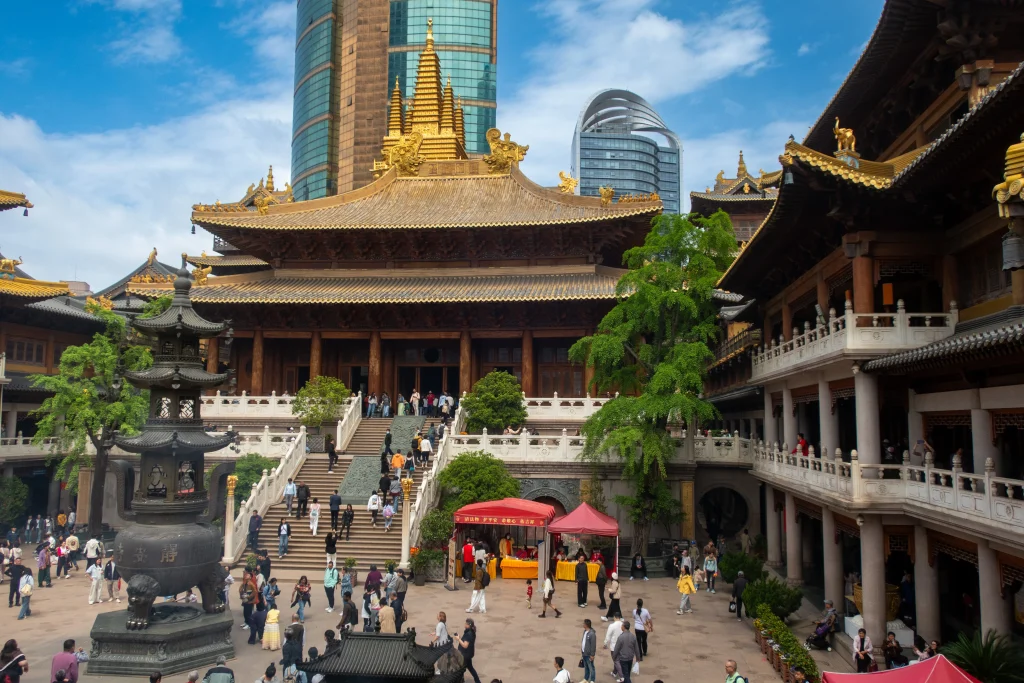
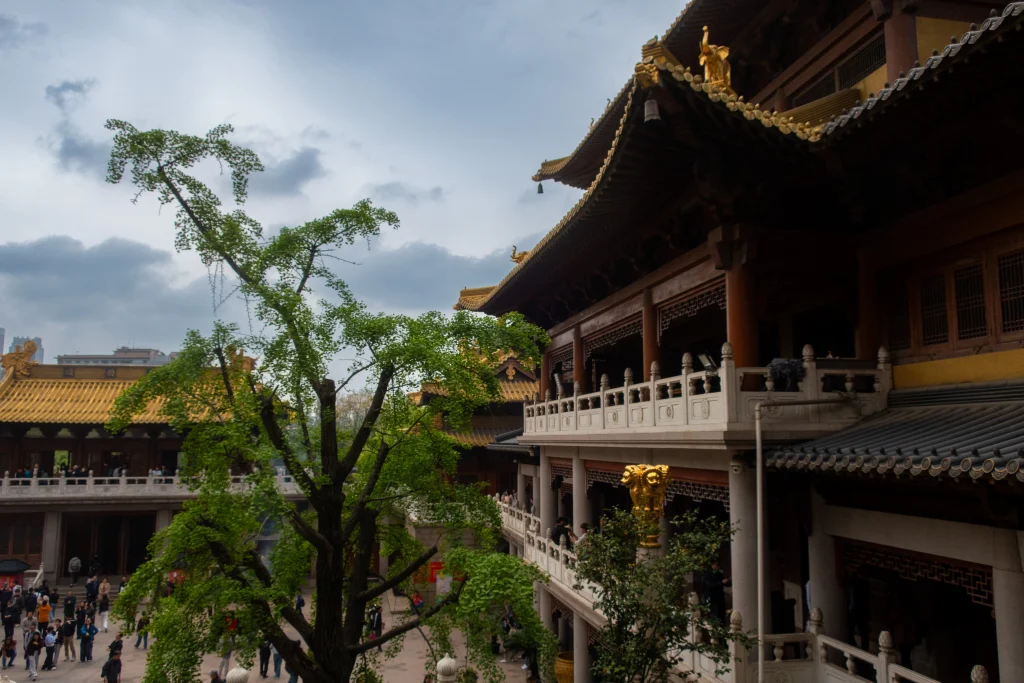
Longhua Temple (龙华寺 – Lónghuá Sì): If you prefer something more historical, you should visit the Longhua Temple. It was built as early as 242 AD, making it the oldest and largest temple in the city. The extensive complex includes several magnificent halls, numerous impressive Buddha statues, and a beautiful garden. A standout feature is the imposing, 40-meter-high Longhua Pagoda, which towers majestically over the temple grounds.
French Concession (法租界 – Fǎ Zūjiè) and Tianzifang (田子坊 – Tiānzǐfāng): The former French Concession breathes a completely different flair. In this area, where French settlers once lived, there are colonial buildings and villas from the early 20th century. In the small, winding alleys of Tianzifang, you will find many cute boutiques and small shops. If your feet get tired from all the walking, just sit down in one of the many cozy cafés and relax while watching the world go by.
People’s Park (人民公园 – Rénmín Gōngyuán): A beautifully laid-out park in the middle of the city. However, the so-called Marriage Market, which takes place here every Sunday, is particularly curious. Parents meet to exchange profiles of their marriageable children and find potential partners. They create posters and profiles with a lot of personal information (age, degree, income, health status, etc.), which are then read by other parents. What seems strange to us is a tradition with deep roots in China.
Zhujiajiao (朱家角 – Zhūjiājiǎo): The water town of Zhujiajiao is located about 50 kilometers west of the city center and looks back on over 1,700 years of history. Zhujiajiao was once an important trade center for rice and textiles. Today, you can view houses that are hundreds of years old along the waterways in this historical canal town. The Buddhist Yuanjin Temple and the Kezhi Garden are also well worth a visit here.
If you’d like to learn more about the history of Shanghai, you can find additional information in my separate article on the topic.
Technology, Museums, and Theme Parks
A globally unique means of transport in Shanghai is the Maglev Train (上海磁浮示范运营线 – Shànghǎi Cífú Shìfàn Yùnyíng Xiàn), the magnetic levitation train based on the German Transrapid system. It connects Pudong International Airport with the edge of the city center. Although the ride isn’t entirely practical—as you usually still need a metro or taxi afterward—it is an experience for tech enthusiasts. Experience the top speed of 430 km/h, covering the 30km distance in just 7 minutes!
Worthwhile museums in Shanghai include:
- Shanghai Museum (上海博物馆 – Shànghǎi Bówùguǎn): Exhibition of cultural treasures from past dynasties.
- Shanghai Natural History Museum (上海自然博物馆 – Shànghǎi Zìrán Bówùguǎn): Features dinosaur skeletons and detailed exhibits on the animal world.
- Shanghai Art Museum (上海美术馆 – Shànghǎi Měishùguǎn): Art museum with a strong focus on modern and contemporary Chinese art, featuring many rotating exhibitions.
Shanghai also has several theme parks that you can integrate into your trip:
- Disneyland (上海迪士尼乐园 – Shànghǎi Díshìní Lèyuán): Did you know that the largest Disney castle in the world is not in the USA, but in Shanghai? Beyond that, Shanghai Disneyland offers everything you expect, including many Disney characters and the famous parade.
- Legoland (乐高乐园 – Lègāo Lèyuán): A brand-new highlight is Legoland Shanghai, which opened in 2025 as the largest of its kind in the world. Here, visitors can marvel at impressive replicas of Chinese landmarks in huge Lego-themed worlds.
- Madame Tussauds (杜莎夫人蜡像馆 – Dùshā Fūrén Làxiàngguǎn): In my view, the wax museum has lost some of its old charm and is only really worth it if you are interested in Chinese celebrities.
Shanghai as a Springboard: Trips to the Surrounding Area
Shanghai is not only a fascinating city but also a central transport hub. Thanks to the best high-speed rail network, you can reach other sights and cities around Shanghai in no time (check my guide on train travel in China).
I particularly recommend Suzhou (苏州) with its world-famous classical gardens and idyllic water towns. You can reach it from Shanghai in just 30 minutes by high-speed train. Be sure to check my article on the best sights in Suzhou for inspiration.
Hangzhou (杭州), known for the picturesque West Lake, is also very easy to reach. You can get there in under an hour by high-speed train. Both cities offer a wonderful contrast to pulsating Shanghai and are perfect as both day trips and the next overnight destination on your journey.
My Personal Conclusion on the Sights in Shanghai
If you come to Shanghai expecting to find ancient temples on every corner, you might be disappointed at first. But that is exactly the secret of this city: Shanghai defines itself not through the past, but through the future. It is an incredibly livable and versatile metropolis where China’s latest trends are born.
For me, a trip here is so rewarding because Shanghai casts a completely new, modern light on China. It is the place where you can feel where the country is headed. Furthermore, the city serves as a central hub with two international airports and well-connected train stations, making it the ideal starting point for your China trip. I hope this overview of the best sights in Shanghai has inspired you to experience this metropolis for yourself.
Do you already have plans for your trip, or is there a place that particularly fascinates you? Let me know in the comments—I look forward to exchanging ideas with you!
10 thoughts on “The Best Sights in Shanghai: Your Essential Guide”