China is massive and covers several climate zones. While your breath freezes in the far north, travelers in the deep south might be lying under palm trees on the beach. That is the good news: you can plan your vacation to China all year round – you just need to know which place unfolds its full potential at what time. To help you keep track and enjoy your trip to the fullest, I have put together this compact guide for you. In another article, I have already listed the best travel destinations in China. But when actually is the best time to travel to China?
Avoiding the Chinese Holidays
Before we talk about the weather, we need to talk about the crowds. There is one golden rule for the best time to travel to China: avoid the major national holidays if you don’t want to get lost in seas of people. The three major “Golden Weeks” are particularly critical. Chinese New Year (春节, Chūnjié) follows the lunar calendar and usually falls in February. If you plan to travel during this time, be sure to check the exact dates in advance, as the entire country is on the move. Similarly, you should avoid Labor Day (劳动节, Láodòngjié), which starts on May 1st, and the National Day week (国庆节, Guóqìngjié), which begins on October 1st.
The Best Travel Destinations by Season
Winter (December – February): From Ice Palaces to Tropical Flair
Winter is a time of extremes. An absolute highlight is Harbin (哈尔滨, Hā’ěrbīn) in the north. This is where the world-famous Ice and Snow Festival takes place. The gigantic, illuminated ice sculptures look magical, even if it is bone-chillingly cold.
Those who prefer to avoid the cold flee to the subtropical south. Hong Kong (香港, Xiānggǎng) and Guangzhou (广州, Guǎngzhōu) offer mild, dry weather now – perfect for exploring the metropolises without the heat-induced hectic.
For a real island feeling, Hainan (海南, Hǎinán) with the city of Sanya (三亚, Sānyà) is the ideal destination. It is often referred to as the “Hawaii of China.” The tropical south of Yunnan (云南, Yúnnán), specifically Xishuangbanna (西双版纳, Xīshuāngbǎnnà), also offers ideal travel weather.
Spring (March – May): The Golden Time for Round Trips
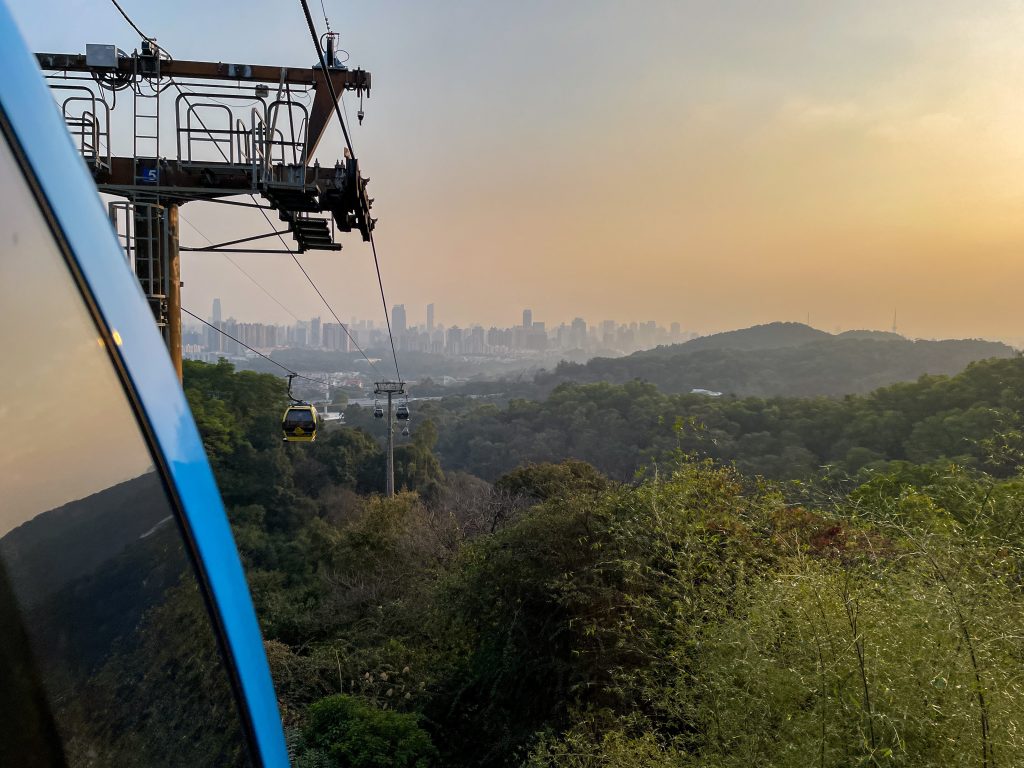
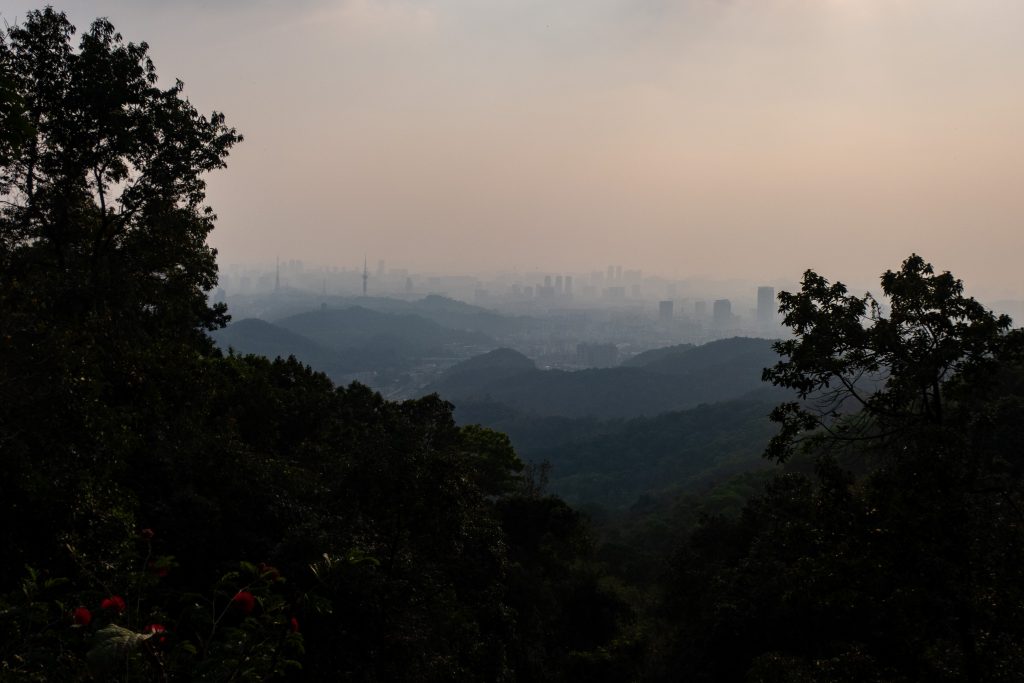
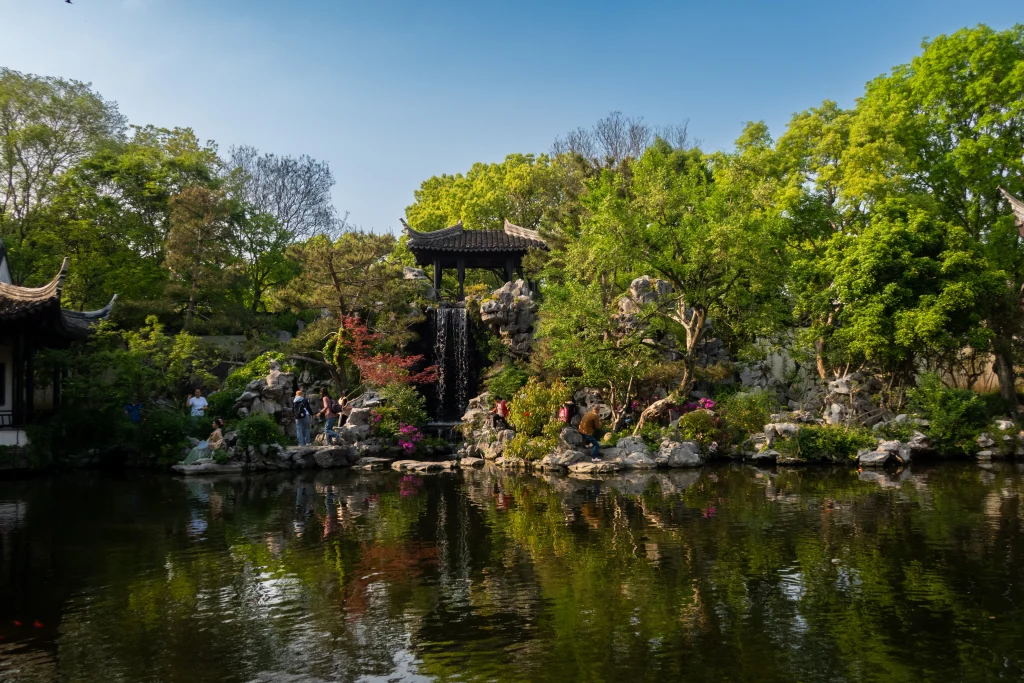
In spring, nature awakens and temperatures are pleasant almost everywhere in the country. Therefore, spring is a great time for a classic round trip through China. In the region around Shanghai (上海, Shànghǎi), the weather is particularly pleasant during this season. In the surrounding cities of Suzhou (苏州, Sūzhōu) and Hangzhou (杭州, Hángzhōu), the historical gardens are in full bloom.
In Guilin (桂林, Guìlín) and Yangshuo (阳朔, Yángshuò), the karst mountains and rice fields glow in a lush green. Even if it rains occasionally, this lends the landscape here a special beauty.
For adventurers and culture enthusiasts, spring is also a good time for Dunhuang (敦煌, Dūnhuáng) on the Silk Road to visit the Mogao Caves (莫高窟, Mògāo Kū) before the summer heat reaches the desert.

Summer (June – August): Escape to the Mountains
While central and southern China struggle with enormous heat and monsoon rains in the summer, the north and the high plateaus beckon. Inner Mongolia (内蒙古, Nèiménggǔ) impresses with endless green grasslands and a cool climate – staying overnight in a traditional yurt is a special experience at this time of year.
Summer is also the best time for Tibet (西藏, Xīzàng), as the oxygen content in the air is slightly higher and the nights are not too icy.
In Yunnan, Dali (大理, Dàlǐ) and Lijiang (丽江, Lìjiāng) are great options now. Due to their high altitude, it remains moderate here while you are literally being “cooked” in the coastal cities.
Autumn (September – November): Arguably the Best Time to Visit China
For me, autumn is absolutely the best time to visit China! The sky is clear, the smog in the north is lower, and the autumn colors are spectacular. In Beijing (北京, Běijīng), the weather is particularly pleasant at this time of year, and the “Golden Autumn” is a well-known term here.
Nature lovers are drawn to Jiuzhaigou National Park (九寨沟, Jiǔzhàigōu) near Chengdu (成都, Chéngdū), where colorful leaves are reflected in crystal-clear turquoise lakes. The Zhangjiajie National Park (张家界, Zhāngjiājiè) also shows its most spectacular side in autumn. The probability of clear views of the “Avatar Mountains” is significantly higher in the dry autumn than in the cloud-covered spring or summer.
Xi’an (西安, Xī’ān) is also perfect now for visiting the Terracotta Army (兵马俑, Bīngmǎyǒng) without frostbite or heatstroke. In October, the ancient ginkgo trees in the temples also glow in brilliant gold.
The Best Travel Time for Popular Destinations in China
Beijing & Tianjin: The Golden Autumn
The best travel time for trips to Beijing (北京, Běijīng) and Tianjin (天津, Tiānjīn) in China is autumn (September to October). During this time, it rarely rains, temperatures are mild, and visibility of the Great Wall is usually clear. Spring is also beautiful but is sometimes accompanied by dusty sandstorms from the desert.

Shanghai, Suzhou & Hangzhou: Best Travel Time in Spring and Autumn
Visit this region in April/May or in October/November. Summer here is extremely humid and hot, while June is often characterized by continuous rain. In autumn, however, it is dry and perfect for walks in the classic gardens of Suzhou (苏州, Sūzhōu). In Hangzhou (杭州, Hángzhōu), it is most beautiful in April when the peach trees bloom at the West Lake, or in October when the scent of osmanthus blossoms wafts through the entire city.

Chongqing & Chengdu: Best Travel Time in Spring and Autumn
Since Chongqing (重庆, Chóngqìng) lies in a basin and is considered the “oven” of China, you should strictly avoid the summer. Spring and late autumn are ideal for spicy hotpot. In Chengdu (成都, Chéngdū), the pandas often retreat to air-conditioned rooms in the summer – in spring and autumn, you can see them more active outdoors.

Zhangjiajie: Clear Views in Autumn
To truly see the famous Hallelujah Mountains, you should travel in September or October. During this time, visibility is clearest. In spring, the peaks often hang in thick fog, which can be mystical but often prevents the panoramic views.

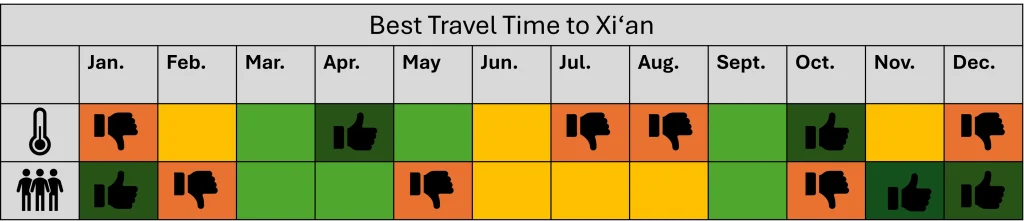
Xi’an: Best Travel Time in Spring and Autumn
The city of the Terracotta Army is most attractive in spring and autumn. Since Xi’an (西安, Xī’ān) is located inland, winters are very cold and summers are very dry and hot. In October, the ginkgo trees in the temples also glow a beautiful golden yellow.
Hong Kong & Guangzhou: The Best Destination in China in Winter
For Hong Kong (香港, Xiānggǎng) and Guangzhou (广州, Guǎngzhōu), the best time to travel is winter (November to February). In these months, there is a pleasantly mild climate with plenty of sunshine and low humidity. In contrast, you should rather avoid the summer (June to September): the combination of extreme heat, oppressive humidity, and the peak season for typhoons can make outdoor sightseeing very exhausting.

Yunnan: The Land of Eternal Spring
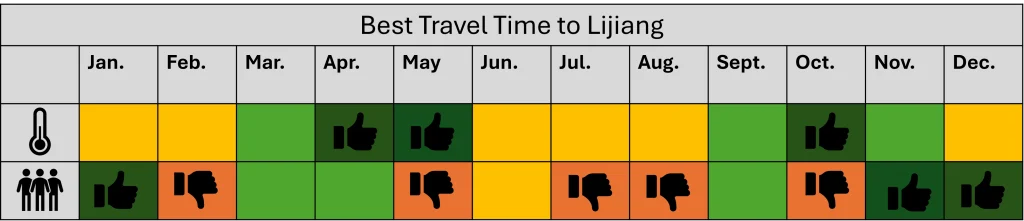
Yunnan (云南, Yúnnán) is known as the land of “eternal spring” and offers attractive destinations all year round due to its topography. While the summer (June to August) marks the rainy season, it is perfect due to the high altitude to escape the extreme heat in the rest of China – especially in cooler regions like Dali (大理, Dàlǐ) and Lijiang (丽江, Lìjiāng). In winter, on the other hand, you can enjoy tropical weather and plenty of sun in the south of the province around Xishuangbanna (西双版纳, Xīshuāngbǎnnà).