
Have you ever heard that in winter in China, people sometimes prefer to stand outside in the sun to warm up because it’s colder inside their homes? Sounds paradoxical, doesn’t it? If you travel through China in winter, you’ll quickly realize that whether a home is cozy and warm depends on its geographical location. Welcome to the world of district heating in China – a system that is as efficient as it is curious and literally divides the country in two.
The Invisible Border of District Heating: the Heating Equator on the Yangtze
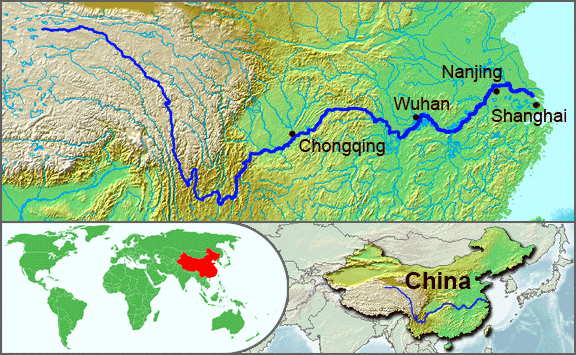
In Europe, we usually decide for ourselves when to turn up the thermostat. In China, however, there is an invisible border: the “heating equator.” Historically, it was decided that central district heating in China would primarily be installed in the north of the country.
The border runs roughly along the Yangtze River (长江, Cháng Jiāng). This leads to the bizarre situation that cities north of the river are heated by the state, while their sister cities on the south bank often have to manage without a permanently installed heating system. Even when the temperature drops below zero in the south, the heating remains off or simply does not exist.

November 15: When District Heating is Turned on in China
Another phenomenon is central control. In large cities in the north, such as Beijing (北京, Běijīng), district heating in China is not activated individually as needed in individual homes, but for entire regions at the same time. The heating season usually begins on November 15 and ends on March 15, although the authorities can be flexible in the event of extreme cold and bring the start date forward at short notice. Once started up, however, there is no stopping the heating plants: they continue to heat until the end of the season, regardless of whether spring-like temperatures prevail outside in the meantime. In the transition period until the official start date of the heating season, most households make do with air conditioning in heating mode until the powerful district heating network finally takes over the supply.
Behind the scenes of district heating in China, a technological change is currently taking place. Traditionally, the huge supply network has been based on a massive stock of coal-fired power plants, which originally formed the backbone of urban heat supply. However, in the wake of efforts to improve air quality, China is increasingly turning to innovative alternatives. Outdated plants are increasingly being replaced by highly efficient industrial heat pumps and the use of geothermal energy. Particularly impressive are the latest nuclear district heating projects, in which waste heat from nuclear power plants is fed directly into the urban network
My Personal Experience: Wearing a Jacket in the Living Room and Creative Heating Solutions
In southern China in particular, it is not uncommon to wear warm sweaters and even down jackets in the living room to reduce individual heating with air conditioning. Even in southern regions without a district heating network, temperatures can fall below 0°C in winter.
It is a real cultural experience to see how creative people can be when it comes to keeping warm. From heated desk pads to electric hand warmers and electric blankets for the sofa. Understanding China also means understanding these pragmatic (and sometimes rigid) systems. It shows how a country is trying to efficiently organize heat supply for millions of people – even if it sometimes means wearing an extra layer of clothing.
Have you ever traveled to China in winter? Were you lucky enough to have central heating, or did you have to bundle up in your thickest jacket? Write about your experience in the comments – I look forward to hearing from you.