
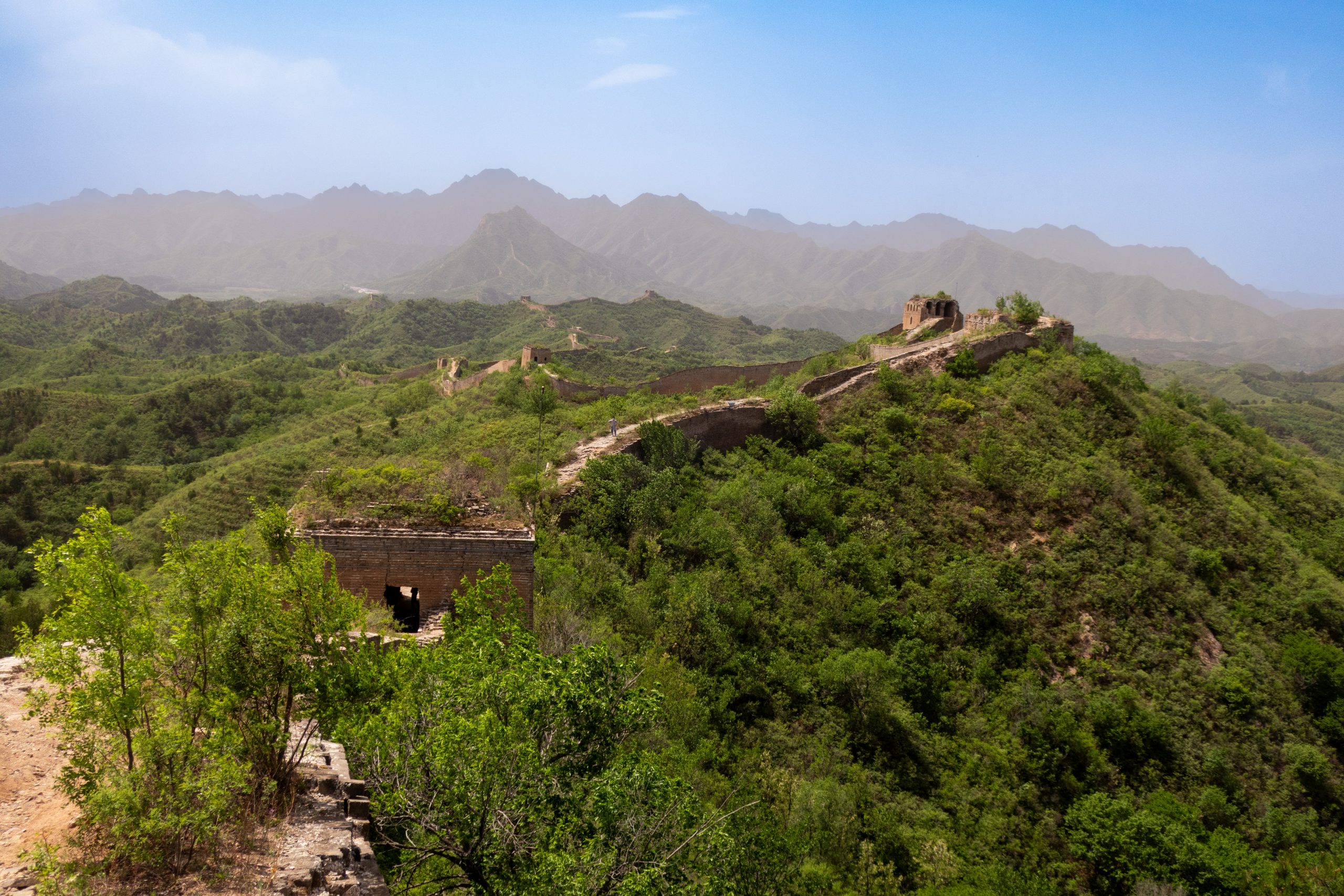

Have you ever wondered what it feels like to stand all alone on one of the wonders of the world? I can tell you: it is magical, and it is possible. For me, the Panlongshan Great Wall (蟠龙山长城, Pánlóngshān Chángchéng) is undisputed as the best place to experience the wild Great Wall in its most authentic form. I have been here several times and have brought my friends to this spot over and over again. Not a single person has been disappointed. If you are looking for an authentic experience off the beaten path, let me show you why this section is my absolute favorite.
Why the Wild Panlongshan Great Wall is a True Insider Tip
The Panlongshan Great Wall is a true hidden gem, likely because it is quite troublesome to reach compared to other sections. It is located near the historic fortress town of Gubeikou (古北口, Gǔběikǒu) on the outermost edge of Beijing. While more accessible spots like Badaling are often overcrowded, here you will find an almost untouched scenery.
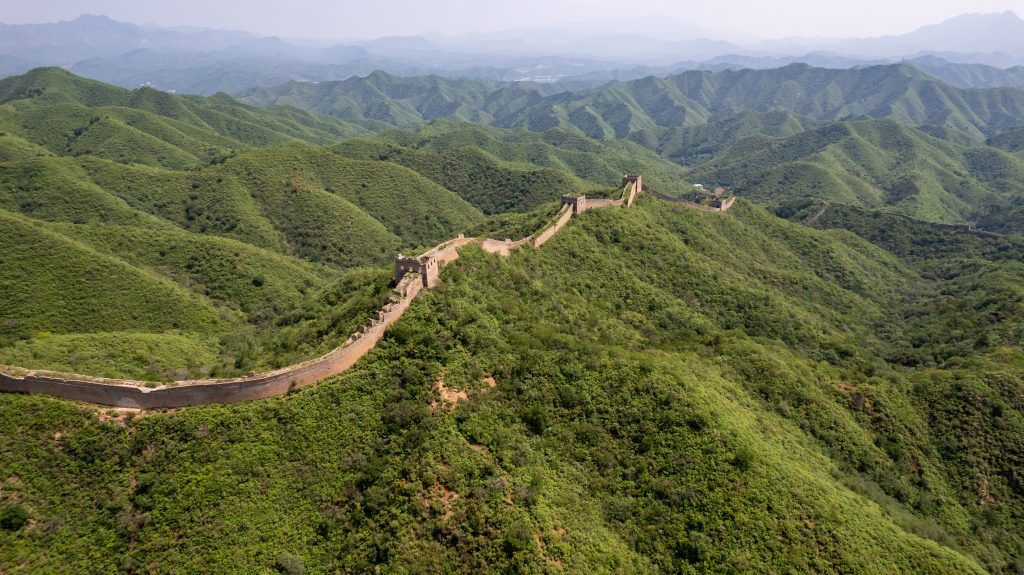
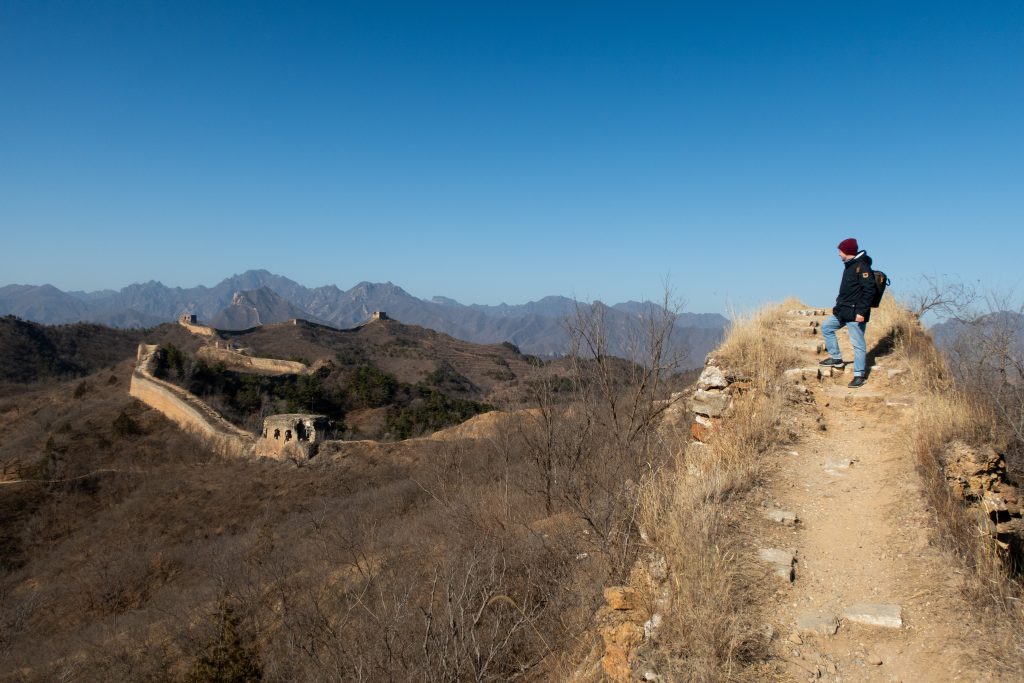
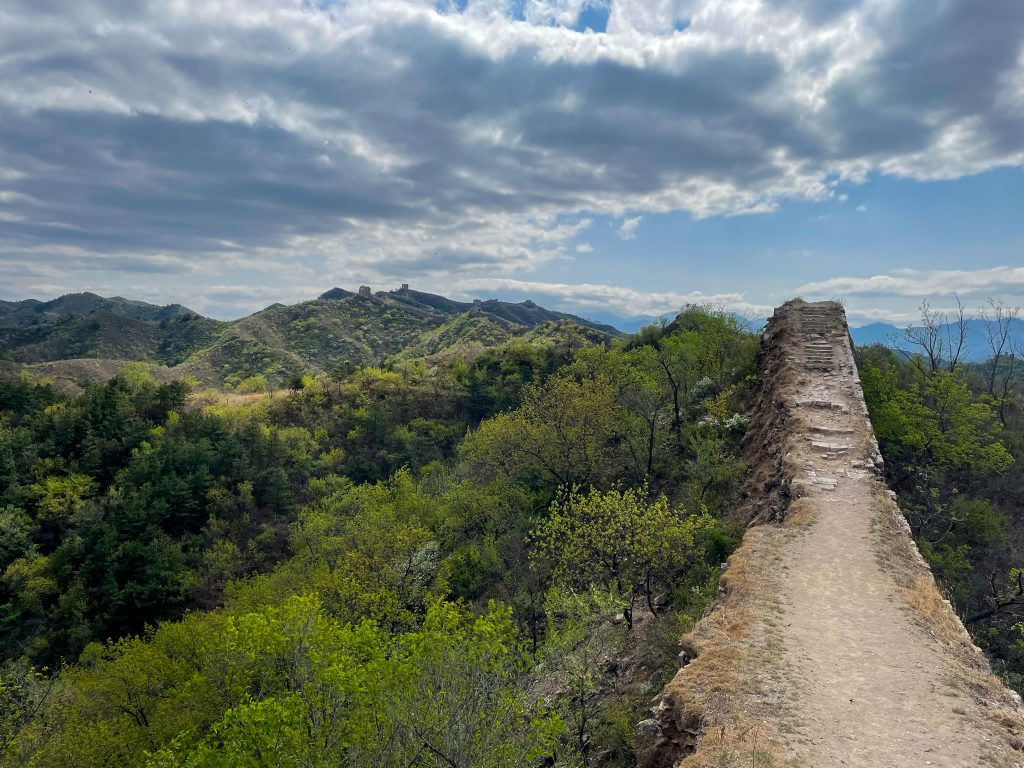
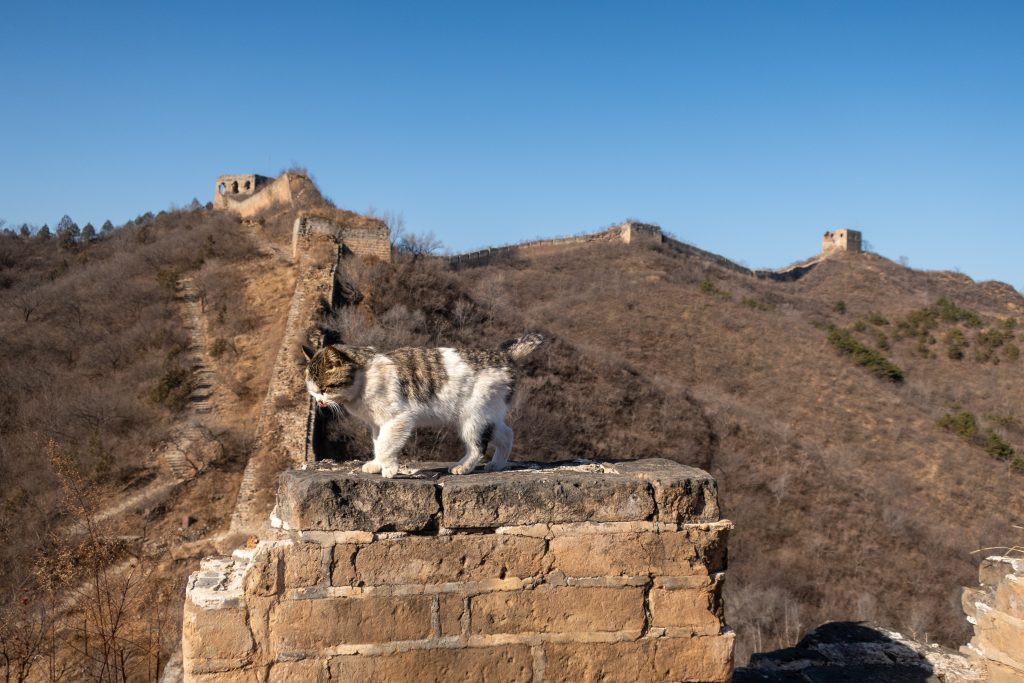
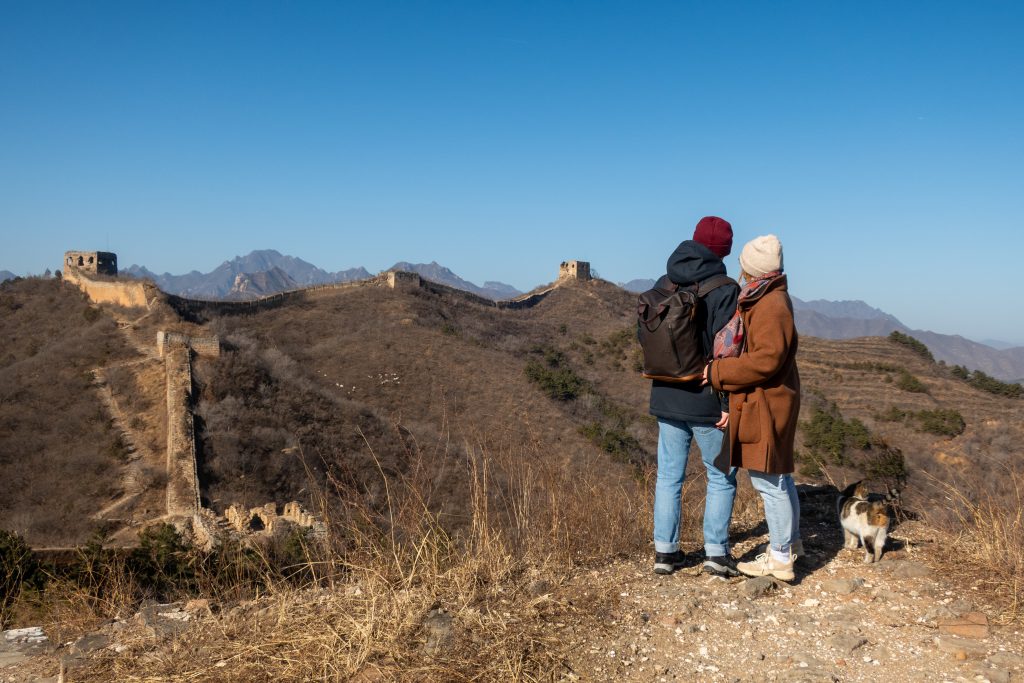
What makes it special: the wall has not been restored for tourism purposes. You experience the authentic, “wild” Great Wall of the Ming Dynasty. The original preserved towers stand close together, and the surrounding hilly nature is breathtaking. From the remains of the wall, you have a unique view of how the structure stretches endlessly along the ridge line. In some places, the bricks have disappeared over the centuries, leaving only the inner core of the wall. This makes hiking narrow and demanding at times, but that is exactly what makes this section so charming.
The name “Panlongshan” translates to “Coiled Dragon Mountain” (蟠龙山, Pánlóngshān). This name is derived directly from the shape of the mountain ridge, on which the Great Wall winds like a dragon. As part of the larger Gubeikou fortification system (古北口, Gǔběikǒu), this section was historically considered one of the most strategically important and fiercely contested points of the Great Wall.
Does the Panlongshan Great Wall Fit Your Travel Plan? My Rating:
Here is a quick overview to see if the wild Panlongshan Great Wall is the right choice for your itinerary:
| Auhenticity | 🍌🍌🍌🍌🍌 (5/5) | Nature | 🍌🍌🍌🍌🍌 (5/5) |
| Crowds | 🍌🍌🍌🍌🍌 (5/5) | Budget | 🍌🍌🍌🍌 (4/5) |
| Accessibility | 🍌 (1/5) | Lifestyle & Entertainment: | 🍌 (1/5) |
| History & Culture | 🍌🍌🍌🍌🍌 (5/5) | Photogenic | 🍌🍌🍌🍌🍌 (5/5) |
A Monument to History: The 24-Eyes Watchtower
A highlight along the hike is the 24-Eyes Watchtower (二十四眼楼, Èrshísì Yǎn Lóu). It bears this name because it used to have 24 windows or embrasures, making it the largest tower on this entire section. It is suspected that it once served as an important command center. Since this tower was built on the highest point of the section, you have a breathtaking view in both directions from here.
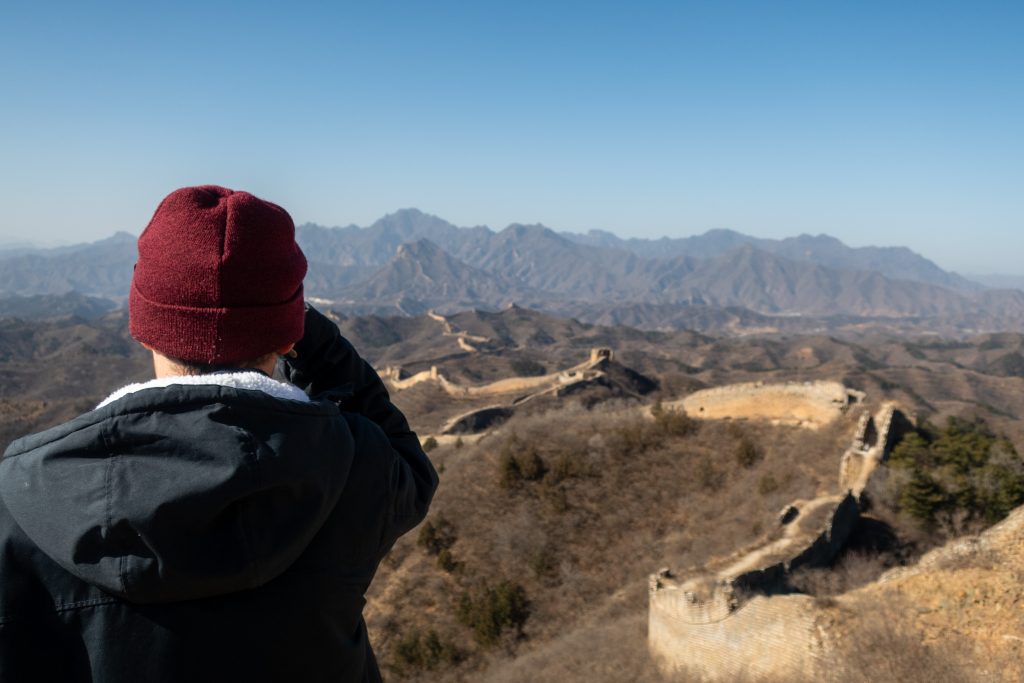
As far as the visibility allows, you can see countless towers on the surrounding hills. Even though you only see a tiny fraction of the entire structure, you get a true sense of the endless length of the wall for the first time up here. Today, unfortunately, only the west wall of the tower remains. This destruction is a silent testimony to the fierce battles during the War of Resistance against Japan in 1933. In total, you will find over 40 watchtowers on this section. Behind the tower, the path continues into a valley that eventually leads to the neighboring Jinshanling (金山岭, Jīnshānlǐng) section.

Condition of the Wall and Important Obstacles
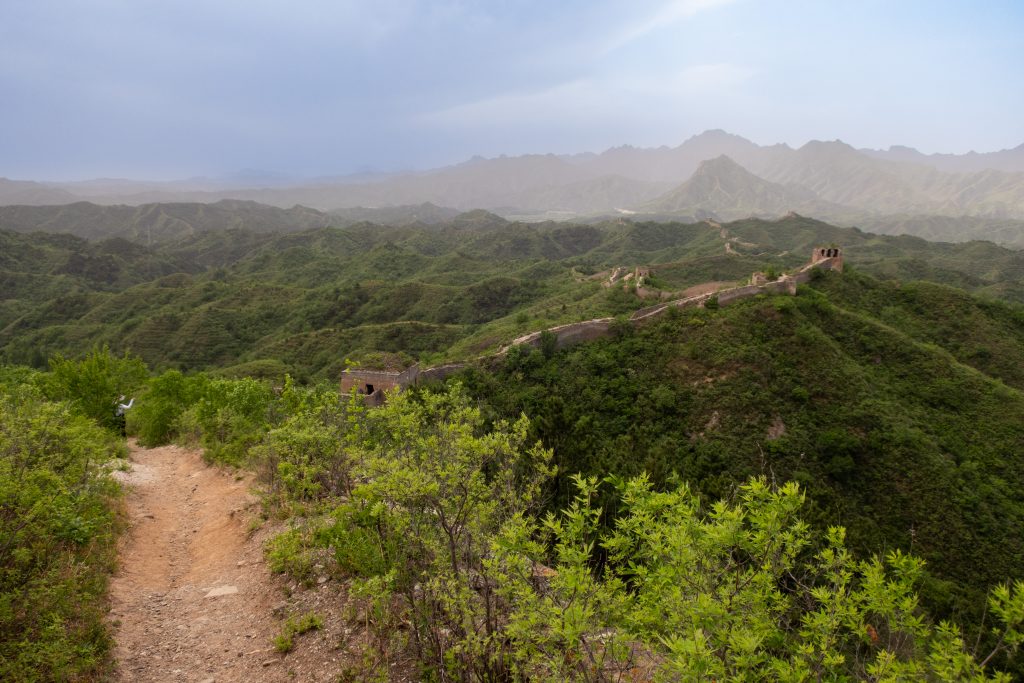
Although this section of the wall has not been restored, the path is easy to walk. Nevertheless, it is advisable to wear hiking shoes. In places where the wall is too narrow or dilapidated, there are obvious paths right next to the wall (mostly on the north side) that you can follow until it is possible to walk on top of the wall again. Also, note that especially during the winter months in Beijing, it is very dry, and the risk of forest fires is very high. Therefore, absolutely refrain from open fires and cigarettes during the hike.
A part of the Panlongshan Wall behind the 24-Eyes Watchtower is a military restricted area and strictly forbidden for visitors. But don’t worry, the barriers and warnings are very clear, so you won’t accidentally enter the restricted area. At this point, you can either turn back or you must bypass this area on the north side of the wall. However, this detour is not quite easy, as there are many forks and paths leading to neighboring villages and fields.
Practical Tips for Your Arrival
Reaching the wild Panlongshan Great Wall is the most demanding part of the trip, as it is hardly connected to public transport. Here are your options:
- By Car: If you have a Chinese driver’s license, you have a clear advantage. There are free parking spaces directly at the entrances.
- Private Driver: The most comfortable solution if you cannot drive yourself. Your hotel in Beijing can usually organize a driver for the whole day. This is ideal because they can drop you off at one point and pick you up at another (e.g., Jinshanling).
- Public Transport: Twice a day, a regional train runs from Beijing North (北京北站, Běijīng Běi Zhàn) to Gubei. The journey takes about 2.5 hours. From there, you have to hike or take a local taxi. You can find the train connection on trip.com (external Affiliate link).
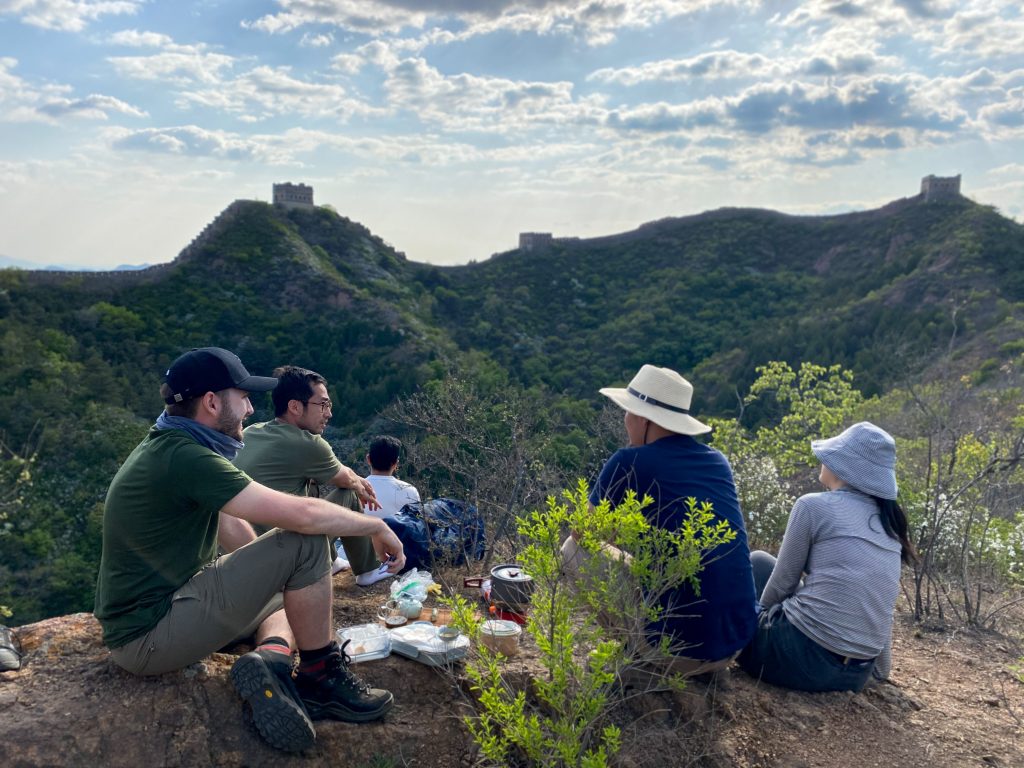
My personal tip: Spend a night in one of the small, cozy hotels in the village on-site. The locals are happy to help you with planning and know exactly which path is currently best to walk. Additionally, staying overnight in the village allows for a unique experience: get up early and, after a short 30–40 minute climb, enjoy the sunrise directly on one of the watchtowers. A moment you will never forget!
Your Hiking Routes: Flexible and Individual
You have two main ways to start the ascent to the Panlongshan Great Wall:
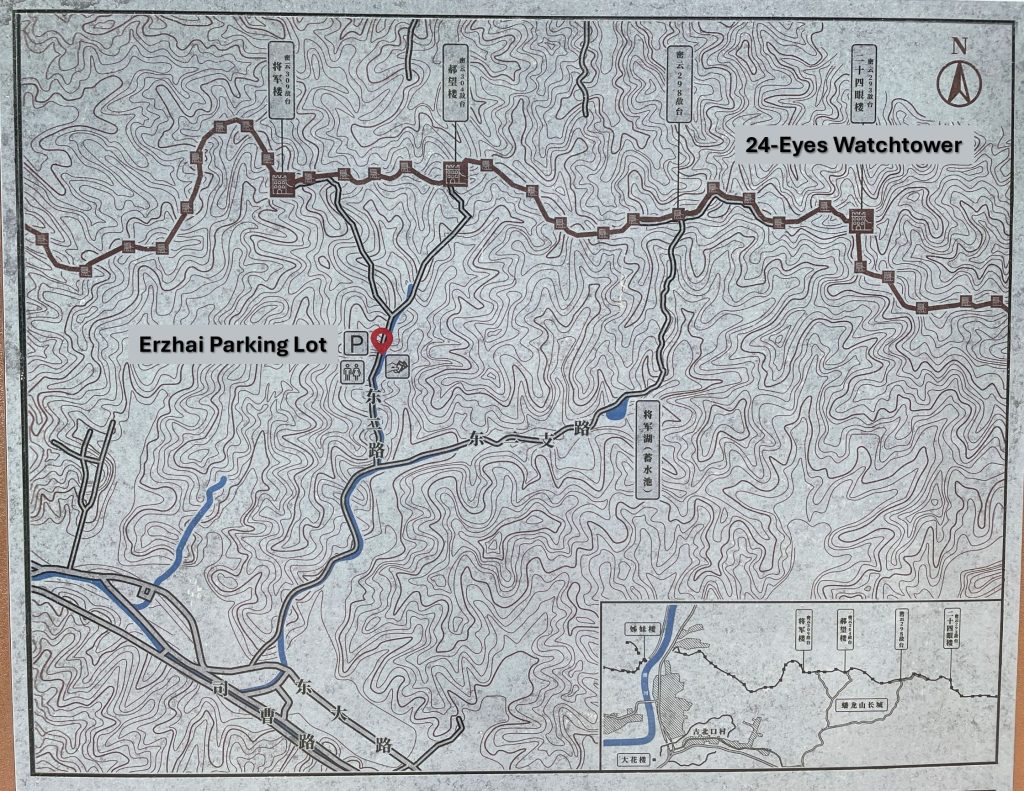
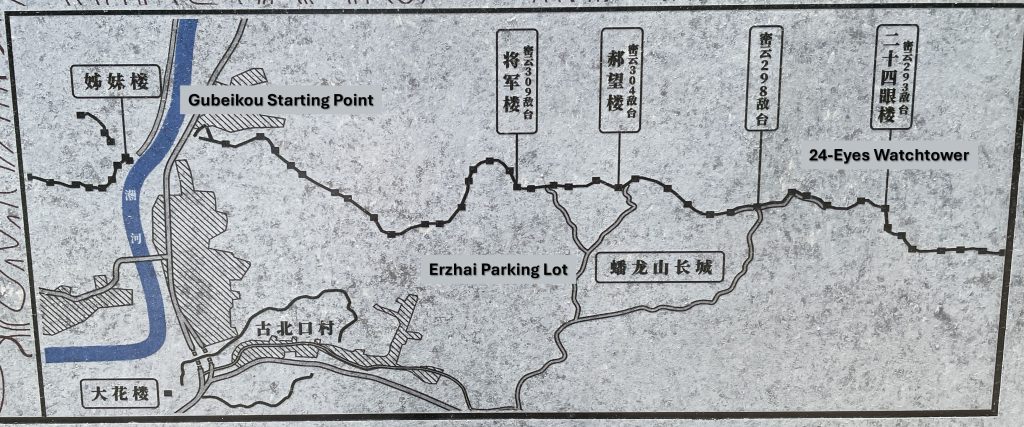
- Erzhai Variant: The easier variant is to head for the village of Erzhai (二寨, Èrzhài) in the north of Beijing. At the end of the village, there is a parking lot for your car or driver. The access starts right behind it. Usually, a local villager stands there and sells entrance tickets (payment via WeChat, Alipay, or cash possible). After a small climb, you reach the Great Wall. Once there, turn right towards the east and follow the wild wall to the 24-Eyes Watchtower.
- Gubeikou Variant: A slightly longer but rewarding ascent starts directly in Gubeikou (古北口, Gǔběikǒu). The path is somewhat hidden but leads you over the entire section from Gubeikou to the 24-Eyes Watchtower.
From the 24-Eyes Watchtower, you can either walk back to Erzhai or take the hidden, somewhat overgrown descent into the valley. If you follow this hiking trail, you will reach the Jinshanling Great Wall (金山岭长城, Jīnshānlǐng Chángchéng), where you will find local drivers at the official entrance who will take you back to Gubeikou or Erzhai. Depending on the route, the hike takes between 2 hours (Erzhai loop) and 7 hours (Gubeikou to Jinshanling) and is therefore flexibly adaptable.
My Personal Conclusion
For me, there is hardly a place that captures the history and wild beauty of China better. The mixture of the rough, unrestored architecture of the Great Wall and the surrounding wild nature is impressive every single time. It is not a comfortable walk like in Badaling, but that is exactly why the wild Panlongshan Great Wall remains in your memory as a true adventure. Even if planning the journey takes a little more time, the experience will richly reward you.
Have you ever been to an unrestored section of the wall or do you have questions about planning? Feel free to write to me in the comments – I look forward to exchanging ideas with you!


1 thought on “Panlongshan: An Insider Tip for the Wild Great Wall of China”