

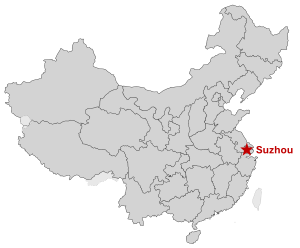
Have you ever wondered where old, romantic China meets the future? If you are looking for a city that enchants you with its quiet canals while impressing you with modern architecture, then Suzhou is exactly the right place for you.
Often underrated and standing in the shadow of its big neighbor Shanghai, Suzhou is, for me, one of the most versatile cities in the country. Located just 30 minutes from Shanghai by high-speed train, entirely new impressions with plenty of history and water town romance await you here. I’m taking you on a journey through my favorite places in this city, which is called the “Venice of the East” for good reason.
Want it even more compact? I’ve put together a ready-to-go itinerary for your 3-day stay in Suzhou.
The Art of Gardens: Green Oases in the City Center
Suzhou is world-famous for its classical gardens, which were originally created by wealthy private merchants as retreats. Most of these UNESCO World Heritage sites are compactly located in the historical center. Since they are so close to each other, several gardens can be wonderfully combined and explored on foot in a single day.
Humble Administrator’s Garden (拙政园 Zhuōzhèng Yuán): This garden is considered the “Mother of all Chinese Gardens” and is the most magnificent example of Ming Dynasty garden art. What sets it apart from other gardens in Suzhou is, above all, its monumental size and the dominant role of water: about three-fifths of the total area consists of ponds and watercourses that connect all buildings and islands through delicate bridges and winding corridors. A masterpiece of Chinese landscape architecture that perfectly unites water, stone, and plants.

If you prefer things a bit quieter, Suzhou luckily offers plenty of choice. These smaller gardens are just as beautiful as their famous counterpart but with significantly fewer tourists. Here is a short selection:
- Canglang Pavilion (沧浪亭 Cānglàng Tíng): It is the oldest of these gardens and is characterized by its unique architecture, where the garden visually merges with the water canal outside the complex.
- Master of Nets Garden (网师园 Wǎngshī Yuán): This rather compact garden impressively demonstrates how perfect harmony between residential buildings and landscape art can be created on a smaller footprint.
- Lion Grove Garden (狮子林 Shīzǐ Lín): It is famous for its bizarre rock formations, which are said to resemble playing lions.
- Garden of Cultivation (艺圃 Yì Pǔ): This garden is rather simple and therefore offers you a quiet, unique atmosphere that makes it a true retreat.
- Lingering Garden (留园 Liú Yuán): It impresses with its extensive halls and the artistic division into different landscape areas, which offer new, framed views time and again through cleverly placed windows and passages.
- Couple’s Garden Retreat (耦园 Ǒu Yuán): This romantic garden is characterized by its symmetrical layout, reflecting the theme of partnership and harmony in traditional Chinese architecture.
Suzhou’s Old Town: Temples and City Walls
Beyond the gardens, Suzhou offers impressive historical monuments that tell the story of the region’s thousands years old history.
Tiger Hill (虎丘 Hǔqiū): This site houses the famous “Leaning Pagoda” of Suzhou. The hill on which the pagoda was built offers a great view over the city. Naturally, this pagoda is also surrounded by beautifully landscaped gardens and ponds. There is also a very impressive bonsai exhibition here.
Panmen Gate (盘门 Pánmén): Panmen Gate is the only surviving city gate in China that controlled both land and waterways. The moat is completely preserved and encircles the entire old town. A perfect starting point for an extended walk along the old fortifications.
Pingjiang Road (平江路 Píngjiāng Lù): This street runs directly along a canal. Here you will find many small, though also very touristy, shops. A good destination if you want to discover the flair of the water towns without leaving the center of Suzhou.
Shantang Street (山塘街 Shāntáng Jiē): Another well-known street running along a canal. This historical street unfolds its full magic especially in the evening, when the many red lanterns are illuminated.
The Suzhou Museum (苏州博物馆, Sūzhōu Bówùguǎn): Designed by world-famous architect I. M. Pei, who also designed the glass pyramid of the Louvre in Paris, the museum combines traditional elements like white walls and dark roofs with futuristic, geometric lines. It is a prime example of how Suzhou links its deep history with modernity.


The Water Towns: A Glimpse into Traditional China
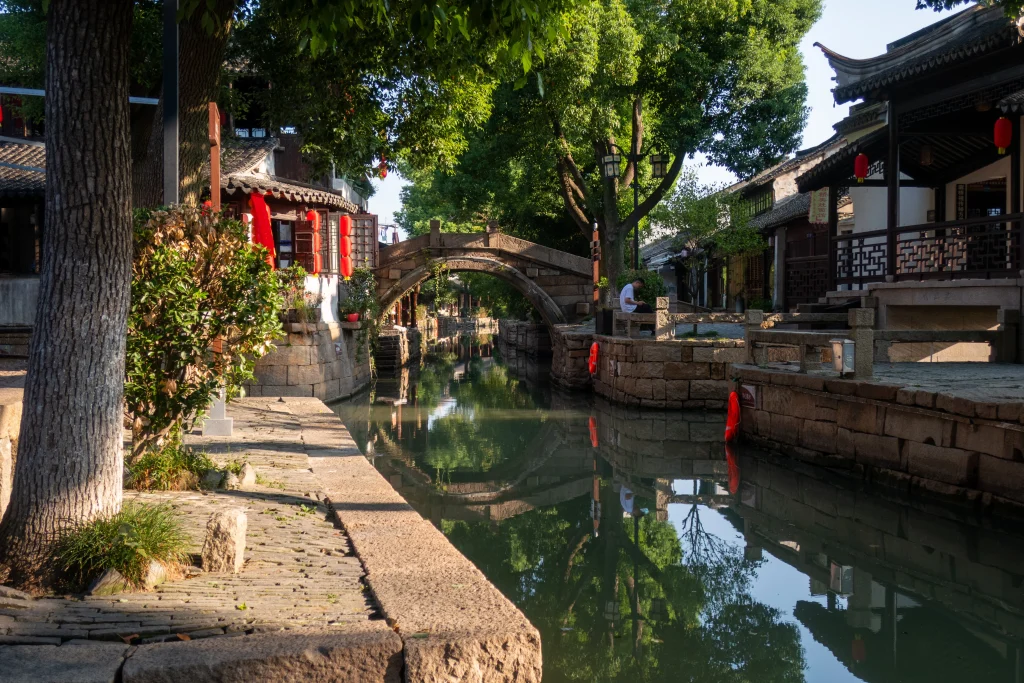
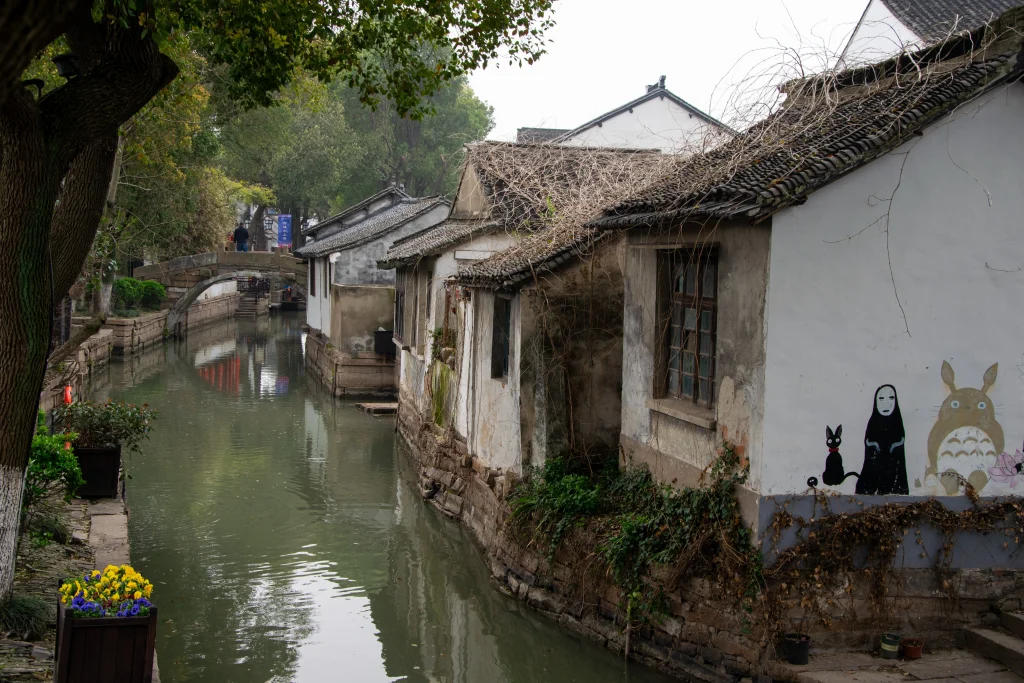
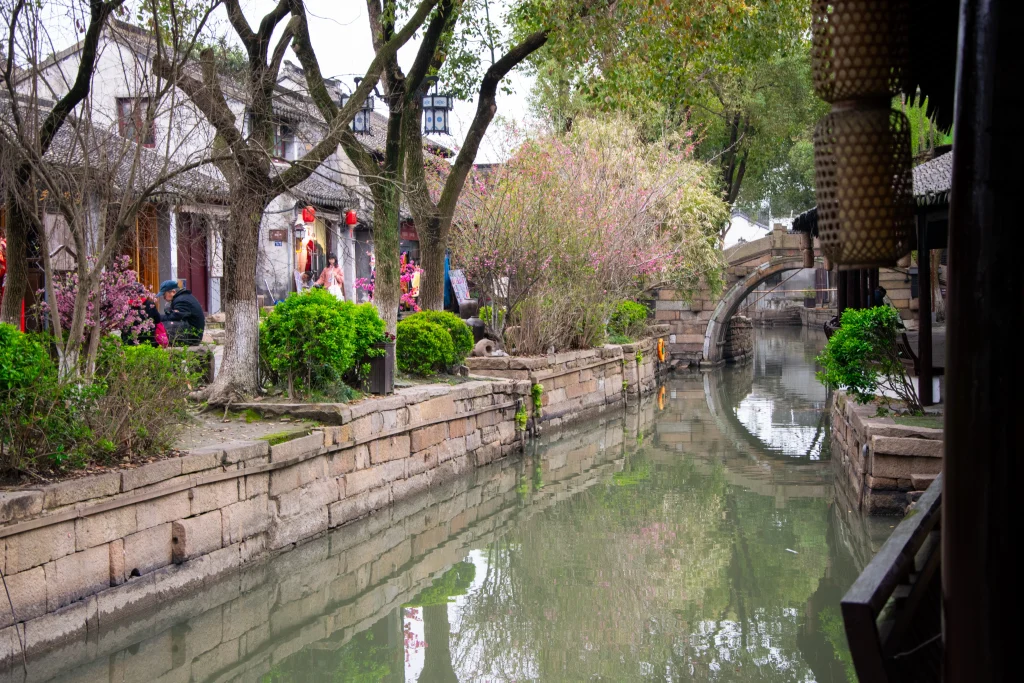
In addition to Suzhou’s own historical old town, the region is famous for its water-rich villages. These water towns act like living museums and offer you the traditional image of China often seen in old drawings with stone bridges, gondolas, and houses directly on the riverbanks.
Tongli (同里 Tónglǐ): This beautiful water town is closest to Suzhou and is therefore the perfect candidate for an uncomplicated day trip where you can discover the famous “Three Bridges” and the UNESCO World Heritage Tuisi Garden.
Zhouzhuang (周庄 Zhōuzhuāng): As one of the largest and best-known water towns, it offers an impressive backdrop of canals and old residences. My tip here is an overnight stay to experience the atmosphere in peace once the day tourists have left.
Luzhi (甪直 Lùzhí): My personal favorite and insider tip impresses with its original and local charm. Even though there are fewer classic sights here than in the larger neighboring towns, life on the canals here feels particularly authentic and original.
Contrast Program: Modern Suzhou at Jinji Lake
You can feel that Suzhou is one of China’s richest cities today (thanks to high-tech and the automotive industry) at Jinji Lake (金鸡湖 Jīnjī Hú). Here stands the impressive Suzhou Center (苏州中心 Sūzhōu Zhōngxīn), a shopping palace with spectacular architecture. The landmark there is the striking skyscraper, affectionately called “Long Johns” (秋裤) by the locals due to its shape. I highly recommend a walk along the shore, especially at night when the skyline is reflected in the lake.
Relaxation and Excursions: Taihu Lake & Wuxi
If you need a break from city life, Taihu Lake (太湖 Tàihú) offers everything for a short getaway: hiking, cycling, or a boat trip. Those who want to see even more can take a detour to Wuxi – a neighboring city with equally charming old towns and waterways.
Culinary Arts in Suzhou: Crabs and Noodles
You cannot leave Suzhou without trying the local specialties. The city is famous for its crabs, which are farmed in the surrounding lakes. My absolute favorite meal is the combination of fresh crab meat and the typical Suzhou noodles. For me, this mixture is a reason to keep coming back to Suzhou every time.
Conclusion: Why I Love Suzhou So Much
For me, Suzhou is one of the few places where you can immerse yourself so compactly in China’s deep culture and history without sacrificing the comfort and dynamics of a modern city. The mix of quiet moments in the gardens and the lively bustle at Jinji Lake makes the city so unique for me.
I hope this overview has made you want to stroll through the alleys of Suzhou yourself. It’s worth it, I promise!
6 thoughts on “My Top Activities in Suzhou: Discovering the “Venice of the East””