
Have you ever wondered what China feels like beyond the glittering skyscrapers of Shanghai or the imperial power of Beijing? My path to Dunhuang was pure coincidence—a stroke of luck during a longer journey. But what I found there changed my image of China forever. Far away from the well-developed coastal regions, a world opens up in Gansu Province that is so much more diverse, intercultural, and mystical than what you see in the major cities in China. In this article, I want to take you to a place where the history of the Silk Road still lingers in the wind of the dunes and show you the best sights in Dunhuang.

The Gateway to the Silk Road: Getting to Dunhuang
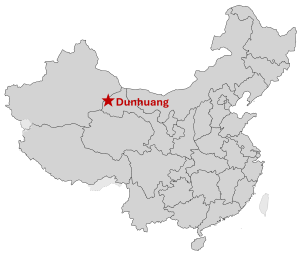
Dunhuang is located in Gansu Province and, to be honest, requires a bit of planning. Since the city lies off the usual high-speed rail tracks, the journey itself is part of the adventure. However, those who make it here are rewarded with an authenticity that is second to none.
The most straightforward way to reach Dunhuang is by plane. Major hubs like Beijing, Shanghai, or Xi’an offer direct flights, at least on selected days. The highest frequency of direct flights is from Lanzhou, the provincial capital, which is why you will find many connections with a layover there. If you prefer traveling by train, you should plan for extra time: Dunhuang Railway Station (敦煌站 – Dūnhuáng Zhàn) is currently not served by modern high-speed trains. A journey from Lanzhou by train can take between 8 and 12 hours.
Does Dunhuang Fit Your Travel Plan? My Rating:
Here is a quick overview to help you decide if Dunhuang and its sights are the best choice for your itinerary:
| Authenticity | 🍌🍌🍌🍌 (4/5) | Nature | 🍌🍌🍌🍌 (4/5) |
| Crowds | 🍌🍌🍌🍌 (4/5) | Budget | 🍌🍌🍌🍌 (4/5) |
| Accessibility | 🍌 (1/5) | Lifestyle & Entertainment: | 🍌 (1/5) |
| History & Culture | 🍌🍌🍌🍌🍌 (5/5) | Photogenic | 🍌🍌🍌🍌 (4/5) |
The Mogao Caves and Yulin Caves
When we talk about the best sights in Dunhuang, the Mogao Caves (莫高窟 – Mògāo Kū) are at the top of the list. This UNESCO World Heritage site possesses a historical and cultural significance that left me utterly speechless. Over centuries, monks and merchants carved hundreds of temples into the cliffs, filled with intricate murals and stunning Buddha statues. To protect this heritage, access is strictly regulated. You must register your tickets in advance; the visit takes place as part of a guided tour that leads you deep into the religious world of the ancient Silk Road. You can find more information about the Mogao Caves and their cultural significance directly on the official UNESCO website (external link).
For those who want to dive even deeper, you can visit the Yulin Caves (榆林窟 – Yúlín Kū). They are located a bit further out and are often called the “little sister” of Mogao. They are less crowded and give you the chance to observe the detailed paintings in a much quieter atmosphere.
Oases and Sand Dunes in Dunhuang
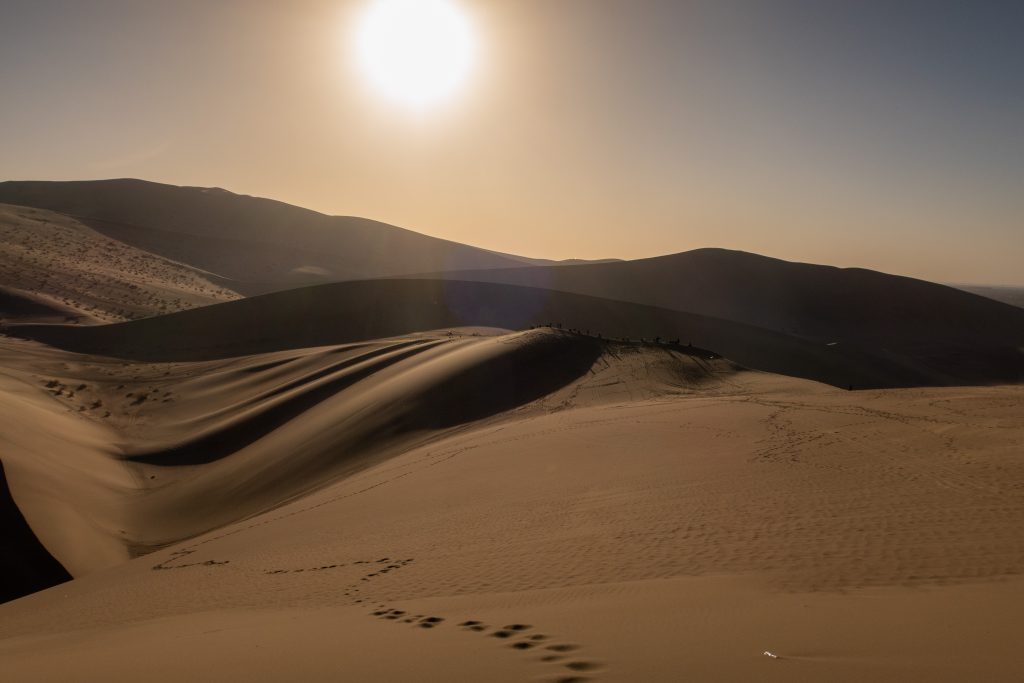
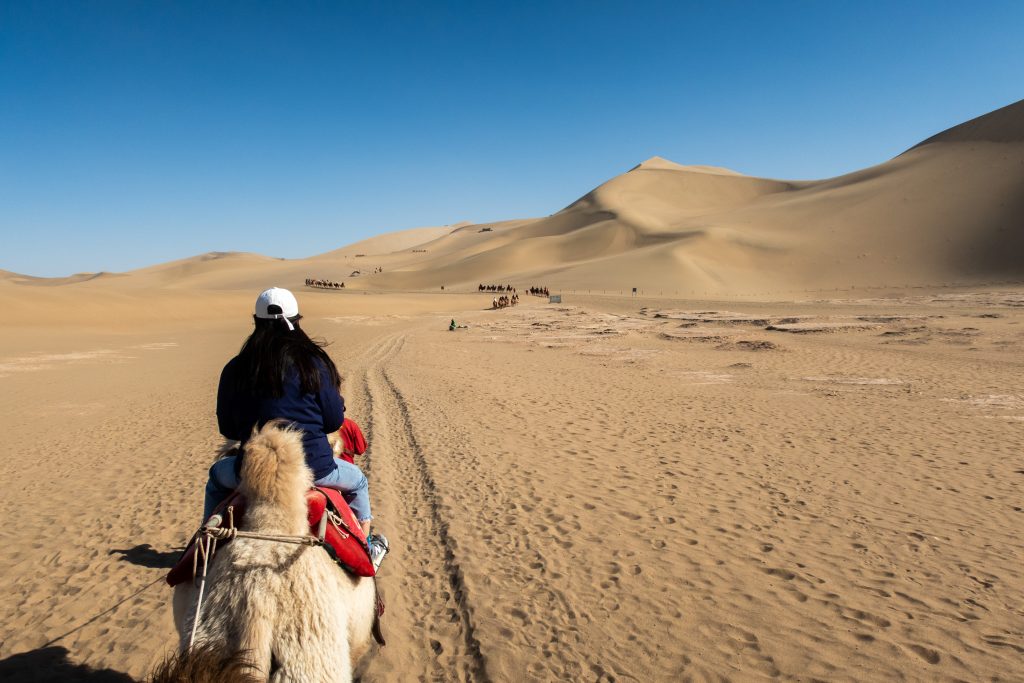
An absolute highlight is the Crescent Lake (月牙泉 – Yuèyáquán) in the middle of the Singing Sand Dunes (鸣沙山 – Míngshā Shān). It is an almost surreal sight: a green oasis in the shape of a crescent moon, surrounded by gigantic, golden dunes. This place develops a magical energy, especially at sunset. When the last rays of sun turn the desert into deep orange, you can climb the dunes and enjoy the view. There are guided camel rides along the dunes and the opportunity to slide down the steep sandy slopes on sleds.

Yumen Pass and Yangguan Pass: Guardians of the Silk Road
Far from the restored wall near Beijing, you will find the raw, real witnesses of the past here. The Yumen Pass (玉门关 – Yùmènguān) and the Yangguan Pass (阳关 – Yángguān) once marked the end of the Chinese Empire. Today, you can see the crumbling ruins of old barracks and the excavated remains of the Great Wall from the Han Dynasty. These fortresses were the last outposts of civilization before travelers had to cross the dangerous Taklamakan Desert. It is an impressive feeling to see remnants of the historical border fortifications thousands of kilometers away from Beijing. Here, I gained a completely new sense of the staggering scale of the Great Wall.
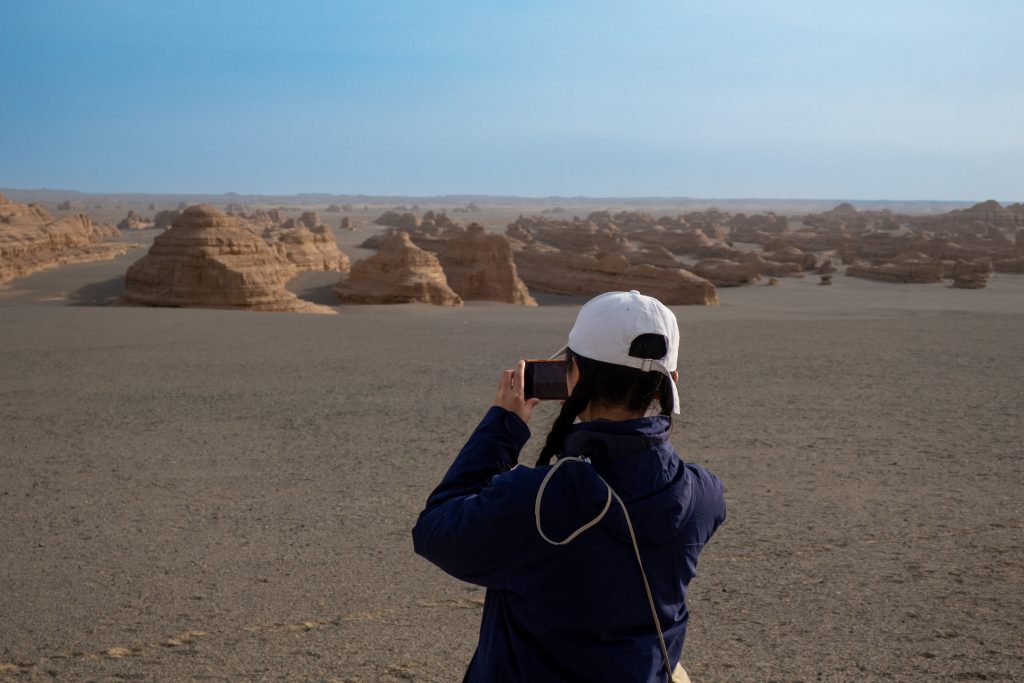
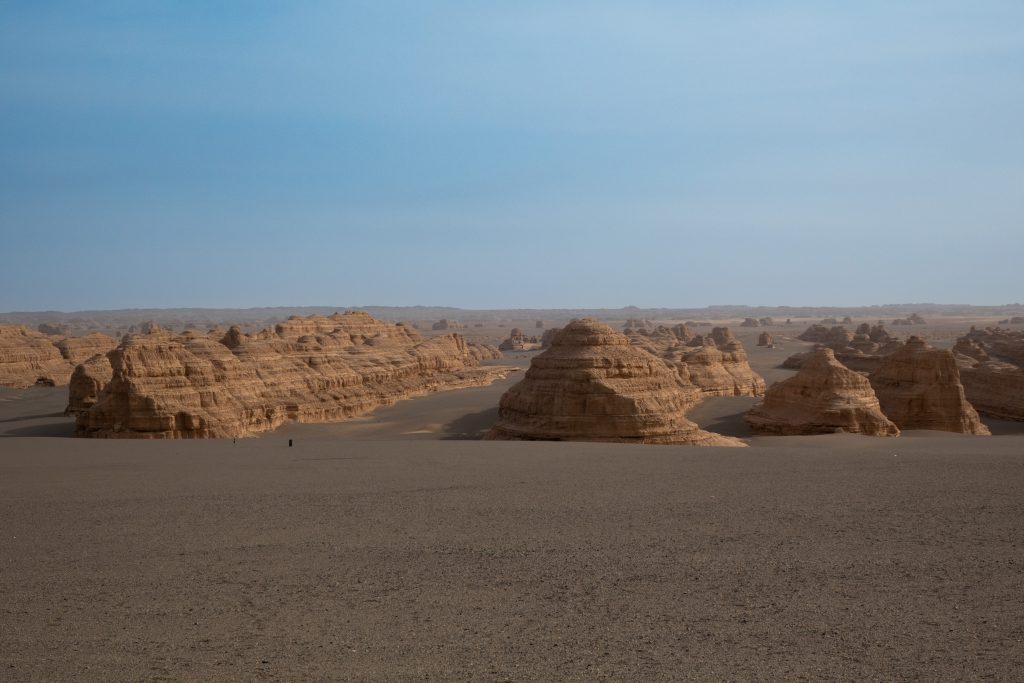
A contrasting program is offered by the “Ghost City” in the Yadan National Geopark (雅丹地质公园 – Yǎdān Dìzhì Gōngyuán). Here, wind and erosion have created bizarre rock formations that look like ghost ships or mythical creatures rising from the ground. To protect this fragile environment, the area is only accessible by shuttle bus. Independent hikes are unfortunately not allowed. Nevertheless, the vastness and unique shapes of this bizarre stone landscape are extremely worth seeing.


My Personal Conclusion: Why the long journey to the sights in Dunhuang is worth it
Dunhuang opened my eyes. It showed me that China does not just consist of megacities, but possesses a deeply rooted, intercultural soul. When you are woken up in the morning by the calls of the muezzin and watch the sunset from the top of a sand dune in the afternoon, you can almost forget that you are still in China. If you are looking for the real, historical China beyond the tourist trails, then take the journey upon yourself. The best sights in Dunhuang will reward you.
Have you ever thought about a trip to Western China or perhaps even been to Gansu Province? I am so excited to hear about your experiences and thoughts in the comments—let’s discover these wonderful corners of China together!

3 thoughts on “The Best Sights in Dunhuang”