Is your first business trip to China just around the corner? If so, there is likely one question weighing on your mind: How do I survive a complicated business dinner in China? You can find plenty of articles online about complex etiquette rules, looming social gaffes, and heavy drinking sessions. But let me reassure you: A business dinner in China is actually an incredibly exciting experience and far less stiff than you might think. It’s less about perfectly following every etiquette manual and more about the interpersonal connection. Furthermore, a good host in China is well aware that formalities differ between China and Europe and will do their best to guide you through the process. In this article, we’re going to dispel the fear, and I’ll give you practical tips for your business dinner in China so you can enjoy your next dinner with confidence and joy.
The Significance: More Than Just a Dinner
In China, sharing a meal is the heart of every business relationship. While we in Europe often try to strictly separate our private and professional lives, dinner is the opportunity for your Chinese partners to step out of their formal roles. The goal is to build a personal relationship (关系, guānxi). Without this foundation of trust, long-term business is hardly possible. So, be aware: the real work often doesn’t happen in the meeting room, but at the round table.
The Invitation and the Restaurant
Declining a joint meal is considered rude, as it is seen as a lack of interest in the relationship. However, during multi-day workshops, it is perfectly fine to focus on one shared evening. The more often and regularly you meet, the less of an expectation there is for a daily dinner. Your host will choose the restaurant carefully, as prestige plays a major role. If you have any allergies or dietary restrictions, communicate them directly when you receive the invitation. Your host genuinely wants you to enjoy the food—a disappointed guest would result in a “loss of face” for them.
Seating: A Small Science
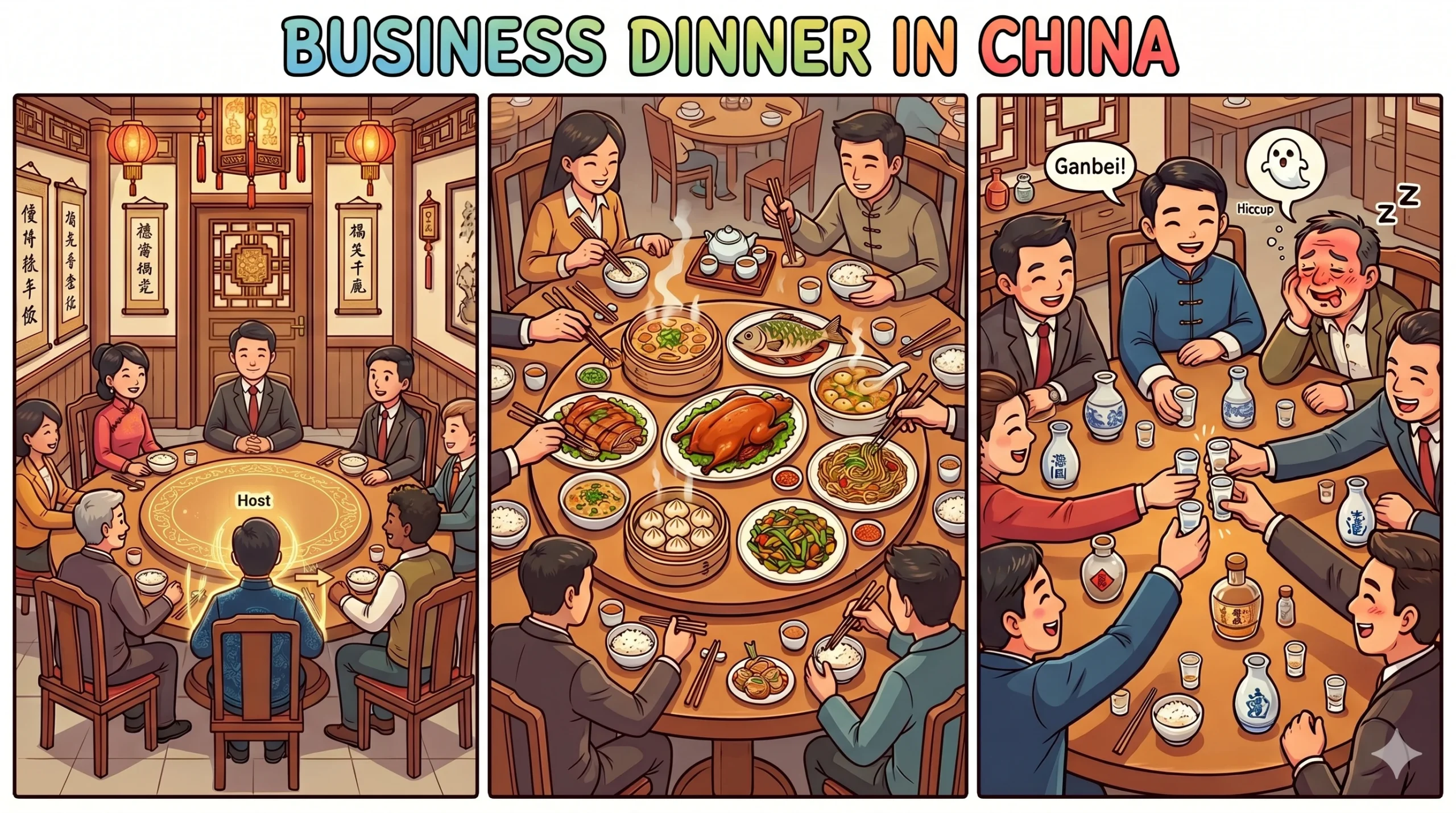
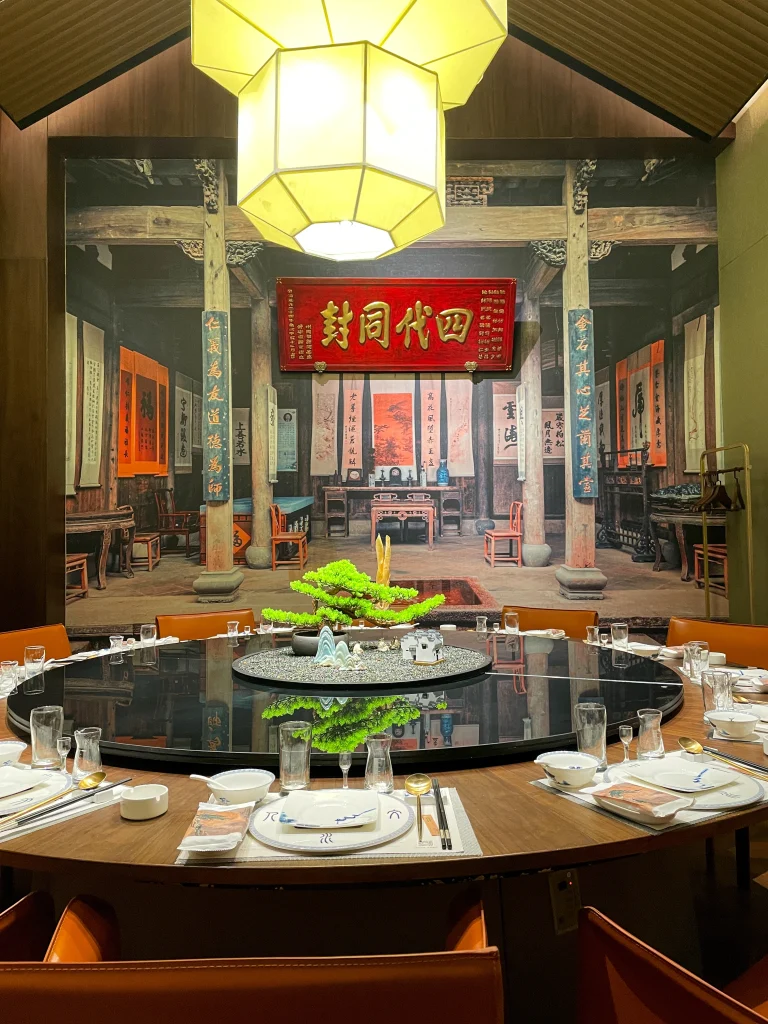
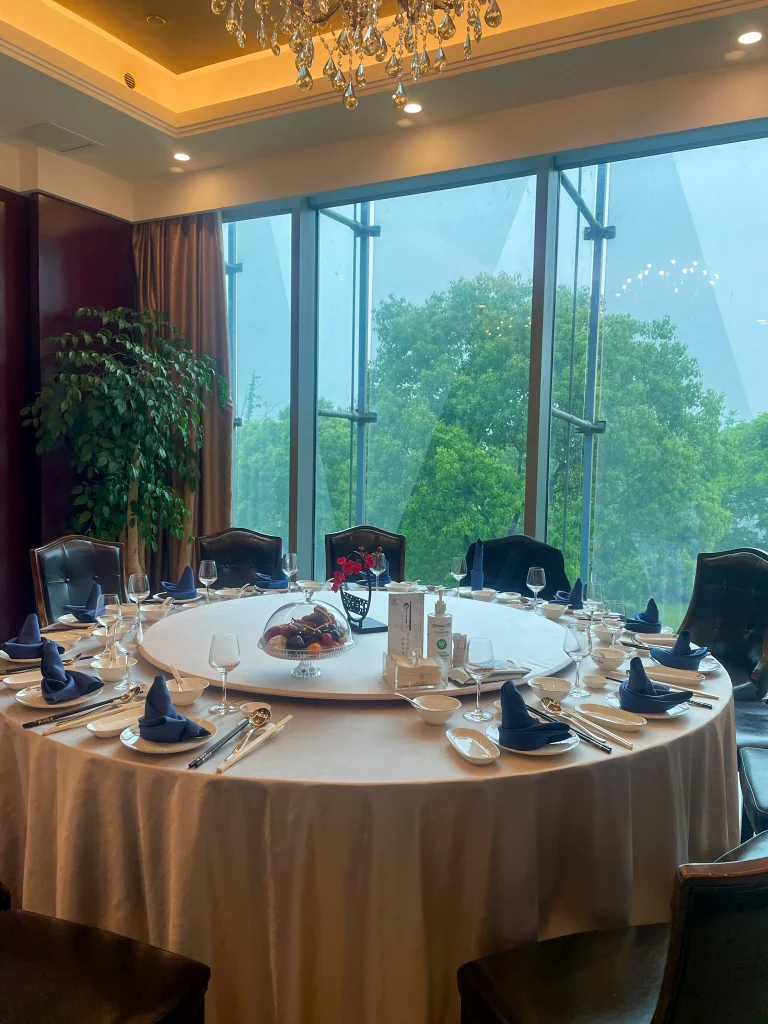
Usually, a separate room, a so-called Baojian (包间, bāojiān), is reserved in a restaurant. These rooms offer privacy, often featuring their own sofa area and sometimes even a private restroom. When it comes to seating arrangements, the golden rule is: Don’t just sit anywhere. In China, there are many rules regarding the correct seating at a round table, and it is a science in itself. Generally, the seat facing the door is reserved for the guest of honor. That is either you as the guest or a high-ranking manager from your business partner’s side. After that, guests are arranged according to their rank starting from the guest of honor. Just wait a moment until you are assigned a seat—that way, you’re guaranteed to do everything right. If you are traveling with a team, make sure your highest-ranking colleague is placed directly next to the head of the host company.
Tips for the Business Dinner Process
During the meal itself, the rules aren’t actually that different from Europe. If you remain polite and respectful, you’ve already won. Usually, the dishes are pre-ordered and served in a specific order. The process usually follows a fixed pattern:
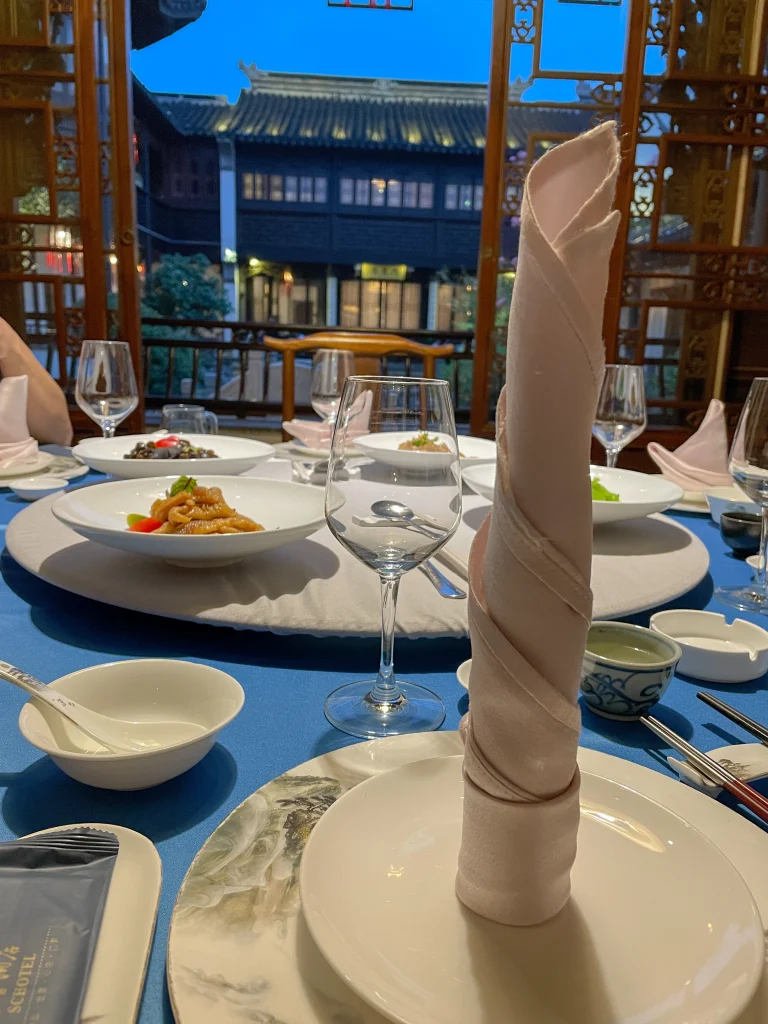
- Cold Appetizers: These are often already placed on the rotating tray in the center of the table.
- Warm Main Courses: Meat, fish, and vegetables are served one by one.
- Carbohydrates: Rice or noodles come at the very end. Why? The host doesn’t want you to fill up on “cheap” fillers before you’ve had a chance to try the delicacies.
- Fruit: As soon as fruit is served, the meal is officially over.
Eating is done with chopsticks. If you have trouble, most restaurants are prepared and can bring you a fork. However, if you really can’t handle chopsticks at all, you should generally consider carrying 1-2 sets of disposable cutlery with you in China. The dishes are shared. Be careful not to scoop too large a portion onto your own plate. This is especially relevant for dishes that are clearly counted—sometimes there is only one portion of certain delicacies per person on the plate, and you don’t want the others to go empty-handed. On formal occasions, it is also considered impolite to take food directly from the serving plate and put it into your mouth. Take it from the shared plate first and place it on your own plate. In some restaurants, there are now even two pairs of chopsticks—one for taking food from the shared plate and one for your own plate to your mouth. By the way, contrary to old clichés, it is considered impolite in today’s modern business world to smack your lips loudly or burp. And don’t worry about the quantities: way too much is always ordered. An empty table would mean the host under-calculated. So, it is perfectly fine (and even intended) to leave leftovers.
Tips for Drinking Culture: “Ganbei” and Baijiu
This is where the biggest cultural difference lies, and I have a few tips for you: Alcohol is often part of a business dinner in China, and sometimes in significant quantities. The standard drink is Baijiu (白酒, báijiǔ). Careful: this is often translated as “white wine,” but it is a high-proof grain liquor! Traditionally, everyone gets a small carafe of Baijiu, which you then pour into a tiny shot glass yourself.
If you don’t want to drink alcohol, that is, of course, perfectly fine. Explain to your host why you aren’t drinking—religious reasons or allergies are well-known in China and won’t lead to major discussions. However, you must then stick to your guns—accepting just “one glass of beer” won’t work. Often, juice is ordered for those not drinking so they can still participate in the toasts. As a rule, a toast is made every time before drinking—either as a whole group or more casually with the person sitting next to you. A sign of respect is to hold your glass slightly lower than your counterpart’s when clinking. When toasting, you say in Chinese Ganbei (干杯, gānbēi): this translated means “dry glass” and is expected quite literally. Especially when drinking Baijiu, it is a sign of respect to finish the glass completely. You will also notice that compliments are often exchanged during toasts. Incidentally, it is not considered unprofessional in China to get slightly tipsy. On the contrary: it shows that you are letting your guard down and being honest with one another.
Business and Gifts
It is not uncommon to address business matters at the end of the dinner. Be prepared and use this to your advantage if necessary. My tips: Concessions are often easier to obtain during a business dinner in China than in a meeting room, and for your Chinese business partners, these promises—no matter how tipsy—are just as binding as in a formal meeting. If gifts are exchanged at the end, it is part of the etiquette not to open them immediately unless explicitly asked to do so. Receive the gift with both hands and thank them politely.
My Personal Conclusion on a Business Dinner in China
When I think back to my first business dinner in China, I mostly remember the warmth and hospitality of the Chinese business culture. Yes, the first rounds of Baijiu take some getting used to, but they break the ice in a way a PowerPoint presentation never could. Despite all the tips, my most important piece of advice for your business dinner in China is: Be yourself, be curious, and if you are unsure, just watch your hosts and follow their lead. The Chinese are very patient with foreigners and appreciate it greatly when you engage with their culture.
I hope you also have some time during your business trip to explore this fascinating country over the weekend. If you are looking for inspiration, check out my article on the best travel destinations in China!
Have you ever experienced a business dinner in China or do you have any other tips? Feel free to write them in the comments—I look forward to hearing from you!