
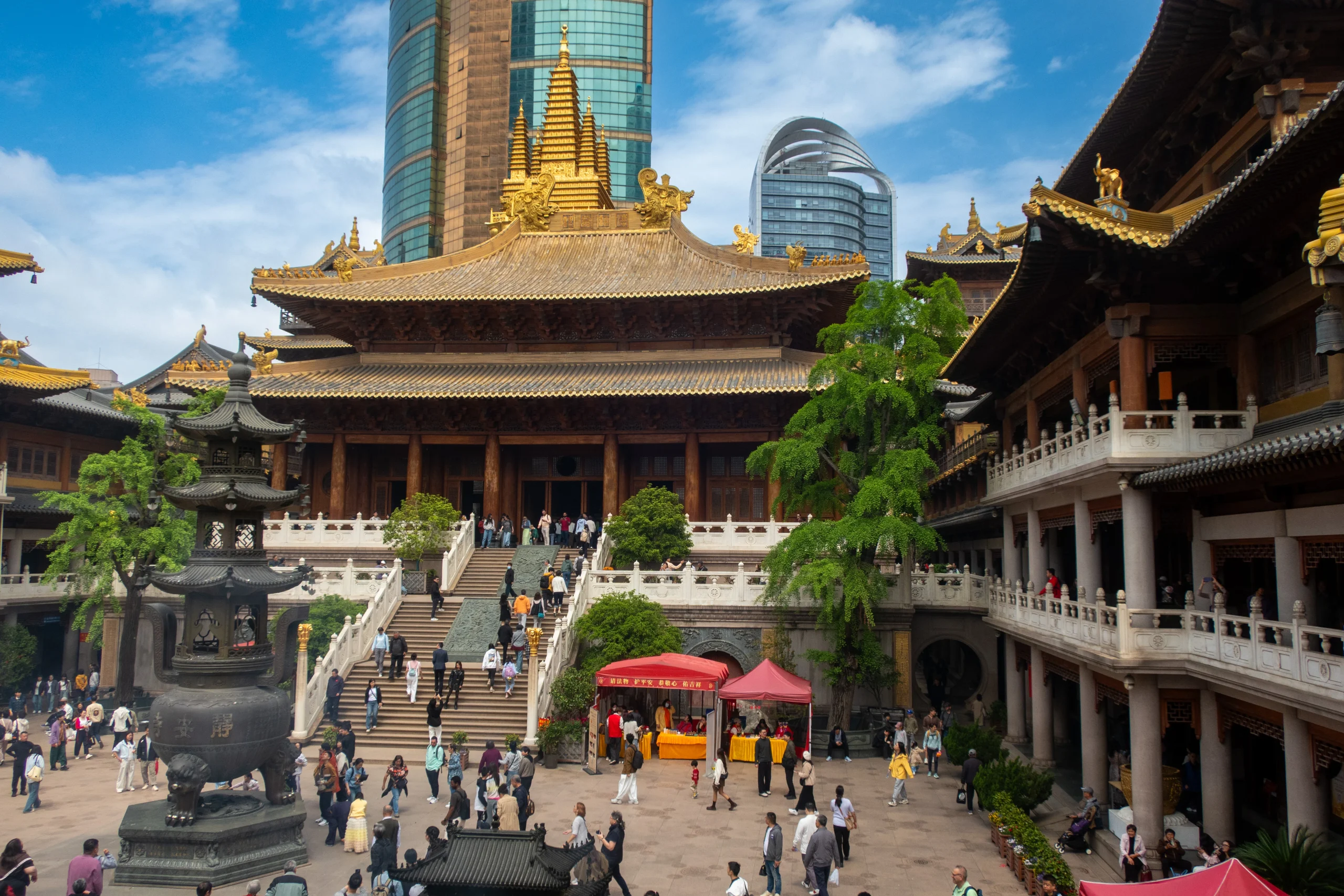
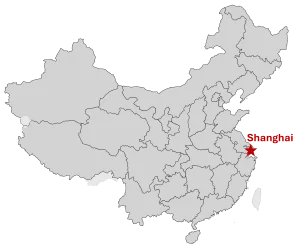
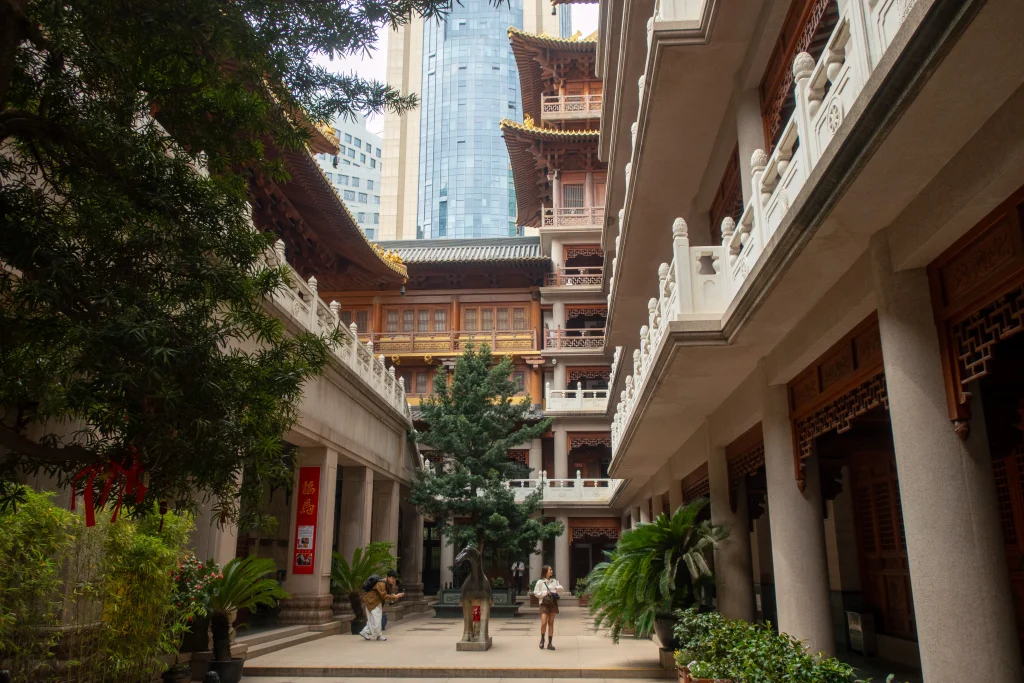
Imagine standing at one of the busiest intersections in the middle of Shanghai. All around you, you’ll find glass shopping malls, futuristic skyscrapers, and—suddenly—the golden roofs of a temple. You are standing in front of Jing’an Temple (静安寺, Jìng’ān Sì) – a Buddhist temple in Shanghai that deeply impressed me during my visit, primarily because of the stark contrast to its surroundings.
The name actually translates to “Temple of Peace and Tranquility.” I have to be honest with you: you won’t find much peace here today. Located in one of Shanghai’s most vibrant districts, the temple is an absolute magnet for crowds. But it is precisely this tension between thousand-year-old tradition and the pulsating life of the modern era that makes it one of the most photogenic spots in the city.
A Turbulent History Between Rivers and Factories
When you visit this magnificent Buddhist temple in Shanghai today, you are looking back at over 1,700 years of history—even if the buildings you see are much younger. Originally, the temple was built in 247 AD during the Wu Dynasty on the banks of the Suzhou River. Back then, it still carried the name Chongyuan Temple (重元寺, Chóngyuán Sì).
Because the river repeatedly burst its banks, the entire complex was moved to its current location on Nanjing Road in 1216 during the Song Dynasty. In recent history, the temple went through turbulent times: during the Cultural Revolution (starting in 1966), it was used as a plastic factory. In 1972, it was heavily damaged by a fire. It wasn’t until 1983 that the gradual reconstruction began, eventually leading to the temple reopening to the public in 1990. The striking Jing’an Pagoda was only completed in 2010.
Find out more on the history of Shanghai in my separate article.
Does a Buddhist Temple Fit Your Shanghai Itinerary? My Rating:
Here is a quick overview to help you decide if a visit to Jing’an Temple is for you:
| Authenticity | 🍌🍌🍌 (3/5) | Nature | 🍌 (1/5) |
| Crowds | 🍌 (1/5) | Budget | 🍌🍌🍌 (3/5) |
| Accessibility | 🍌🍌🍌🍌🍌 (5/5) | Lifestyle & Entertainment: | 🍌🍌 (2/5) |
| History & Culture | 🍌🍌🍌🍌 (4/5) | Photogenic | 🍌🍌🍌🍌 (4/5) |
What to Expect in the Temple’s Three Halls
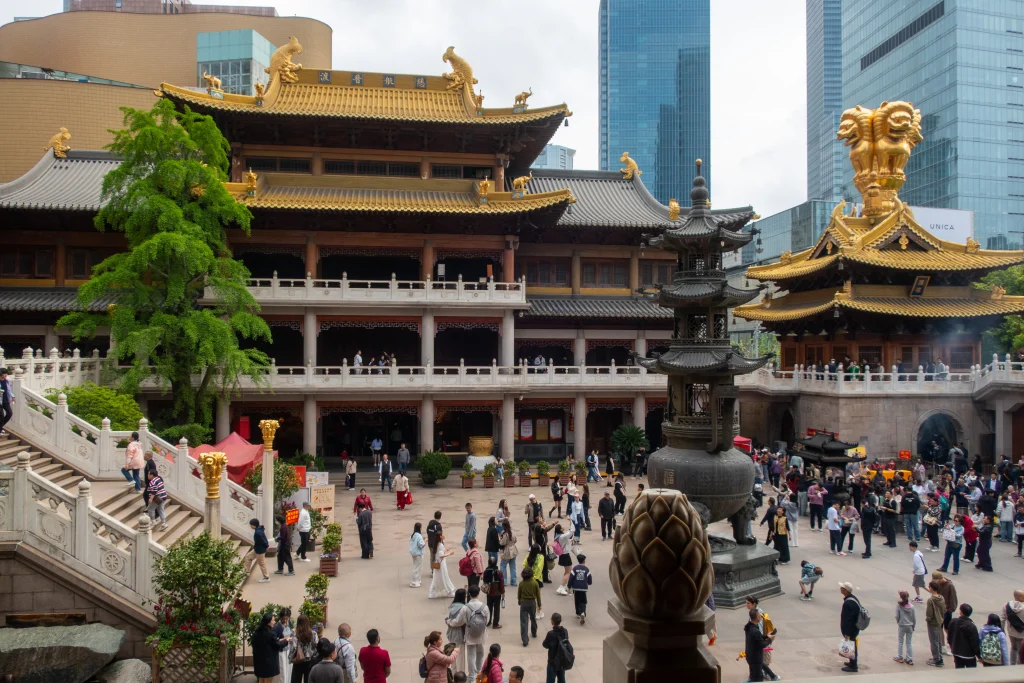
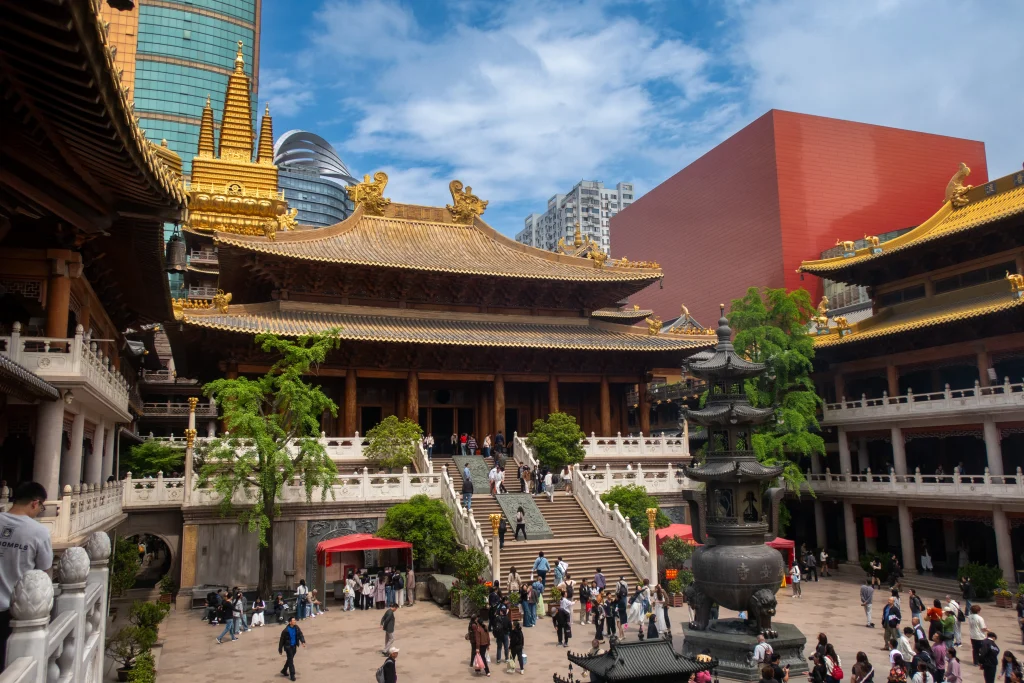
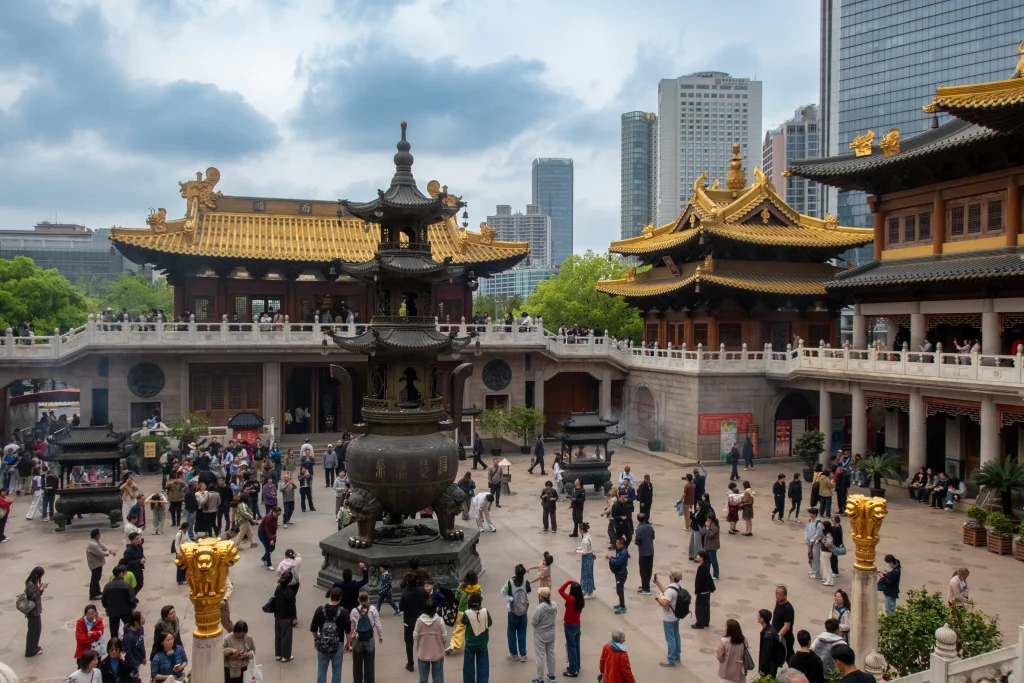
As soon as you enter the temple courtyard, the large bronze shrine will likely catch your eye. Here, you can watch visitors try to toss coins into it—a almost playful ritual that invites you to join in and creates a relaxed atmosphere.
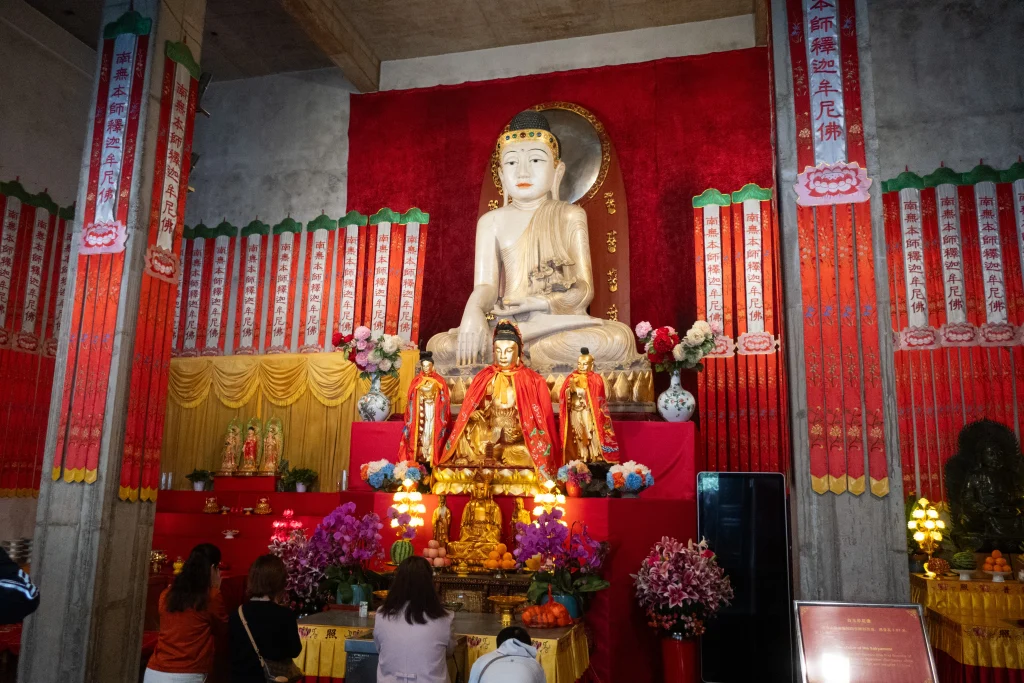
An absolute must is the Mahavira Hall. Here, you will find the largest jade Buddha statue in China. It stands 3.8 meters tall, weighs a massive 11 tons, and was carved from a single piece of pure jade. While the statue is impressive, the hall itself feels somewhat neglected due to the bare concrete and lack of traditional decorations. The contrast between the precious jade and the gray concrete unfortunately takes away a bit of the magic from the scene.
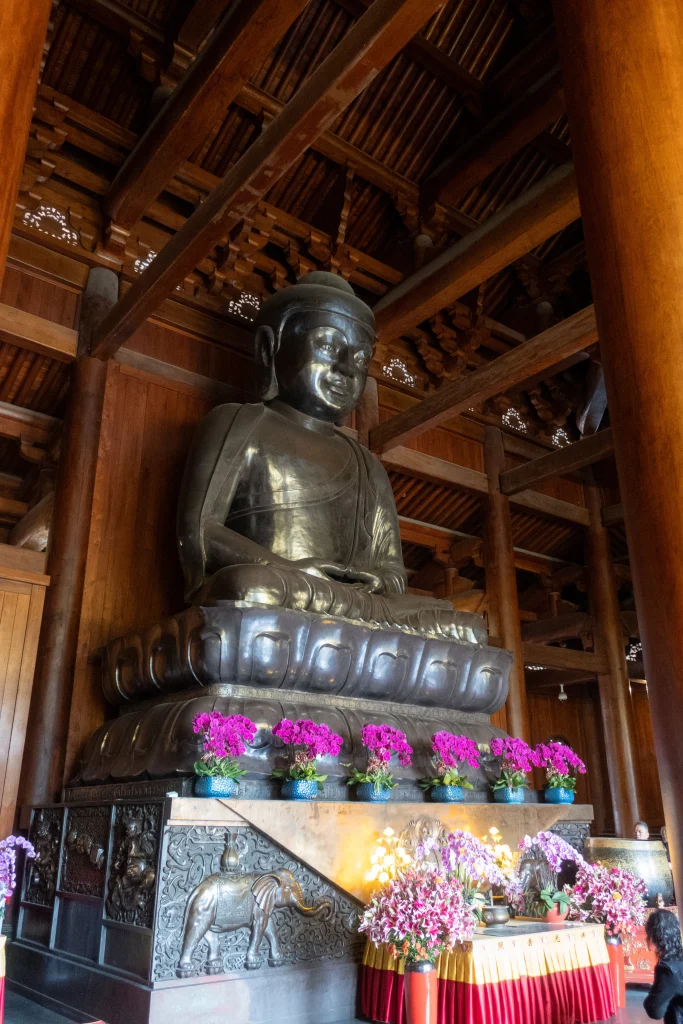
The actual centerpiece of the complex makes up for it: the central Daxiongbao Hall. Inside, a gigantic silver Buddha towers at nearly nine meters high, cast from 15 tons of silver. The construction of the hall itself is particularly impressive. For the supporting pillars, tons of teak logs were imported from Myanmar, giving the room enormous stability and a very classic, noble aesthetic.
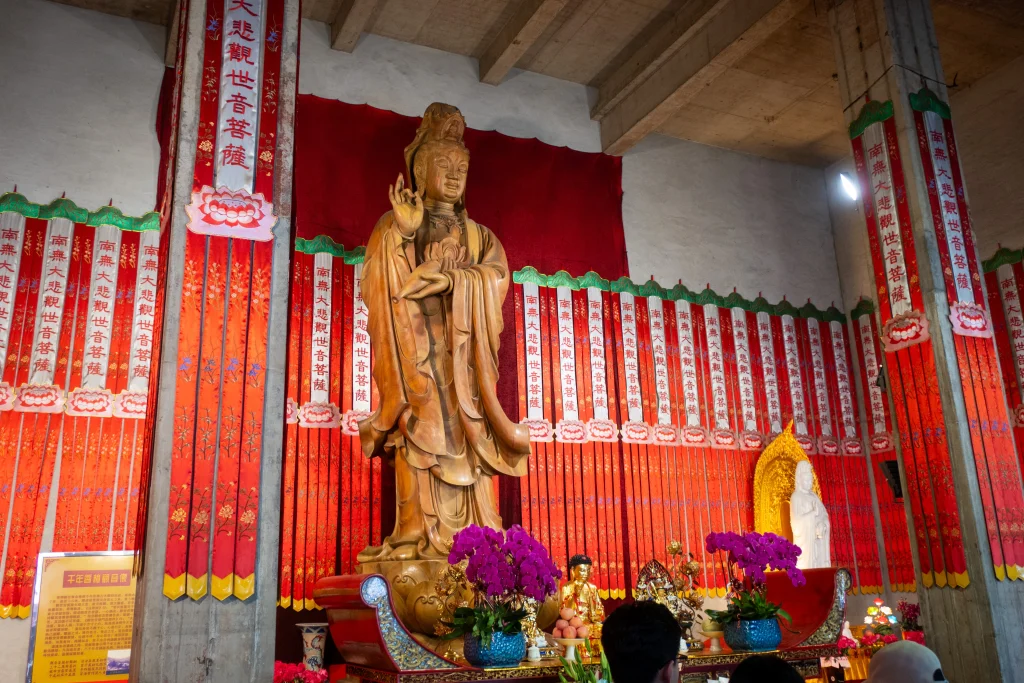
To the east of the main hall, you should also visit the Guanyin Hall. There, a beautiful statue of the Goddess of Mercy awaits you, carved from fragrant camphor wood and standing on a lotus throne.
My Insider Tips for the Perfect View:
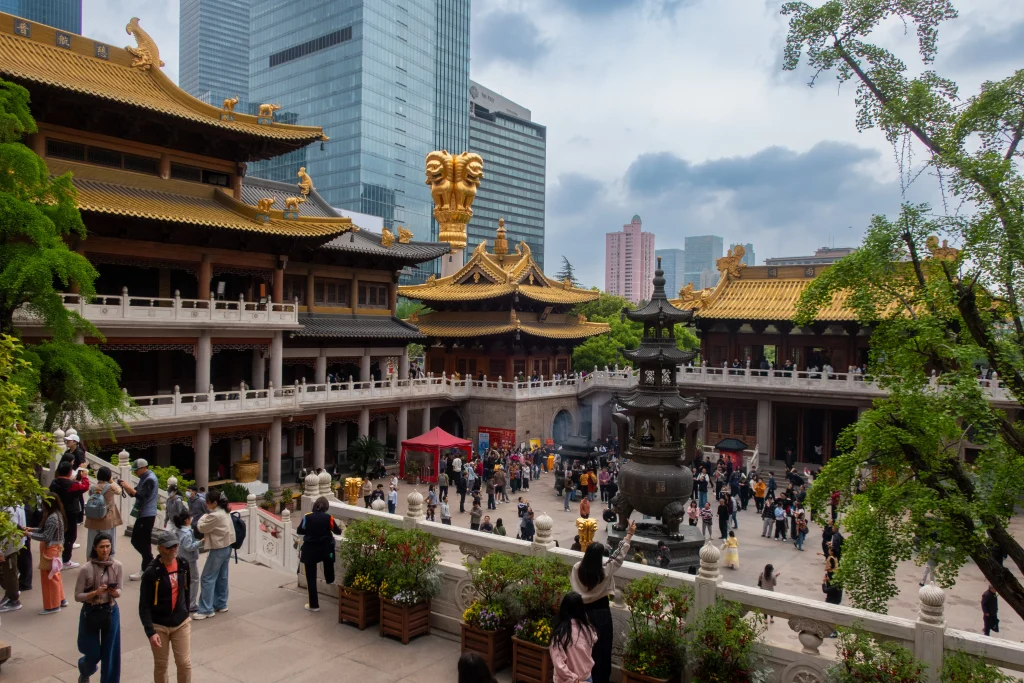
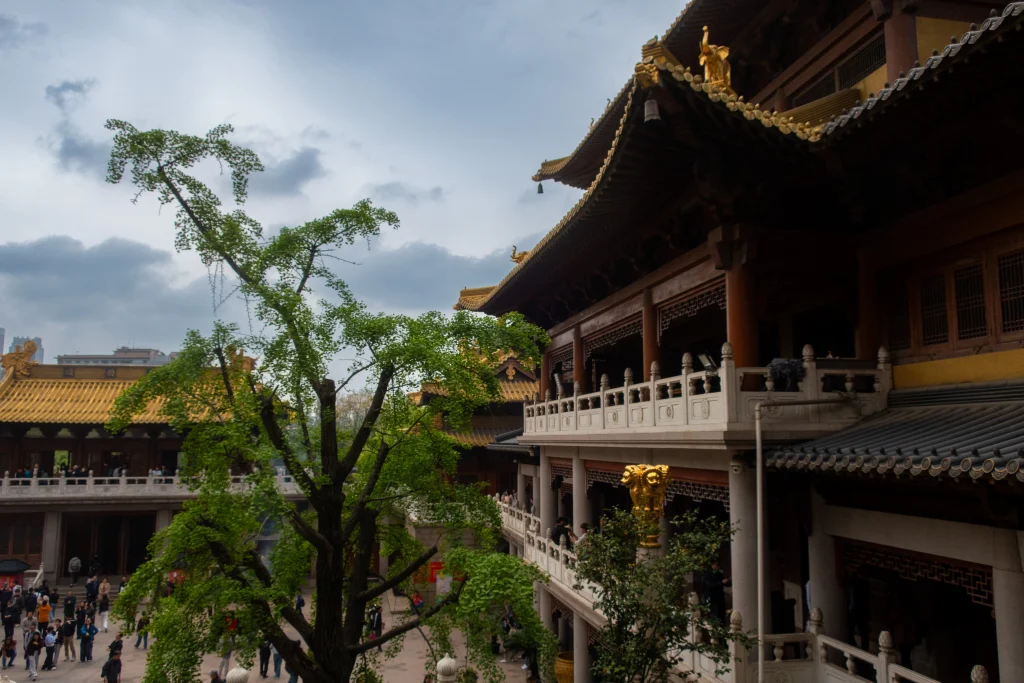
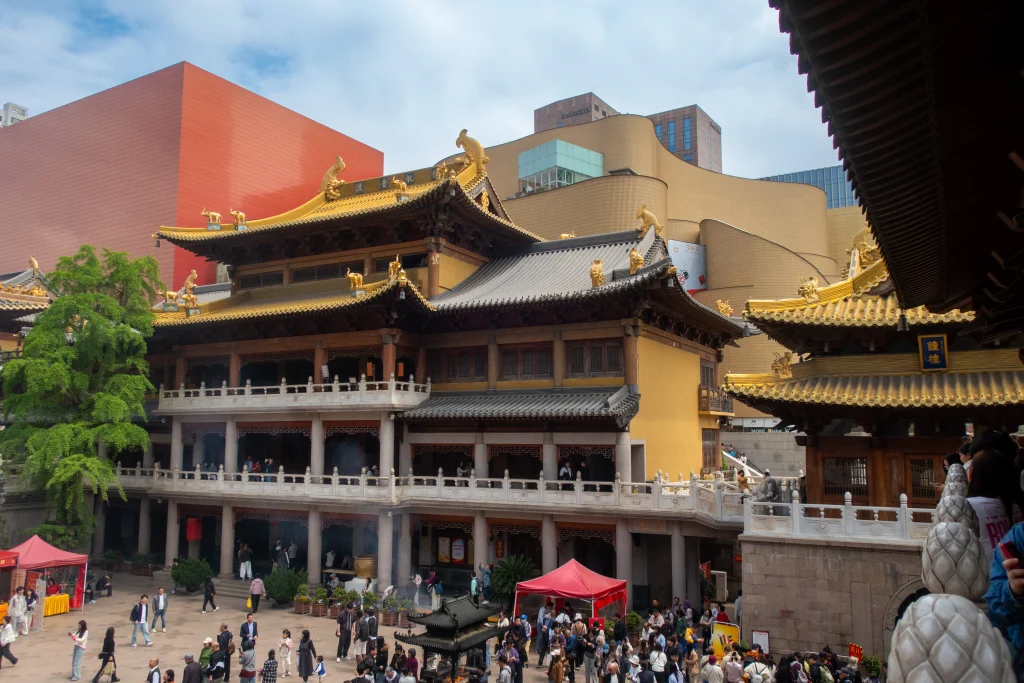
Do not miss the stairs to the second floor! The temple is almost completely enclosed by a walkable walkway. From up here, you have a fantastic perspective of the hustle and bustle in the courtyard and can see the golden tiles of the roofs even better. On this level, you will also find the historic Hongwu Be from the Ming Dynasty, a massive bronze bell weighing 3.5 tons.
By the way, the absolute best view of the golden roofs against the skyscraper skyline isn’t from within the temple itself, but from the pedestrian bridge over the intersection of West Nanjing Road / Huashan Road. The golden roofs of the temple literally glow, especially at sunset.
Planning Your Temple Visit in Shanghai
The visit can be wonderfully integrated into a day in Shanghai, as the connection is perfect.
- Getting There: The easiest way is to take the subway (Line 2, 7, or 14) to the Jing’an Temple Station (静安寺站).
- Admission: Entry costs 50 CNY (approx. €6.50).
- Tickets: You can buy them directly on-site or online via the official WeChat account.
- Opening Hours: Daily from 07:30 AM to 05:00 PM.
- Time Required: Plan for about 1.5 hours to see everything at a relaxed pace.
Jing’an Temple can thus be perfectly combined with other sights in Shanghai. Feel free to check out my article on the best sights in Shanghai for more inspiration.
My Personal Conclusion: Is the Jing’an Temple in Shanghai Worth the Visit?
I’ll be honest with you: if you’ve already seen many temples in Asia, you won’t discover much new at Jing’an Temple. It is a tourist hotspot and definitely not a place for quiet meditation or deep spirituality.
Nevertheless, the visit fascinated me. What makes this Buddhist temple in Shanghai so special is its unbeatable location. If you want to experience culture and history without traveling far out of the modern city center, this is the place for you. The sight of the gold-colored roofs of the temple amidst futuristic shopping malls is also a symbol of modern, rising China.
3 thoughts on “Jing’an Temple: A Buddhist Temple in the Heart of Shanghai”