
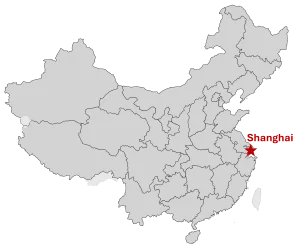
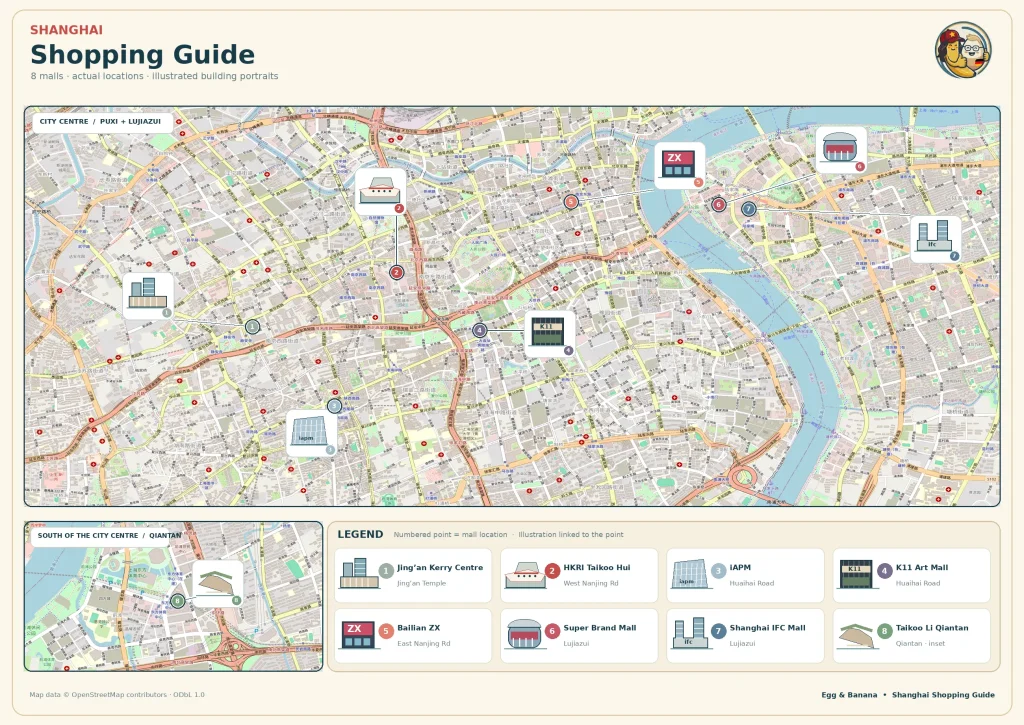
The size and architecture of shopping malls in China never stop impressing me. Alongside Guangzhou, Shanghai is the other city where shopping feels like an experience and part of urban culture. Sometimes I visit a mall here without intending to buy anything. Hong feels much the same way. She often goes for the restaurants, snacks and cafés. To her, a mall gives visitors a glimpse of everyday life and current trends in China, almost like sightseeing. To help you find your way through Shanghai and its many malls, we’re taking you along on our shopping tour in this guide. My first planning tip: choose one neighbourhood as your focus. Shanghai is spread out, and if you try to visit too many shopping destinations, you’ll spend much of your day on the metro.
We visit Shanghai regularly, most recently in April 2026. The city keeps changing, and I discover something new every year. My personal favourite among its malls is HKRI Taikoo Hui on West Nanjing Road. In Pudong, I especially recommend IFC Mall, though mainly for its rooftop terrace and the view of Lujiazui.
Why Shanghai’s Shopping Malls Are More Than Shops
In many Chinese malls, shopping, food and leisure come together. You can browse new shops, see an exhibition, try something out and then sample a range of snacks. This combination is often described as experience consumption: the visit itself becomes the experience.
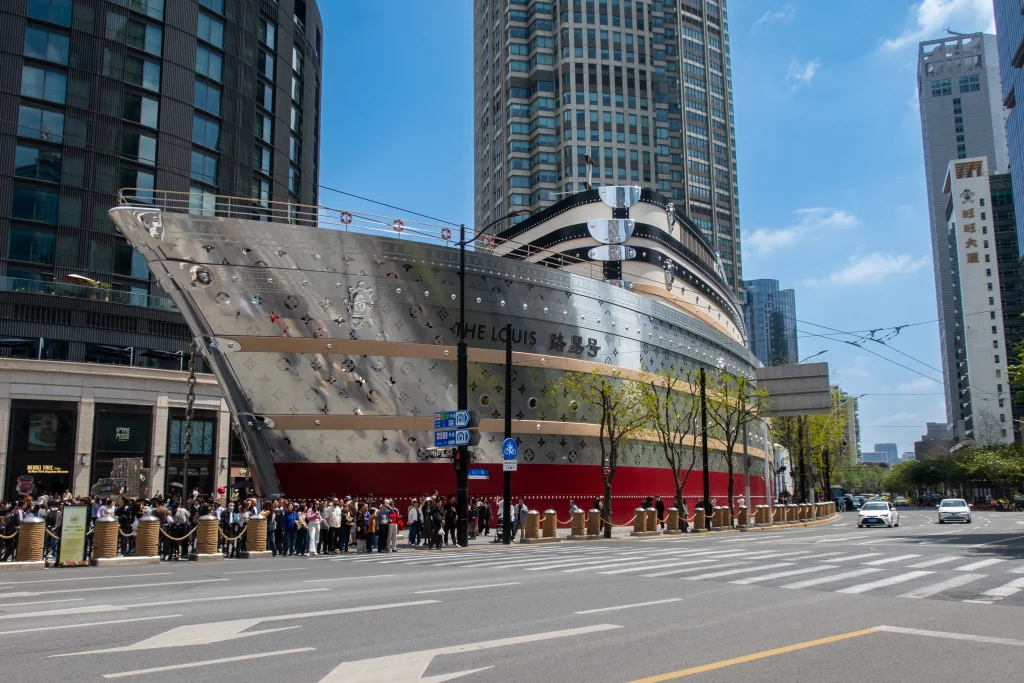
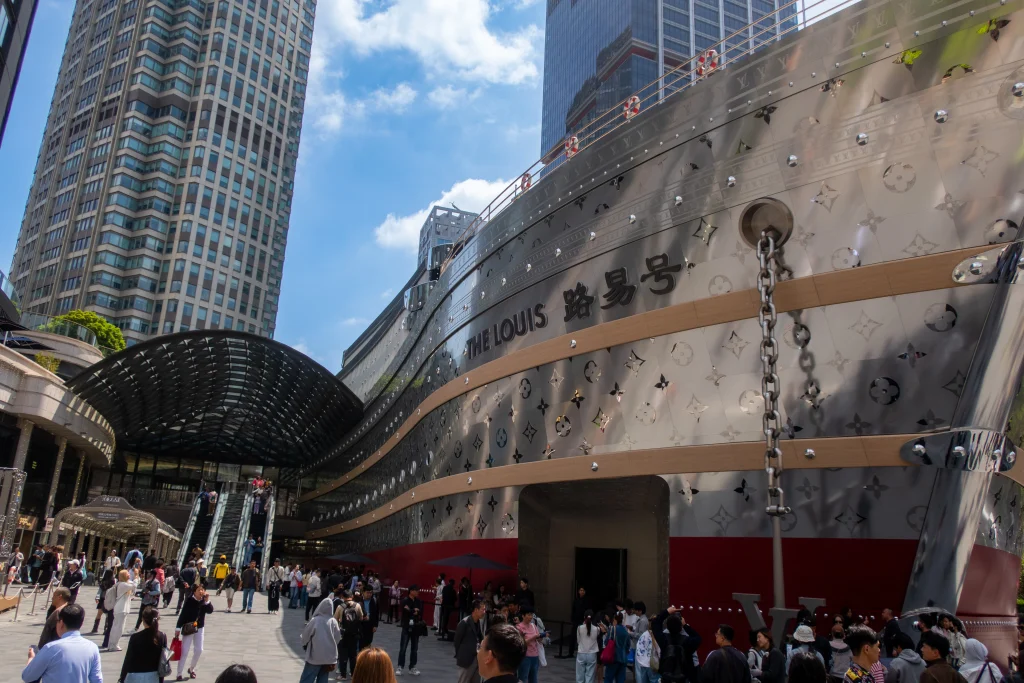
West Nanjing Road is a good example. At the ship-shaped “The Louis”, Louis Vuitton combines an exhibition with a shop and café. A short walk away, the Starbucks Reserve Roastery makes coffee roasting and the café’s design reasons to visit in their own right.
I once had a very personal lesson in how far convenience and service can go in China. I had ordered a new phone online, and it was supposed to be delivered to my hotel. When the courier arrived, though, I was still in a shopping mall. He called me, drove over to the nearby mall and handed me the package in person at the café. From a German perspective, it felt rather surreal.
A Guide to the Shopping Neighbourhoods in Shanghai
The best mall depends on what you’re looking for that day. Here’s a quick guide to help you plan:
| Area | Best for | Key places | Combine it with |
|---|---|---|---|
| West Nanjing Road and Jing’an | Modern shopping culture, cafés and brand experiences | HKRI Taikoo Hui, Starbucks Reserve Roastery, “The Louis” | Jing’an Temple and a walk |
| Huaihai Road and nearby historic streets | Fashion, design, smaller shops and bakeries | iAPM, K11 Art Mall and shops along the road | A long city walk |
| East Nanjing Road | A central shopping street and pop culture | Bailian ZX | The Bund |
| Lujiazui, Pudong | Shopping among skyscrapers | IFC Mall, Super Brand Mall | The skyline and riverfront |
| Qiantan, Pudong | An open-air shopping area and modern architecture | Taikoo Li Qiantan | A trip to southern Pudong |
West Nanjing Road and Jing’an: My Favourite Place to Shop in Shanghai
HKRI Taikoo Hui – 兴业太古汇 is my personal favourite in this guide to Shanghai’s malls. If you asked me which shopping mall to choose for a first visit in Shanghai, this would be my answer in this guide. The complex brings together fashion, lifestyle and food. The Starbucks Reserve Roastery is part of it, too. You can reach the mall via West Nanjing Road station (Lines 2, 12 and 13).
Right next to Taikoo Hui, you’ll find the Starbucks Reserve Roastery. Even if you wouldn’t normally seek out a Starbucks, this one deserves a closer look. The Roastery at 789 West Nanjing Road combines visible coffee production with carefully designed counters and a variety of offerings. For me, it fits perfectly into a shopping day: look around, take a break, then carry on exploring.
The ship-shaped “The Louis” is also in this shopping district. Inside, the “Visionary Journeys” exhibition explores travel, craftsmanship and the brand’s history. Retail spaces and a café complete the concept. You can get a first impression of the exhibitions on the official Louis Vuitton website (external link). I recommend arranging a reservation for the exhibition in advance. You’ll find my experience and booking tips in our separate article about the Louis Vuitton Visionary Journeys exhibition in Shanghai.
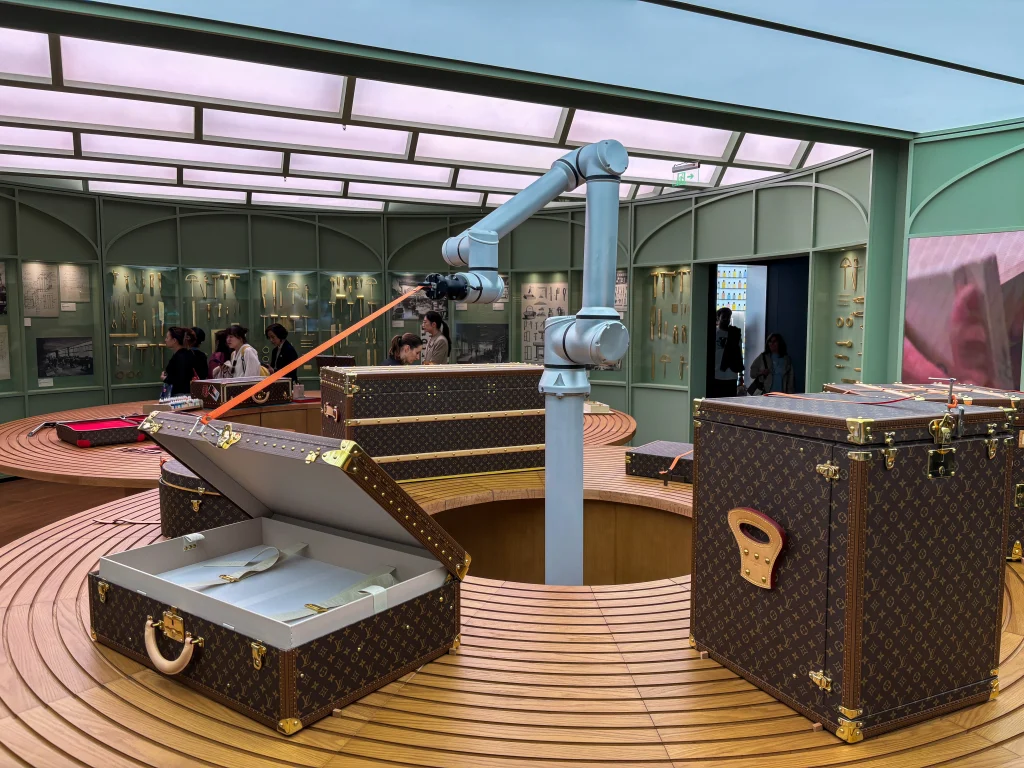
Walk from Jing’an Temple to Taikoo Hui
A visit to Jing’an Temple works well with a shopping day. My recommendation is to walk towards Taikoo Hui afterwards. The journey becomes part of your stroll through the city, and you’ll pass plenty of luxury hotels and shopping malls along this road. Jing’an Kerry Centre – 静安嘉里中心 is right by the temple. It’s another option if you want to shop immediately after your visit; the nearest station is Jing’an Temple (Lines 2, 7 and 14).
Huaihai Road Shopping Guide: Fashion, Cafés and a Walk Through Older Shanghai
I particularly enjoy combining shopping in Shanghai with a walk through the streets of the former French Concession. Browsing shops among older buildings and stopping for a coffee afterwards: that’s exactly the kind of city stroll I like. I find the mix of European-influenced architecture and present-day Chinese city life especially appealing.
The bakeries have stayed in my memory, too. I appreciate the quality and familiar varieties of German bread. In Shanghai, by contrast, the combinations keep surprising me: pretzel bread with matcha filling, sweet pastries and spicy creations. Not everything will be to your taste. That’s part of what makes it interesting. For me, shopping here is also a chance to try something I probably wouldn’t order at home.
If you’d like to pair that walk with a larger mall, iAPM and K11 are two options along Huaihai Road:
- iAPM – 环贸iapm商场, at 999 Middle Huaihai Road, is aimed particularly at visitors looking for international fashion and upscale shopping. South Shaanxi Road station (Lines 1, 10 and 12) makes it easy to reach. Its location is what makes it especially useful for planning: you can start at the mall and then explore the surrounding streets. That way, a mall visit can lead to smaller discoveries and a coffee break.
- Shanghai K11 Art Mall – 上海K11购物艺术中心 combines retail with art. The mall even has its own art museum with changing exhibitions. That makes it an interesting choice if you want to combine shopping and culture. The nearest station is Site of the First CPC National Congress · South Huangpi Road (Lines 1 and 14).
Tianzifang: Narrow Lanes and Personal Discoveries
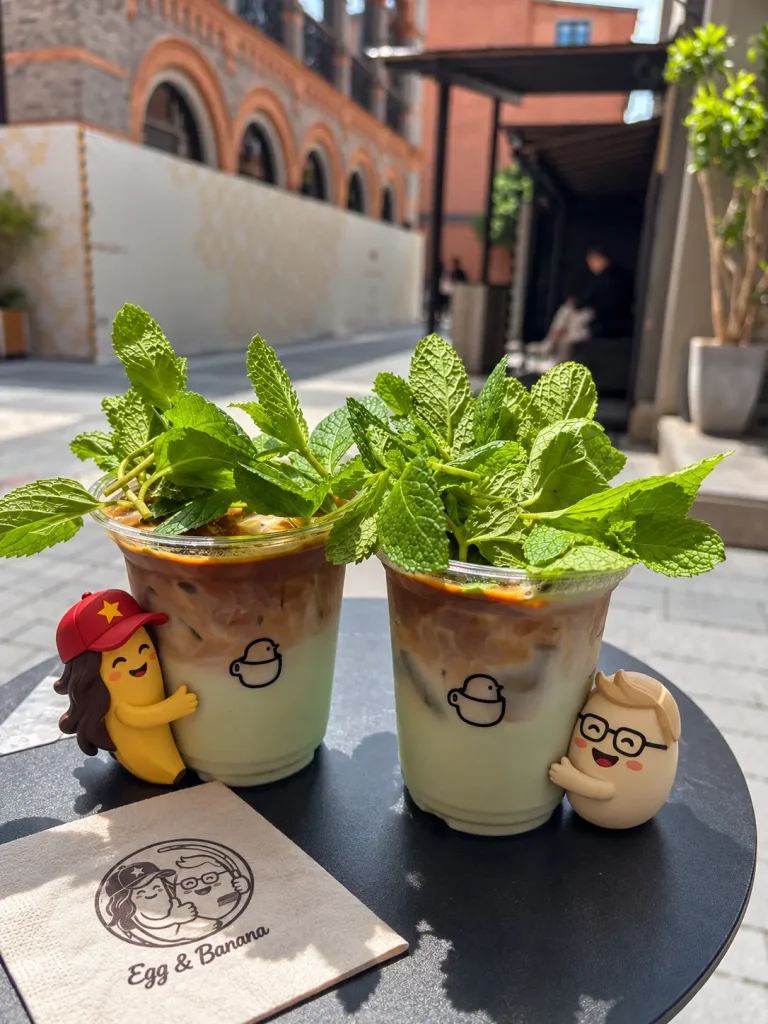
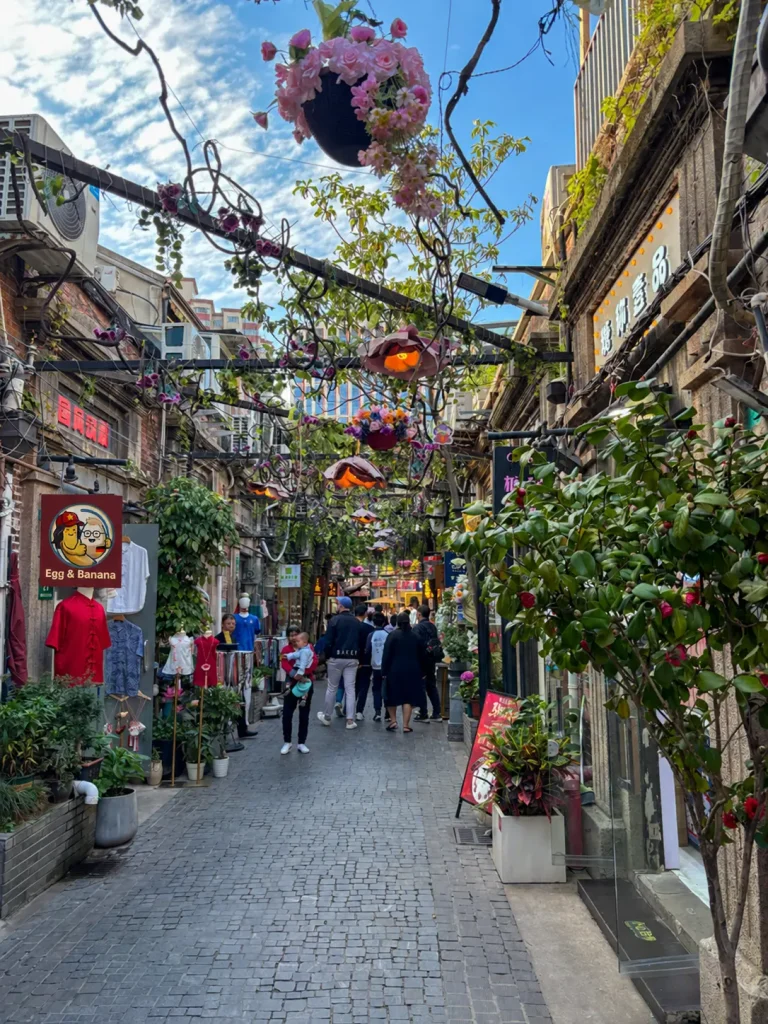
We’ve visited Tianzifang – 田子坊 ourselves, and the area has particularly stayed with me. Here, a shopping stroll also lets you explore narrow lanes. The area is shaped by shikumen houses, a style typical of historic Shanghai. For me, Tianzifang definitely belongs in this Shanghai guide if you’d like to experience smaller shops and a different atmosphere alongside the big malls. The nearest metro station is Dapuqiao (Line 9). Unfortunately, on my most recent visit, I felt that many of the small shops had become very focused on tourists.
East Nanjing Road: Shopping Street and Pop Culture
Bailian ZX – 百联ZX创趣场 caters specifically to visitors interested in anime, manga, games and collectable figures. The shopping centre combines shops with themed spaces and entertainment. That sets it apart from malls focused more heavily on luxury fashion. East Nanjing Road station (Lines 2 and 10) is a convenient way to get there. You can combine your visit with a walk along the shopping street and continue to the Bund.
Lujiazui: Shopping and My Guide to Shanghai’s Best Skyline View
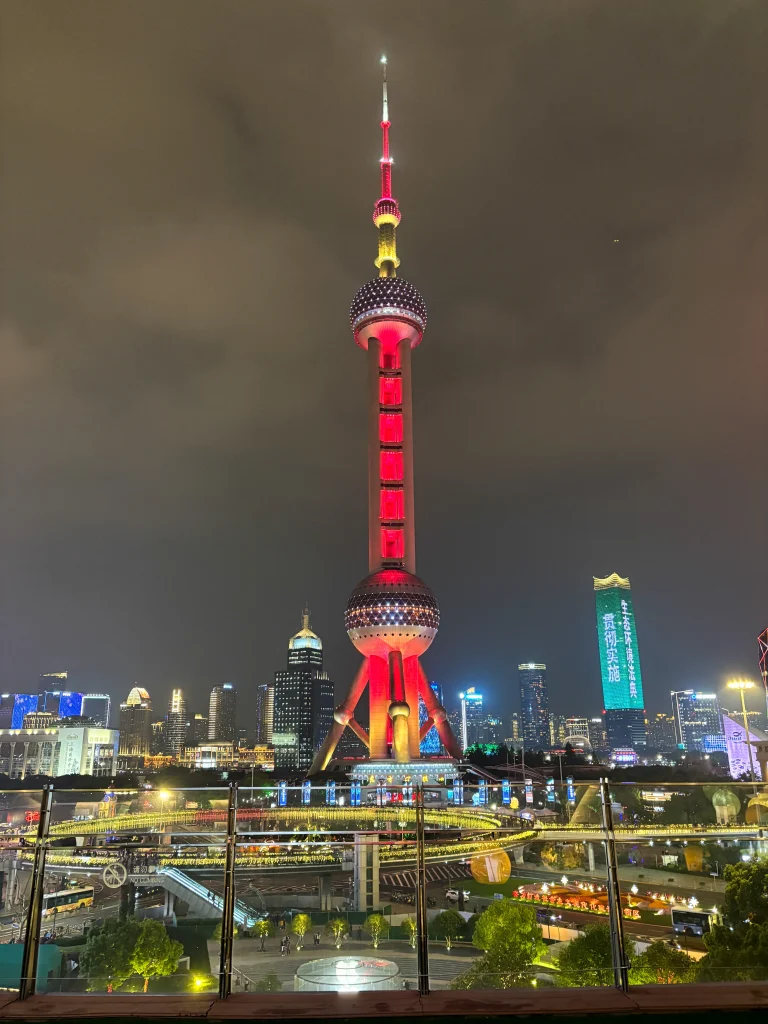
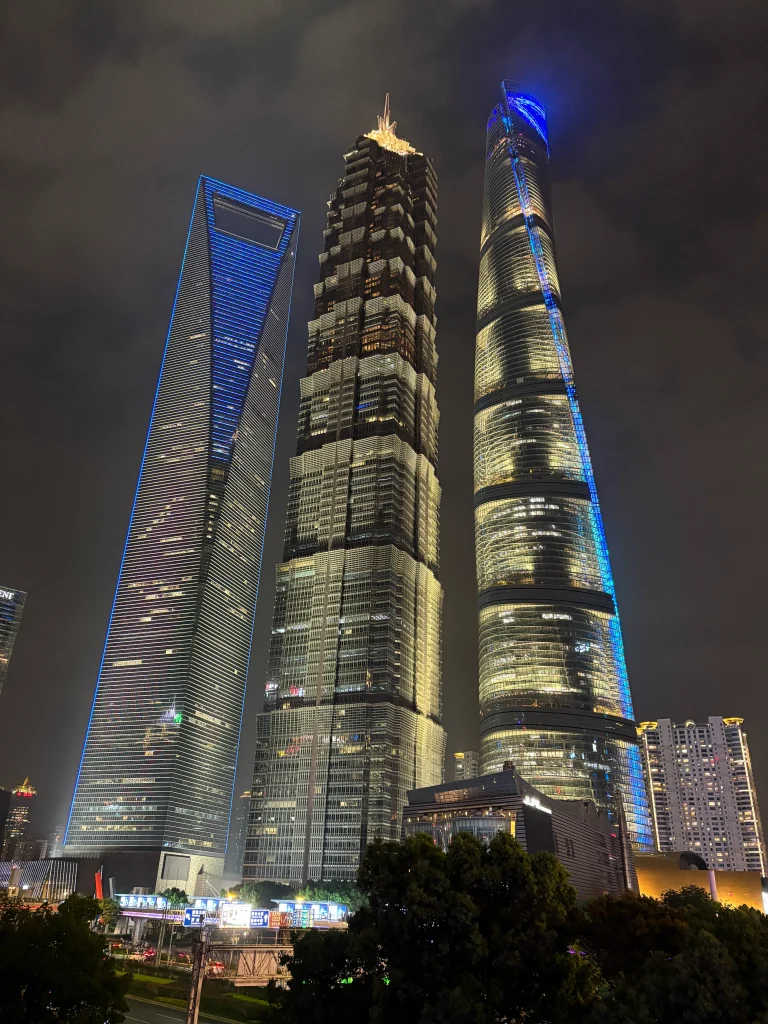
IFC Mall – 上海国金中心商场 is best known for its international luxury brands. My particular recommendation, though, is on the mall’s roof: the viewing terrace. For me, it offers by far the best view of the Lujiazui skyline. There were only a few people there when we visited. I got the impression that, despite its central location, relatively few visitors know about this viewpoint. That’s exactly why I want to recommend it. Even if you don’t intend to buy anything in the luxury shops, I think the view makes IFC Mall worth adding to your day. Lujiazui station (Lines 2 and 14) is right by the mall.
Taikoo Li Qiantan: An Open-Air Shopping Area in Southern Pudong
Taikoo Li Qiantan – 前滩太古里 is another option, although we haven’t visited it ourselves yet because it lies a little farther out. This shopping complex takes a different approach from a traditional enclosed mall, with open spaces, connected buildings and landscaped areas. It could be a good fit for your itinerary if you’d like to combine modern architecture with shopping outdoors. The nearest station is Oriental Sports Center (Lines 6, 8 and 11).
Our Favourite Shops: What We Like to Look For in China
Our favourite shops in China are Uniqlo, DJI, Xiaomi, Muji and Huawei. In our experience, prices for these brands are often lower than in Europe. Some shops also carry limited products available only in the Chinese market.
- Xiaomi and Huawei make far more than smartphones. Both brands offer extensive ranges of electronics, from smart-home products to electric vehicles.
- DJI is the market leader in consumer drones and generally sells its products for less in its home market of China than in Europe. Be careful with removable drone batteries, though: rules for flights departing China have become very strict.
- Uniqlo is a Japanese brand, but it has become well established in China. To me, it offers good-quality clothing at reasonable prices, with simple designs. Prices in China are usually noticeably lower still.
- Muji is a Japanese home-furnishings retailer with a broad range of practical household items in China. Its products also offer good value for money and can bring a little Japanese style into your home.
We’re more cautious about European and American brands. In our experience, they’re often more expensive in China than in Europe. We enjoy looking around their shops, but we wouldn’t generally recommend them as purchases to make in China.
And remember Hong’s approach to visiting a mall: the most interesting find doesn’t have to be a product. It might be a snack you’ve never tried, or a café where you end up staying longer than planned.
My Guide to a Shopping Day in Shanghai
Take the Metro and Stay in One Area if You Can
Our clear recommendation for getting around is the metro. Road traffic in the centre can take up a lot of time, especially if you’re travelling between Puxi and Pudong. Even so, don’t underestimate metro journeys. Walking to the station, changing lines and navigating large stations all add to the journey itself. A well-chosen shopping area will usually give you more than a long list of destinations scattered across the city.
You can set aside a whole day for shopping or work individual malls into your sightseeing in each neighbourhood. On a rainy day or when the weather is unpleasant, spending more time in a mall is a particularly good option for us.
Three ways to plan your day:
- My favourite in Jing’an: Start at Jing’an Temple, then walk towards HKRI Taikoo Hui. Browse the mall, visit the Starbucks Reserve Roastery and, if it interests you, plan time for the Louis Vuitton exhibition.
- For a relaxed wander: Focus on the streets of the former French Concession and Huaihai Road. Leave time for small shops, cafés and bakeries. Tianzifang is a personal tip for an extra detour; iAPM or K11 are good options if you’d like to add a larger mall.
- For sightseeing in Pudong: Include IFC Mall in your day in Lujiazui and stop by its rooftop terrace. Afterwards, explore the skyscrapers or take a walk along the river.
My Shanghai Shopping Guide Verdict: Which Mall Do I Recommend?
My personal favourite is HKRI Taikoo Hui. If you only want to visit one mall in Shanghai, this is the one I’d choose. Together with the Starbucks Reserve Roastery and “The Louis”, it shows how varied a shopping day in China can be.
In Pudong, I recommend IFC Mall for its rooftop terrace. The view of the Lujiazui skyline is the real highlight for me. Having so few people around when we visited made it feel even more special.
For more ideas on combining a shopping day with other sights, see my guide to the best things to do in Shanghai.
What does your perfect shopping day look like? Would you follow Hong in search of the latest trends and snacks, or would you rather wander and see what catches your eye?
Our visits to Shanghai: regularly, most recently in April 2026. Research and fact-checking: September 2026.
1 thought on “Shanghai Shopping Guide: The Best Malls and Neighbourhoods for Shopping”