
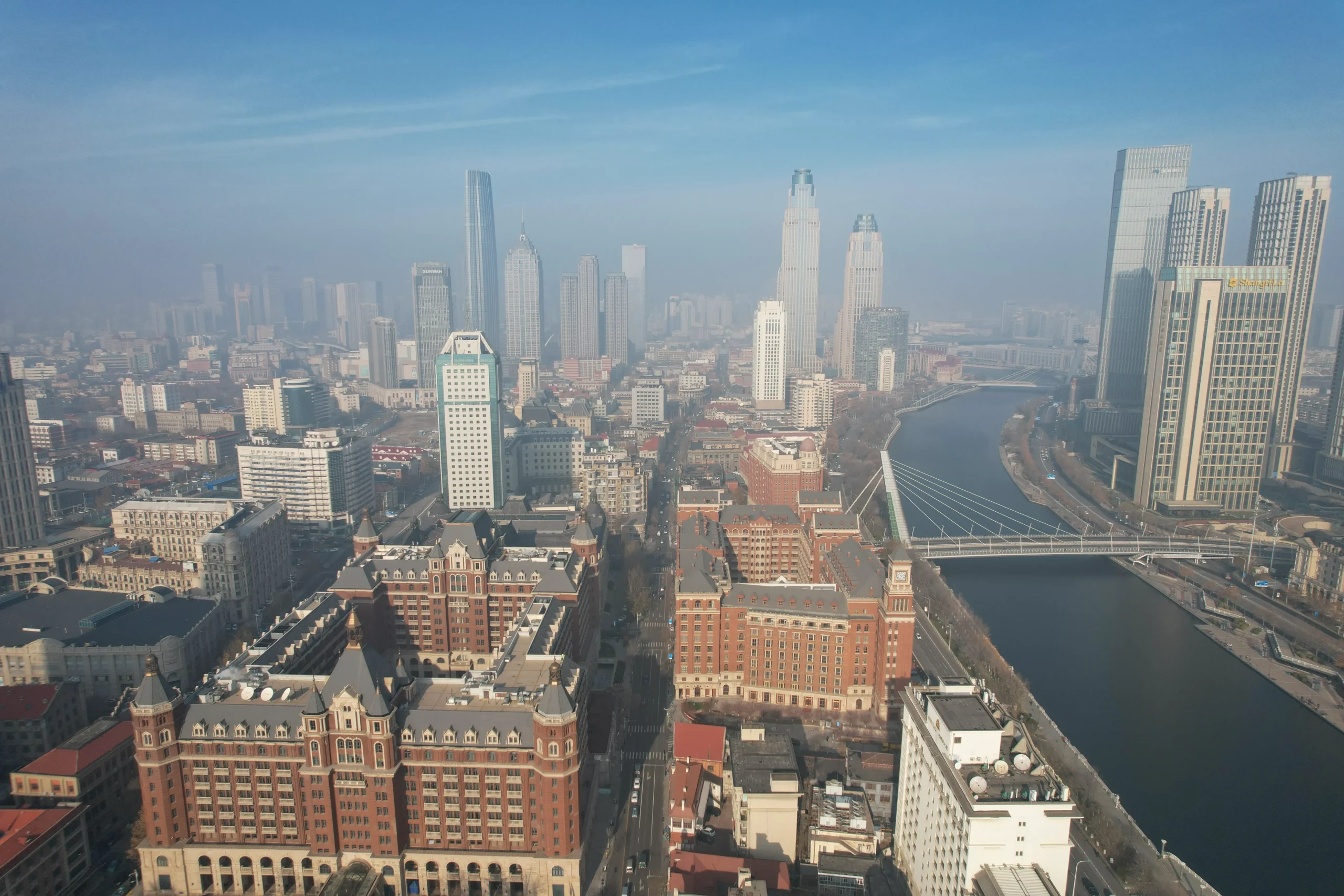

An evening walk by the river, dance groups along the way, and a bike ride past European architecture: these are the reasons I kept returning to Tianjin while I lived in Beijing. The best sights in Tianjin were only part of the appeal. Just as important was the feeling that, after a short train ride, I had arrived in a city with a completely different rhythm.
Hong and I visited Tianjin regularly. What has stayed with me most are the lively promenades along the Haihe river and the unexpectedly European streets. While grand palaces and imperial history shape Beijing, Tianjin has villas, former bank buildings and churches combined into everyday Chinese city life.
Are the sights in Tianjin worth visiting during your trip to China? If you have plenty of time in Beijing and want an easy excursion to a city with a different look, I think it absolutely is. On a short first trip to China, though, I would say it’s best to put Beijing’s famous sights ahead of Tianjin. You can get a good feel for central Tianjin in one day. If you also want to visit the coastal district of Binhai, allow another day.
Along the Haihe: Tianjin’s Sights by the Water
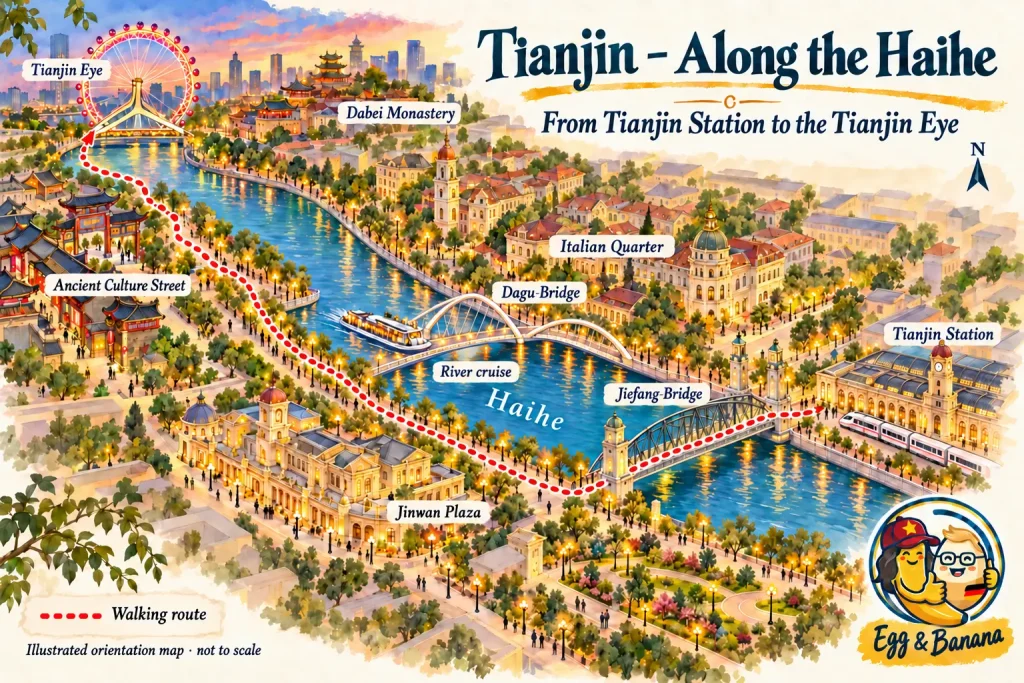
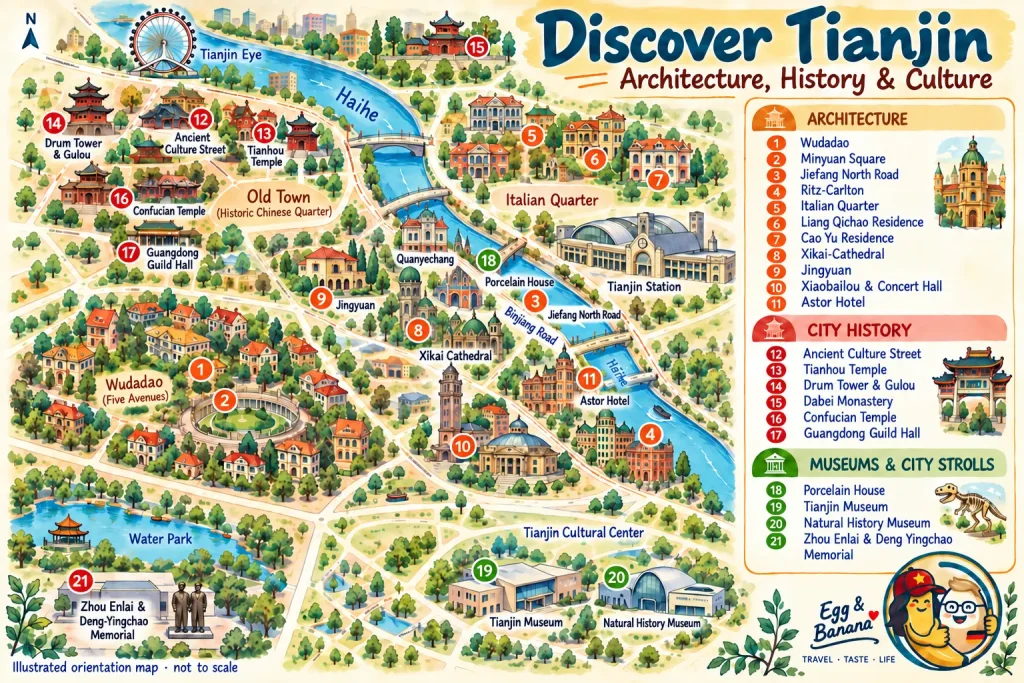
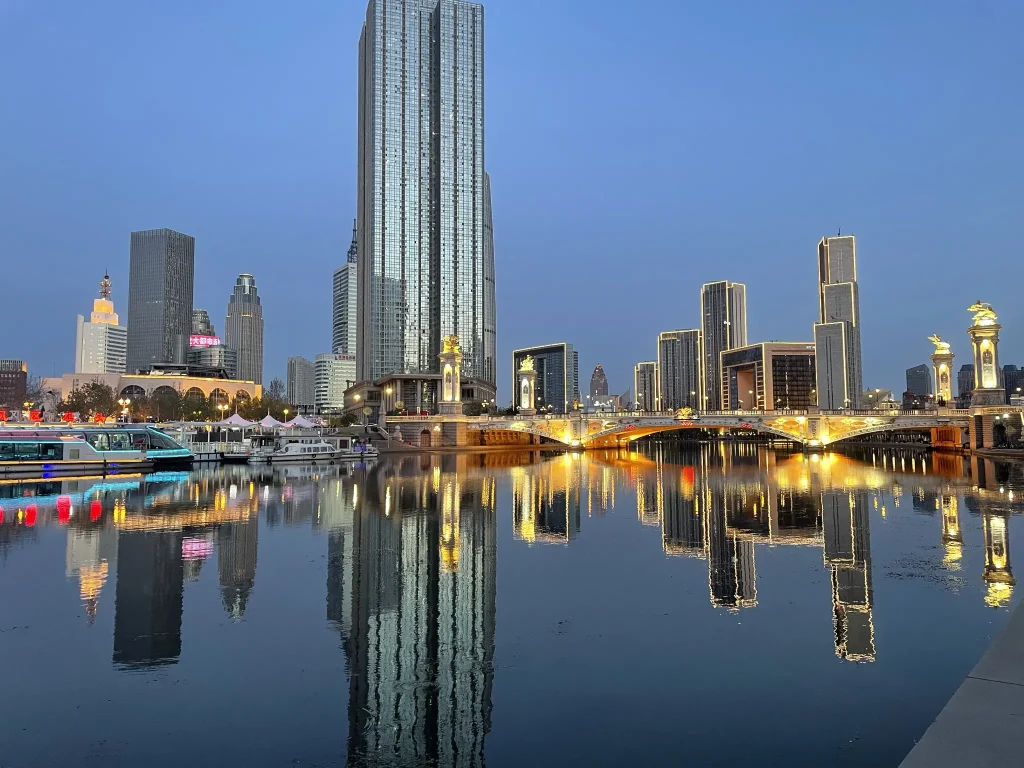
The Haihe (Hǎi Hé, 海河) is my main reason for visiting Tianjin. Hong and I often walked from the station to the Tianjin Eye. Those walks were a regular part of the early days of our relationship: we followed the river with the illuminated skyline around us and had time for long conversations. Tianjin is closely tied to my memories of our first days together.
Along the way, we passed dance groups, people exercising and others out for an evening stroll. I loved how the romantic riverside setting sat alongside ordinary city life.
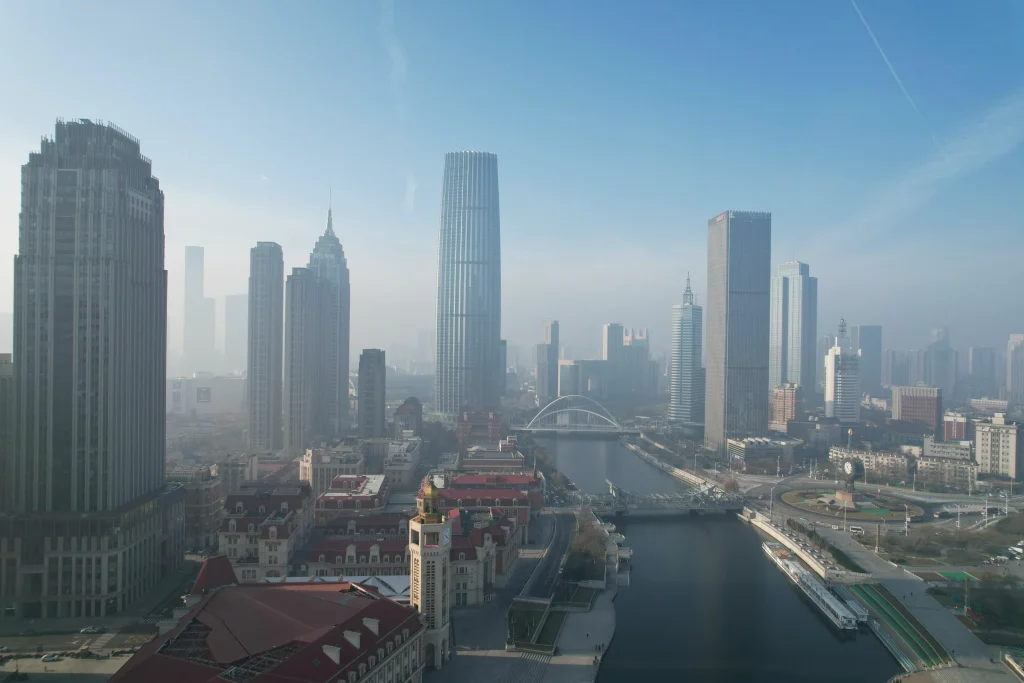
- Haihe Promenade (海河): For a first visit, I recommend the stretch between Tianjin Station and the Tianjin Eye—the route Hong and I walked so often. It brings together many of the best-known views of sights and life along the water in Tianjin. I especially like walking here in the evening, when the buildings are lit up.
- Jiefang Bridge and Dagu Bridge (解放桥 / 大沽桥): The steel Jiefang Bridge dates from 1927, while the Dagu Bridge provides a modern contrast with its arches of different sizes. Both fit easily into a walk along the Haihe Promenade.
- Tianjin Eye (Tiānjīn Zhī Yǎn, 天津之眼): The Ferris wheel on Yongle Bridge is one of the best-known sights in Tianjin. Together with the river and the evening lights, it is one of the scenes that makes the city so photogenic to me. You can simply enjoy the view from the riverbank without taking a ride.
- Haihe river cruise: If you would rather take in the riverside architecture while seated, a cruise is another option. I still prefer walking at my own pace.
Do the Sights in Tianjin Fit Your Travel Plans? My Rating
| Criterion | Rating | Criterion | Rating |
|---|---|---|---|
| Authenticity | 🍌🍌🍌🍌 (4/5) | Nature | 🍌🍌 (2/5) |
| Crowds | 🍌🍌🍌🍌 (4/5) | Budget | 🍌🍌🍌 (3/5) |
| Accessibility | 🍌🍌🍌🍌🍌 (5/5) | Lifestyle & Entertainment | 🍌🍌🍌🍌 (4/5) |
| History & Culture | 🍌🍌🍌🍌 (4/5) | Photogenic Appeal | 🍌🍌🍌🍌 (4/5) |
The high accessibility score mainly reflects the fast connection from Beijing and the central location of Tianjin Station. For me, the combination of the river, the illuminated Ferris wheel and the architecture shaped by the former concessions makes the city especially photogenic.
Why Does Tianjin Look So European in Places?
Tianjin’s location on northern China’s waterways made it an important trading centre and gateway to the capital. The European influence on its cityscape developed primarily after it was forced to open as a treaty port in 1860, following the Second Opium War. Foreign powers subsequently established their own concession areas; over time, there were nine in total. They included British, French, German, Italian and Japanese concessions. Each had its own administrative structures, and their banks, homes, churches and street layouts left a lasting mark on the city. These façades also tell a story of unequal power and limits on Chinese sovereignty. (Source)
Chinese entrepreneurs, politicians and former officials later lived in these districts, too. I find these overlapping histories fascinating: some streets look European, while the life unfolding between the buildings today is unmistakably Chinese.
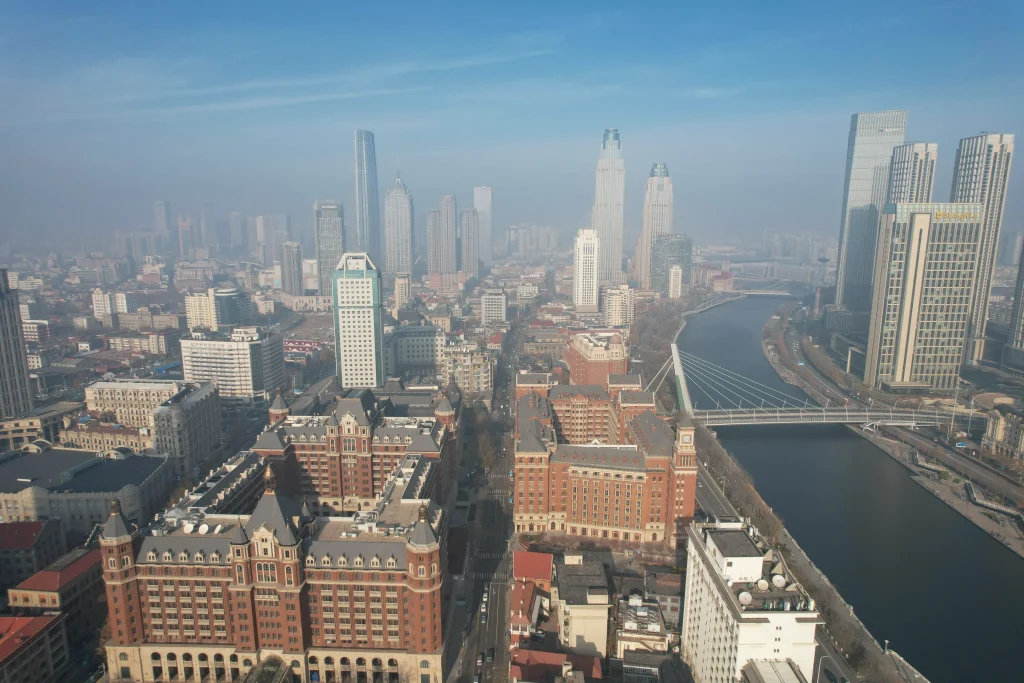
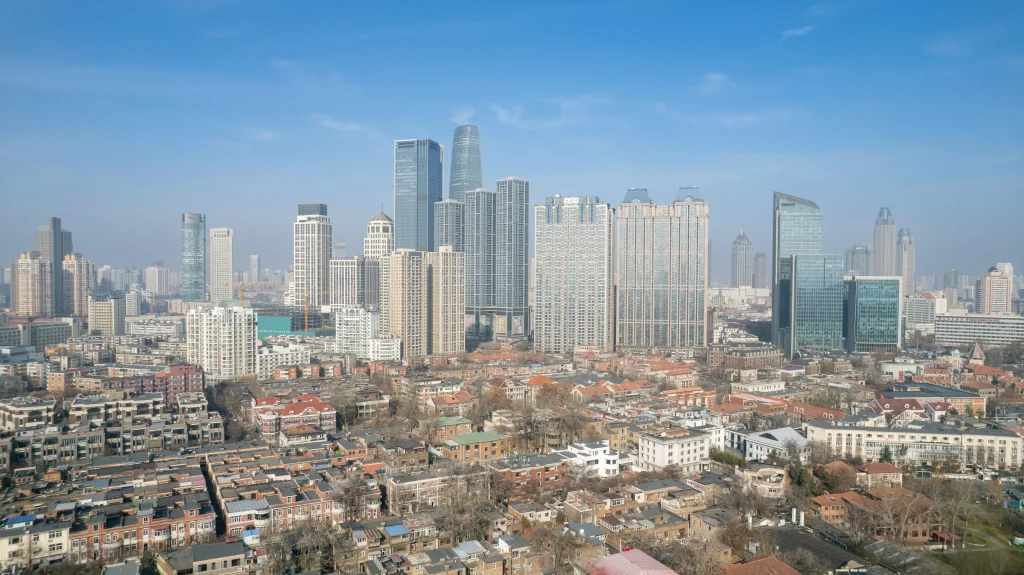
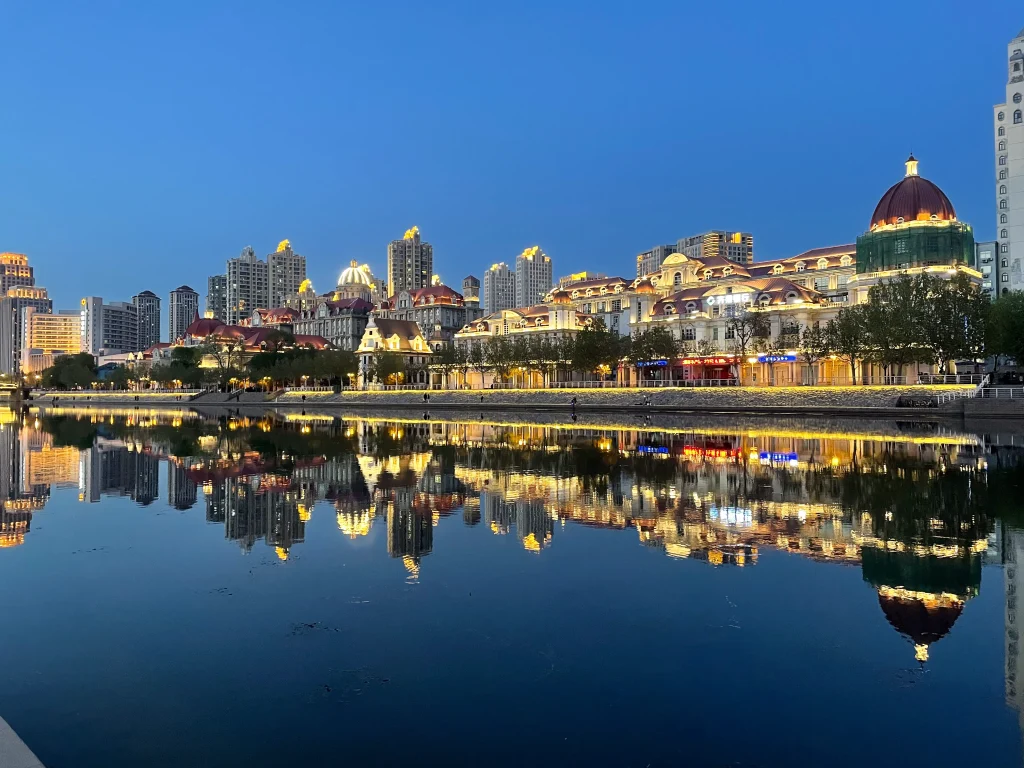
European Architecture in Tianjin: Villas, Churches and Former Banks
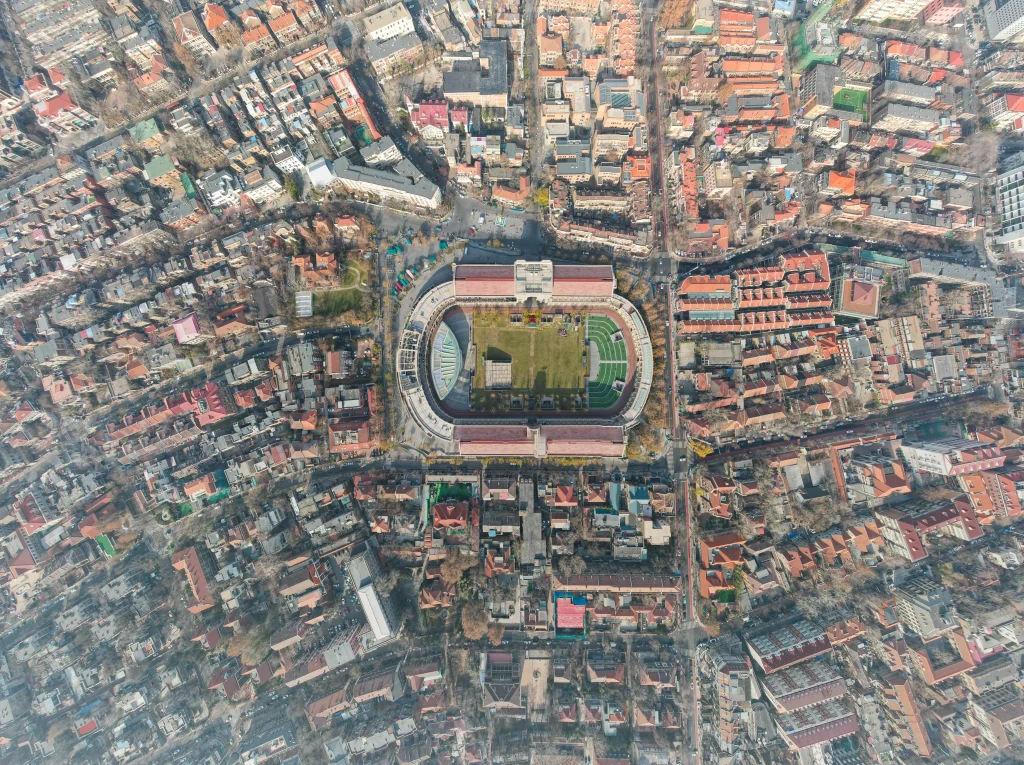
If you are interested in architecture, it is worth comparing several districts. The villas of Wudadao have a different character from the former banking district or the streets of the Italian concession.
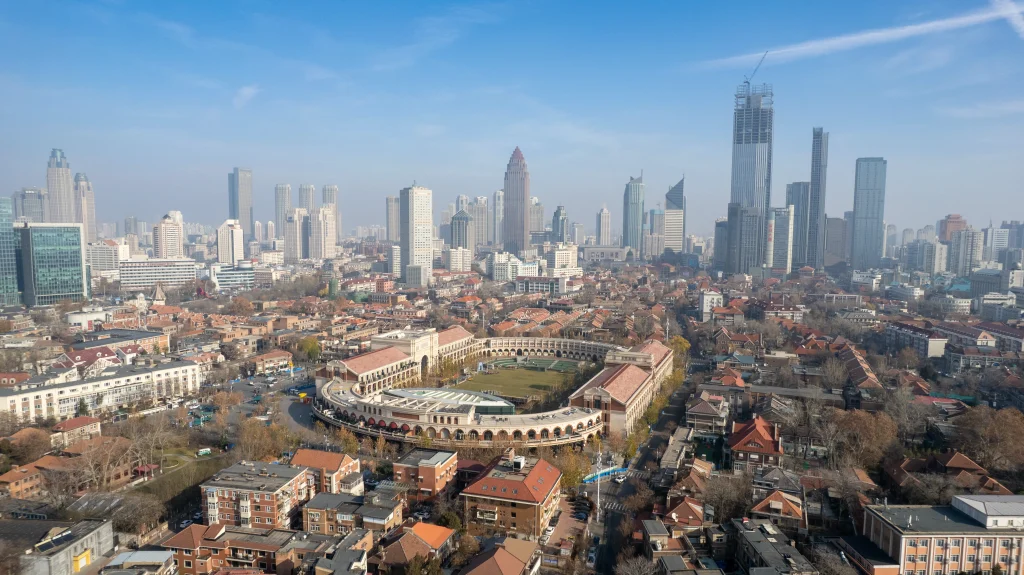
- Wudadao—the Five Great Avenues (Wǔdàdào, 五大道): This extensive district is known for its villas, varied European architectural styles and the homes of wealthy residents in the early twentieth century. Riding a shared bike through these streets was one of my highlights in Tianjin. You can move easily from one street to the next and stop whenever a façade or a small detail catches your eye.
- Minyuan Square (Mínyuán Guǎngchǎng, 民园广场): The former stadium is a striking landmark in Wudadao and a useful point of reference as you explore. We particularly liked the cafés nearby.
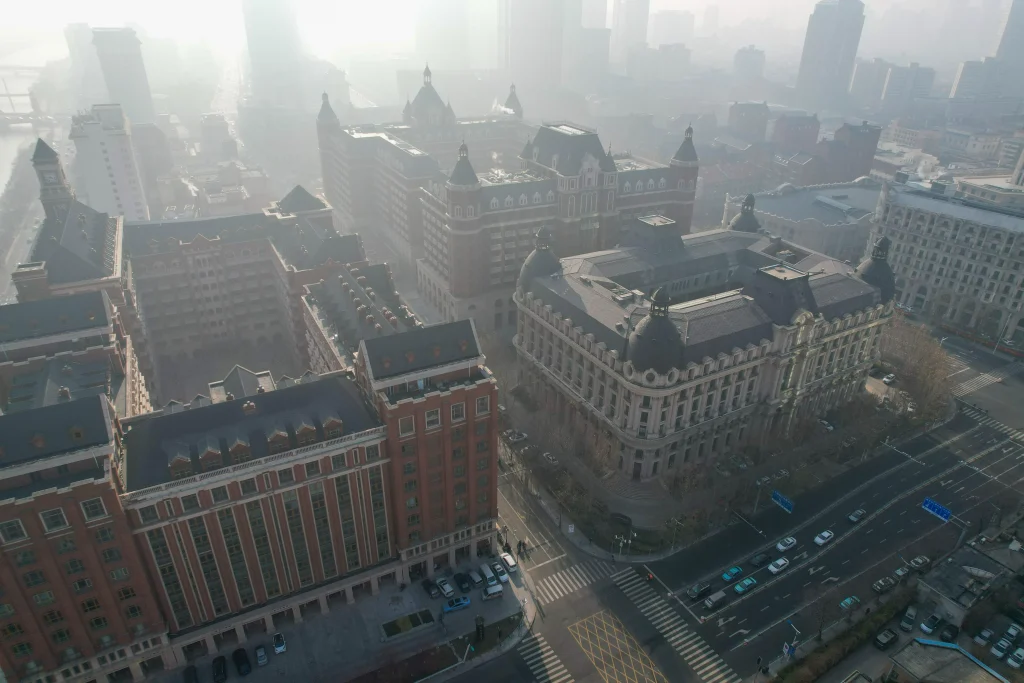
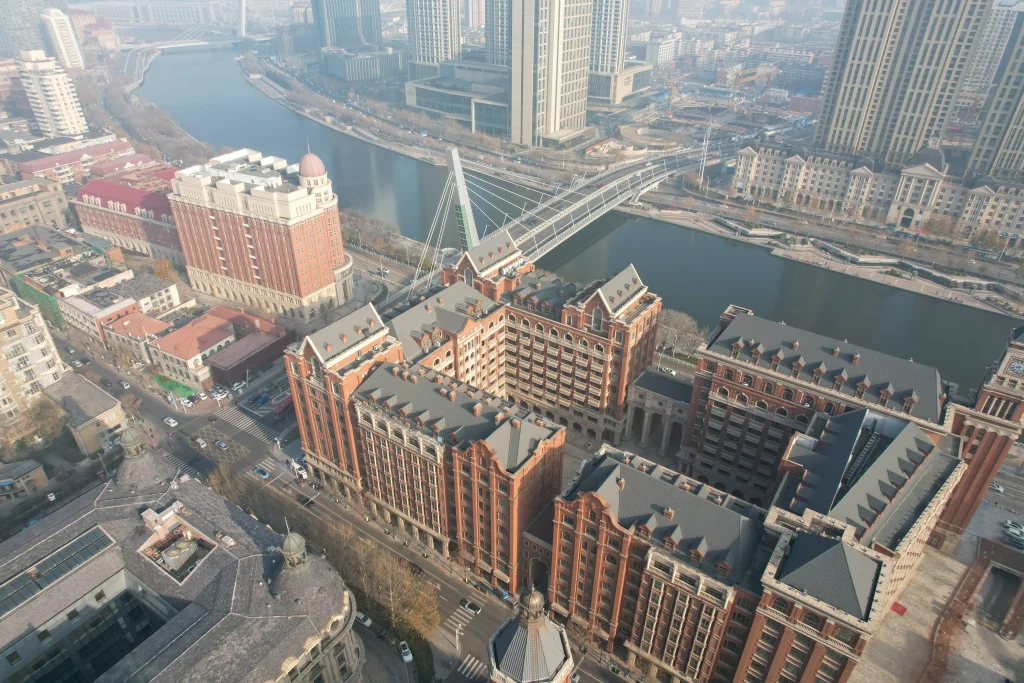
- Jiefang Beilu (Jiěfàng Běilù, 解放北路): Grand bank and commercial buildings stand close together in the former financial district. Take a closer look at their entrances, columns and façade details. If you have limited time and mainly want to see monumental commercial architecture, this street is a good choice.
- Italian Quarter (Yìshì Fēngqíng Qū, 意式风情区): Around Marco Polo Square, you will find buildings from the former Italian concession alongside plenty of restaurants and cafés. Personally, though, I found the area disappointing. It felt very touristy to me, and the restaurants I tried did not win me over.
- Jingyuan—the Garden of Serenity (Jìngyuán, 静园): Puyi, China’s last emperor, lived in this house from 1929 to 1931. If you have already visited the Forbidden City, this private residence offers an interesting continuation of his story on a much smaller scale.
Chinese City History: Temples, Crafts and Old Trading Districts
Among the European buildings, it is easy to overlook the fact that Tianjin’s history reaches far beyond the concession era. The following places and sights add another layer to your best understanding of Tianjin.
- Ancient Culture Street (Gǔ Wénhuà Jiē, 古文化街) and Tianhou Temple (Tiānhòu Gōng, 天后宫): Along this street, you will find traditional-style shopfronts, crafts and souvenirs. Expect a tourist-oriented shopping street, though; its name does not mean you are walking through an old town preserved unchanged. The temple at its centre is dedicated to Mazu, the goddess of the sea. Her worship reflects Tianjin’s history as a trading city on the water and sailors’ hopes for safe journeys.
- Drum Tower and Gulou district (Gǔlóu, 鼓楼): A small old-town area surrounds the reconstructed Drum Tower, and I think it is well worth seeing. Its traditional-style streets offer a lovely contrast to the European façades elsewhere in the city. The area is compact, however: allow time for a short wander rather than hours of exploring an extensive old town.
Striking Buildings, Museums and Shopping Streets
Beyond the main districts, Tianjin has individual sights you can add best according to your interests.
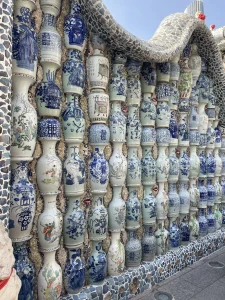
- Porcelain House (Cífángzi, 瓷房子): An older villa has been transformed into an unusual work of art using porcelain shards, vessels and other ceramic elements. Its playful forms reminded me a little of Gaudí’s buildings in Barcelona. If you enjoy unusual architecture, it makes an interesting stop.
- Tianjin Museum (Tiānjīn Bówùguǎn, 天津博物馆): The museum combines art collections with historical exhibits. It is a good choice if you want to learn more about the city’s history or spend part of a rainy day indoors.
- Tianjin Natural History Museum (Tiānjīn Zìrán Bówùguǎn, 天津自然博物馆): Natural history and biological collections take centre stage here. It is an alternative to another architecture walk, particularly for families or anyone with a strong interest in the natural world.
- Binjiang Dao, Heping Lu and Quanyechang (滨江道 / 和平路 / 劝业场): These central shopping streets combine stores with historic commercial buildings. They are worth considering if you want to mix sightseeing with a stroll through the shops.
Binhai: Sights Between Futuristic Architecture and the Coast
Binhai (Bīnhǎi Xīnqū, 滨海新区) belongs to Tianjin, but it is a sprawling coastal district with several centres of its own. Distances are considerable, so plan the following sights as a separate outing.
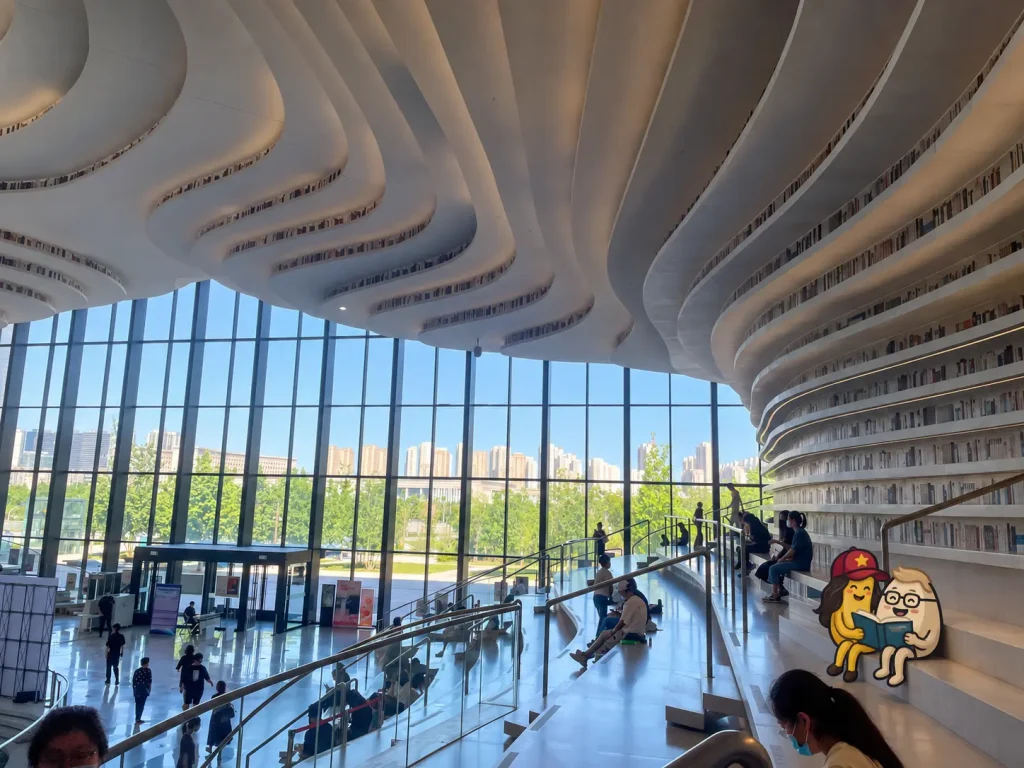
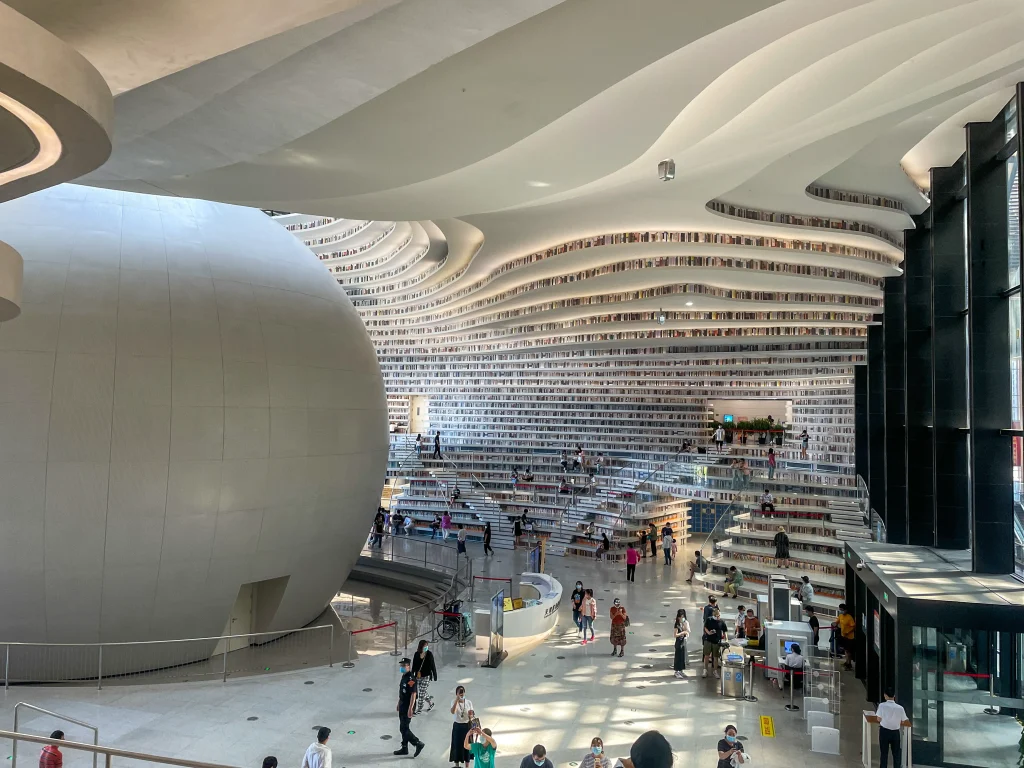
- Binhai Library (Bīnhǎi Túshūguǎn, 滨海图书馆): The white, wave-shaped tiers of shelves surrounding a large sphere are impressive pieces of architecture. Even so, the visit disappointed me. In the famous atrium, the shelves felt more like a set: many book spines were printed on, and the same images appeared again and again. My impression was that, for most visitors there, taking photos mattered far more than reading.
- National Maritime Museum of China (Guójiā Hǎiyáng Bówùguǎn, 国家海洋博物馆): Marine ecology, natural history and maritime culture come together here. If you want a substantial museum visit to anchor your day in Binhai, this is an obvious candidate. Allow several hours.
- TEDA Aircraft Carrier Theme Park (泰达航母主题公园): The centrepiece is the original former Soviet aircraft carrier Kiev. The park combines the ship with a tourist entertainment experience.
- Haichang Polar Ocean Park (天津海昌极地海洋公园): An aquarium and animal park featuring polar and marine animals.
- Dagu Forts (Dàgūkǒu Pàotái, 大沽口炮台): The remains of the fortifications and the museum near the mouth of the Haihe take you back to the military conflicts that preceded Tianjin’s opening to foreign powers. If the history of the concession districts interests you, this site adds historical context to the striking architecture of the city centre.
Eating Your Way Around Tianjin: My Favourite Jianbing Guozi
If you try just one breakfast in Tianjin, my choice is clear: Jianbing Guozi (Jiānbing Guǒzi, 煎饼馃子). I loved these savoury pancakes—they are my absolute favourite food in the city. Traditionally, a thin pancake made from a mung bean-based batter is spread across a hot griddle, topped with egg and savoury sauces, then folded around fried dough sticks or a crisp sheet of fried dough. Soft pancake outside, savoury crunch inside: for me, it is a great way to start a day in Tianjin.
The dish is closely linked to Tianjin’s port culture. Back then, the pancake was an affordable, filling meal that dockworkers could eat on the move with one hand. That connection also helps explain why this breakfast is so practical and substantial.
Your Trip to Tianjin: Getting There, How Long to Stay and What to Combine
Taking the High-Speed Train from Beijing to Tianjin
The easy journey was one of the main reasons I kept returning to Tianjin. The fastest connection runs from Beijing South / Beijingnan (北京南) to Tianjin Station (天津站). As a guide, allow around 30 to 40 minutes of travel time and approximately 55 yuan per person each way in second class. Pay particular attention to your arrival station: Tianjin Station is right by the central Haihe and well placed for a visit to the city centre.
For more help preparing for the journey, read my guide to train travel in China, or go straight to booking your train with Trip.com (affiliate link).
How Many Days Do You Need in Tianjin?
| Your focus | My recommendation |
|---|---|
| A first look at the city centre of Tianjin, its architecture and the best sights | One full-day trip |
| The city centre with leisurely breaks and an evening walk | One overnight stay |
| The city centre and selected sights in Binhai | At least two full days |
For a first day in Tianjin, I would start at the station with Jiefang Bridge and Jinwan Plaza. Then choose either a longer architecture walk through Wudadao or time in the former banking district. In the afternoon, you could visit Ancient Culture Street or the Italian Quarter. I would save the evening for the Haihe and a view of the Tianjin Eye.
My Personal Verdict: Who Will Enjoy the Sights in Tianjin?
While I lived in Beijing, Tianjin was a favourite weekend destination because it felt different after even such a short journey. The river, the life along its banks and the European-influenced streets turned a simple excursion into a little holiday for me.
If you are spending longer in Beijing, enjoy exploring cities on foot and like architecture, I would consider adding Tianjin to your plans. It also suits expats looking for a change of scene, good hotels and international restaurants.
On a short first trip to China, I would see Beijing’s best sights first. Tianjin makes a particularly good addition when you still have room in your itinerary for another side of northern China.
Have you been to Tianjin? Which sights did you like best—the villas of Wudadao, life along the Haihe or the coast in Binhai? Tell me in the comments.
Our most recent visits: 2023. Research for this article: September 2026. Our next visit is planned for November 2026.
2 thoughts on “The Best Sights in Tianjin: Riverside Walks, European Architecture and the Sea”